Indonesia Perfume Market Surges 53% Amid Middle-Class Decline

Perfume sales on Indonesian e-commerce surged 53% in 2025 to IDR 6.1 trillion, despite a shrinking middle class and continued pressure on consumer purchasing power.
This reflects the “lipstick effect,” where people seek small, affordable luxuries. Local perfumes have become a personal and emotional lifestyle symbol amid economic pressure.
The local perfume industry is moving upmarket through strong identity, local ingredients, and digital distribution, while young consumers are redefining luxury in a way that feels relevant to Indonesian culture.
Homes feel increasingly out of reach and loan installments weigh more heavily on many Indonesian households. Amid the constant rise in the cost of living, local perfume is growing aggressively and has become one of the consumer categories that keeps expanding.
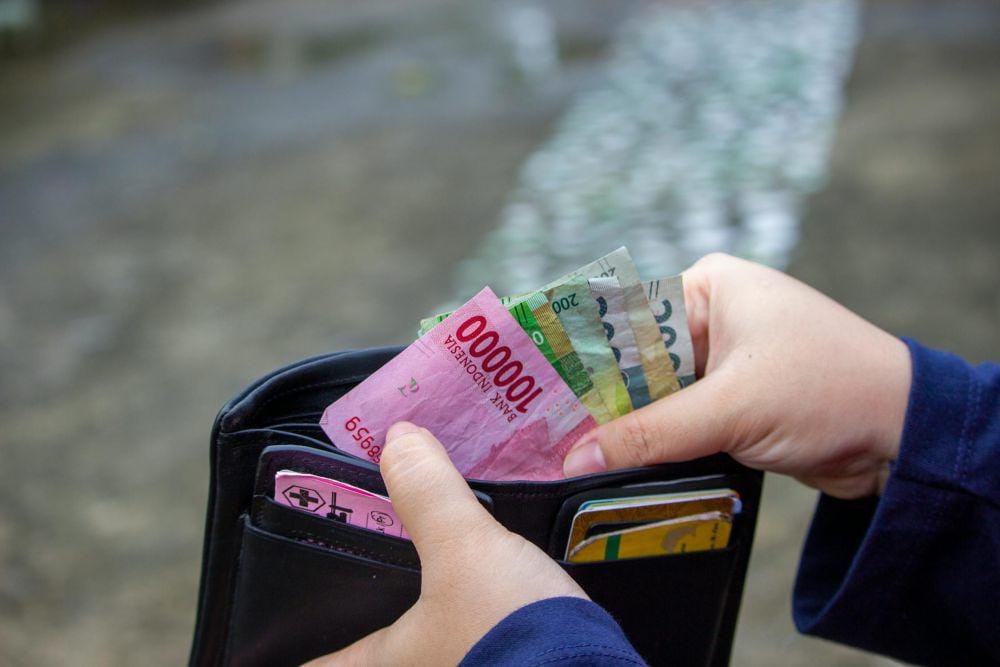
Perfume sales on Indonesian e-commerce reached Rp6.1 trillion (about USD386 million) in 2025, up 53 percent compared with the previous year. This growth is happening at a time when Indonesia's middle class is shrinking and people's purchasing power remains under pressure.
This phenomenon can be read through the concept of the lipstick effect, a consumption theory explaining that when economic conditions worsen, people still seek small forms of luxury that still feel affordable. When houses, cars, and vacations become harder to reach, consumers tend to keep setting aside money for something that provides comfort, confidence, and a personal experience in their daily lives.
In Indonesia, this form of affordable luxury increasingly appears through local perfume. The "cheap alternative" label that clung to local perfume for years is beginning to lose its relevance as consumer behavior shifts and the industry develops.
Local brands now no longer compete through scent alone, but also through story, emotional closeness, and an identity that feels relevant to young Indonesians. This shift is what makes the growth of the local perfume industry interesting to watch, especially because it is happening amid economic pressure that has not fully eased.
The Economy Recovers, but Financial Pressure Remains
The Covid-19 pandemic became one of the biggest turning points for Indonesia's economy in recent decades. In 2020, Indonesia's economy contracted by minus 2.07 percent according to Statistics Indonesia (BPS).
Household consumption, which had previously grown 5.04 percent, fell to minus 2.63 percent. Investment weakened, while both exports and imports declined due to restrictions on economic activity during the pandemic.
These changes affected how people view consumption and financial stability. Many households began postponing large expenses, recalculating their installments, and using their money more cautiously.
In recent years, Indonesia's economy has indeed begun to recover. The Ministry of Finance recorded economic growth of 5.61 percent year-on-year in the first quarter of 2026. Household consumption and investment have also started to move again.
However, the macroeconomic recovery is not yet fully reflected in people's financial conditions. A Mandiri Institute report shows that the number of middle-class Indonesians fell from 47.9 million people in 2024 to 46.7 million people in 2025.
At the same time, the aspiring middle class grew by around 4.5 million people and now covers more than half of Indonesia's population. This condition shows that more and more people are economically vulnerable, meaning they are not classified as poor but also do not yet have strong financial security.
That pressure is visible in many everyday consumption decisions. Many people are starting to delay buying a house, taking on installments more cautiously, and reducing spending considered non-urgent.
Even so, not all consumption categories have slowed. Amid the pressure on purchasing power, perfume consumption keeps rising and shows consistent growth.
The Lipstick Effect and Luxury That Is Still Affordable
The term lipstick effect became popular in the early 2000s after being popularized by Leonard Lauder of the cosmetics company Estée Lauder. When the United States economy slowed, he instead saw lipstick sales increase.
The concept explains that when people struggle to reach luxury in large forms, they still seek small forms of luxury that remain realistic to buy. This pattern of consumption is actually not a new phenomenon.
After World War II, fashion houses such as Chanel, Dior, and Yves Saint Laurent began selling perfume and cosmetics as entry-level luxury products. Consumers who could not afford couture bags or clothing could still buy perfume as a way to maintain closeness to the world of luxury.
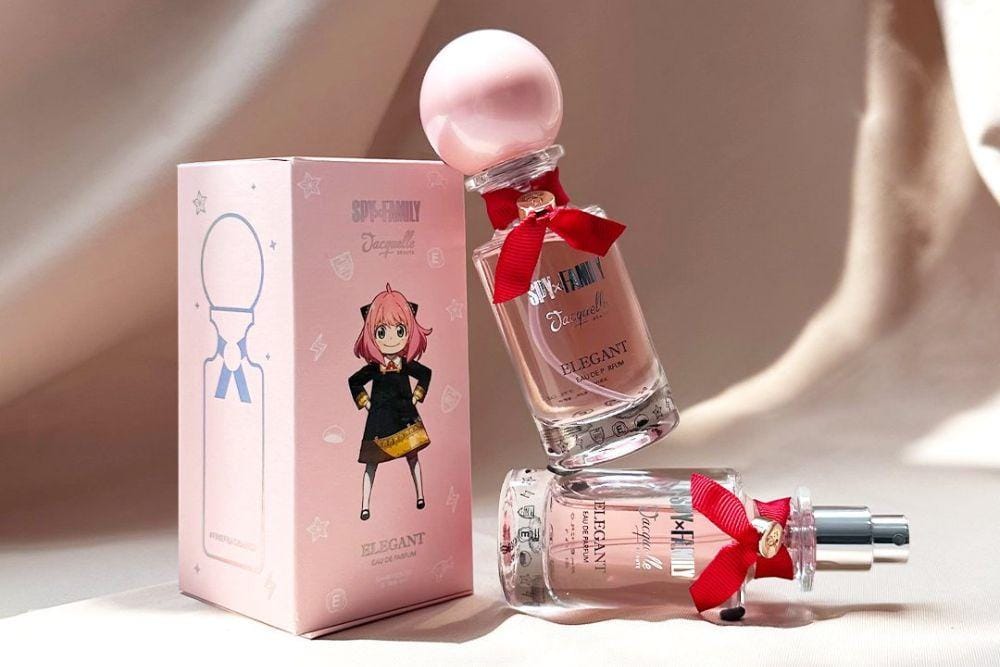
In Indonesia's current context, local perfume is beginning to play a similar role. At prices of around Rp200 thousand to Rp500 thousand, consumers can already buy an experience that was previously identified with foreign niche perfume houses priced in the millions of rupiah.
Perfume also has a different character compared with other consumer products. It is used every day, attached to personal identity, and gives a relatively intimate emotional experience to its user.
For that reason, perfume feels like a form of luxury that is close to daily life. Its value lies not only in the product's function but also in how a person wants to feel and be perceived.
However, the growth of Indonesia's local perfume cannot be explained merely as a coping mechanism amid economic pressure. If consumers were simply seeking cheap luxury, ordinary mass-market products should already be enough to meet that need.
What is happening instead points to a more specific change in preference. Indonesian consumers are starting to seek perfume that is more personal, more niche, and has a stronger identity than conventional mass-market products.
The Local Perfume Industry Is Moving Up
The growth of the local perfume industry was actually visible long before the social media trend exploded in recent years. According to the Compas Market Insight Dashboard, the transaction value of perfume on Indonesian e-commerce rose 69 percent in 2022 and grew again by 31 percent the following year.
That growth shows that Indonesia's perfume market has developed consistently and can no longer be viewed as a passing trend. The momentum continued through 2025.
Compas data published by Koran Jakarta in January 2026 recorded that perfume sales value on Indonesian e-commerce rose from Rp4 trillion to Rp6.1 trillion within a year. Sales volume increased from 84 million units to 115 million units, while the average product price rose from Rp47 thousand to Rp53 thousand per unit.
This combination shows that the growth of Indonesia's perfume market comes not only from a rising number of buyers but also from rising consumption value. Consumers appear increasingly willing to pay more for perfume considered to have higher quality and a stronger identity.
A similar pattern is also visible in the perfume market overall, both online and offline. A Central Insight report in March 2025 stated that the value of Indonesia's body fragrance market reached Rp5.8 trillion in 2022 and was estimated to increase to Rp6.4 trillion in 2023.
In the long term, the industry's growth is expected to continue. Strategy Helix estimates that Indonesia's perfume market will grow from USD723.2 million in 2025 to more than USD1 billion in 2030, at an average annual growth rate of 6.7 percent.
All of this is interesting because it is happening when much of Indonesian society is in fact growing more cautious about spending money.
Local Perfume Is No Longer Seen as a "Cheap Alternative"
For years, local perfume was often positioned as an economical alternative to imported perfume. Many products merely imitated the scents of global perfume houses at a lower price.
That approach is now beginning to change. Many local brands are building their own identity through storytelling, product design, and scent exploration that feels closer to the daily lives of young Indonesians.
HMNS, Saff & Co., and Alchemist have succeeded in building an audience by offering a more personal approach relevant to Indonesian urban lifestyles. Meanwhile, Rumah Atsiri Indonesia and Project 1945 take a different approach by translating Indonesian identity into distinctive scent characters.
They use local ingredients such as patchouli, vetiver, tropical flowers, and various Indonesian spices as part of their product identity. This context matters because Indonesia is one of the largest patchouli oil producers in the world, an ingredient widely used in the international perfume industry.
This shows that the growth of local perfume is supported not only by consumption trends but also by relatively strong access to raw materials.
Niche Perfume Does Not Have to Come From Europe
The most interesting change in recent years is the emergence of local niche perfume brands. Previously, niche perfume was identified with European perfume houses selling products worth millions of rupiah with an exclusive and prestigious image.
Now, that perception is starting to shift. Saudade and Alien Objects show that niche perfume can also come from Indonesia at far more realistic prices.
In the price range of Rp300 thousand to Rp500 thousand, consumers can already find perfume with a complex, artistic scent character and a strong identity. That price can even be around a quarter of foreign niche perfumes with similar positioning.
However, the appeal of brands like these lies not only in price. They offer scents that feel closer to the Indonesian consumer experience and do not always follow the scent references of European department stores or international luxury hotels.
Many consumers now actually seek scents that feel warm, tropical, intimate, and relevant to their daily lives. In this context, luxury is no longer always associated with imported products, but also with products that feel personal and have a strong identity.
Social Media Democratizes the Perfume Industry
The growth of local perfume also cannot be separated from changes in digital distribution. Before social media developed as it has today, the perfume industry tended to be exclusive because distribution was controlled by large department stores, premium retailers, and conventional media.
That situation made it hard for new brands to grow without large capital. Now, digital distribution has made the market far more open.
TikTok, Instagram, YouTube, and e-commerce allow small brands to build an audience directly without having to pass through traditional gatekeepers. Consumers are also increasingly accustomed to seeking perfume references through content creator reviews, fragrance communities, and social media discussions.
As a result, the decision to buy perfume is no longer influenced only by the prestige of global brands. Consumers are beginning to consider a product's story, its scent character, and its relevance to personal identity.
This change gives local brands great room to grow without having to wait for validation from luxury retailers to find a market.
Indonesia Is Building Its Own Definition of Luxury
The local perfume phenomenon reflects a larger change in consumption culture in Indonesia. In many creative sectors, local identity is now no longer seen as something less international.
More and more young Indonesians feel comfortable consuming products that feel close to their own context. That change is also clearly visible in the perfume industry.
Where standards of luxury once largely followed Western or Middle Eastern references, consumers are now more open to scents that feel tropical, warm, and relevant to everyday Indonesian life.
In the end, local perfume sells not only scent. The industry also sells an emotional experience, a story, and a new way of seeing modern Indonesian identity.
Interestingly, that change is happening precisely when economic pressure is high. This condition shows that the growth of local perfume is not merely a passing consumption trend.
Economic pressure does indeed push people to seek more realistically affordable forms of luxury. But the development of Indonesia's local perfume shows a bigger change than just a coping mechanism.
Young Indonesians are increasingly accustomed to buying products based on emotional closeness, identity, and cultural relevance. They no longer buy only a product's function but also the story that comes with it.
Local perfume is growing because it sits at the intersection of three factors at once: affordable luxury, local identity, and digital distribution. From there, Indonesia is slowly beginning to build its own language, taste, and definition of luxury in the perfume industry.
What This Means for Industry Players
The growth of local perfume reflects not only a change in consumption patterns but also serves as a road map for industry players who want to enter, compete, or maintain their position in this market.
For brands looking to start, the most realistic entry point is not through scent alone but also through a consistent story and identity. The market is already full of products with adequate quality, but few brands truly have a loyal audience with clear positioning.
Before formulating a product, a brand needs to first decide who it wants to speak to and what kind of identity it wants to build. This approach can be seen in The Story of Vivienne (TVOS).
Digital distribution does allow new brands to grow without large capital to enter department stores. But competition on TikTok and Instagram has also become far tighter than a few years ago.
In a situation like this, the important initial capital is not only the advertising budget but also the ability to build a community consistently.
For brands currently competing, Compas data shows that the men's perfume segment grew 70 percent in 2025, more than double the growth of the women's and unisex segments. This condition shows there is market space still wide open.
Brands that keep taking positioning that is too neutral or generic risk being left behind by players bolder in taking a specific identity.
The rise in the average price from Rp47 thousand to Rp53 thousand per unit also signals that consumers are no longer simply seeking the cheapest product. There is room to move up, as long as price increases are followed by stronger narrative, product experience, and brand identity.
Meanwhile, for brands already leading the market, the biggest challenge does not always come from cheaper competitors. The greater risk instead arises from changes in consumer expectations that move faster than a brand's ability to adapt.
Braven, a local brand that has become one of the best-selling men's perfume products on e-commerce, did not grow because of price alone, but because it succeeded in locking in masculine positioning at the right moment.
For that reason, maintaining a position in the perfume industry today means continuously rereading who the consumer is now, not just holding on to a formula that worked in the past.