K-Pop Exposure and the Rising Production Standard of Indonesian Music
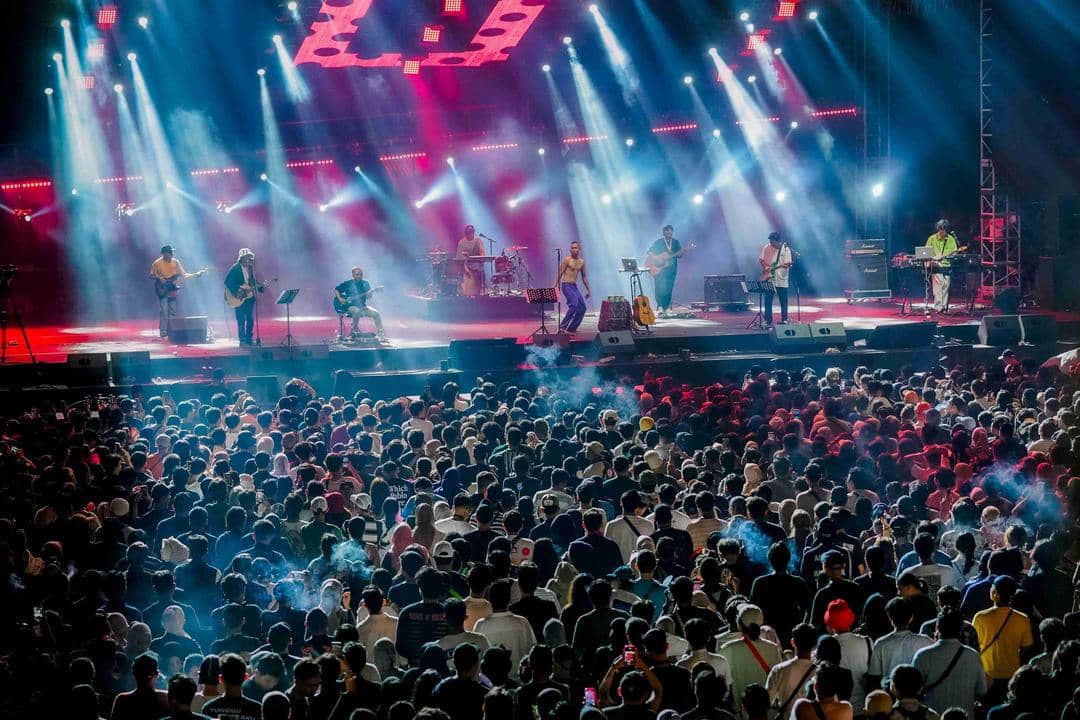
K-Pop has become a creative school without an official curriculum for young Indonesians, instilling high standards in music production, visuals, and community management since the early 2000s.
Long-term exposure to K-Pop has helped shape local creators and musicians with strong production quality, enabling Indonesian music to compete on national charts and meet global expectations.
Shifting listener preferences suggest a move from K-Pop consumption toward greater appreciation of high-quality local music, marking a turning point for Indonesia’s music industry as it becomes more rooted in its own identity.
For more than a decade, the debate about K-Pop in Indonesia has circled the same question: does this Korean wave threaten local music? The question was wrong from the start.
A more accurate question is this: what happens when the children who grew up with K-Pop start creating something of their own?
The answer is unfolding in front of us. And the result is more interesting than a mere market battle.
A School With No Official Curriculum
K-Pop is not just a music genre. It is a system.
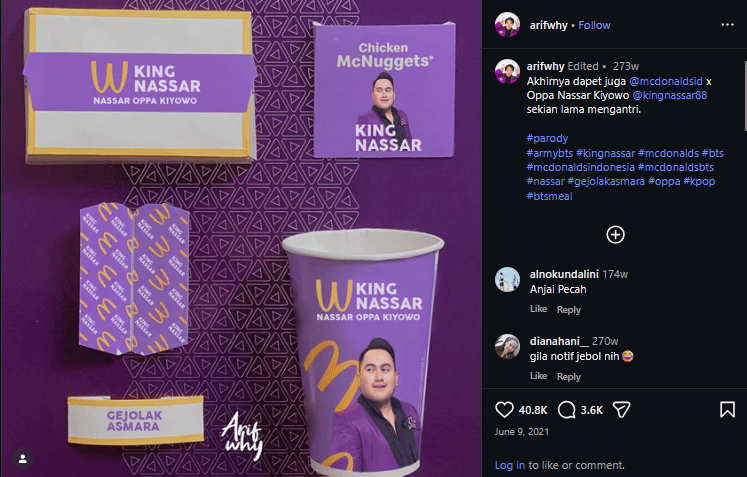
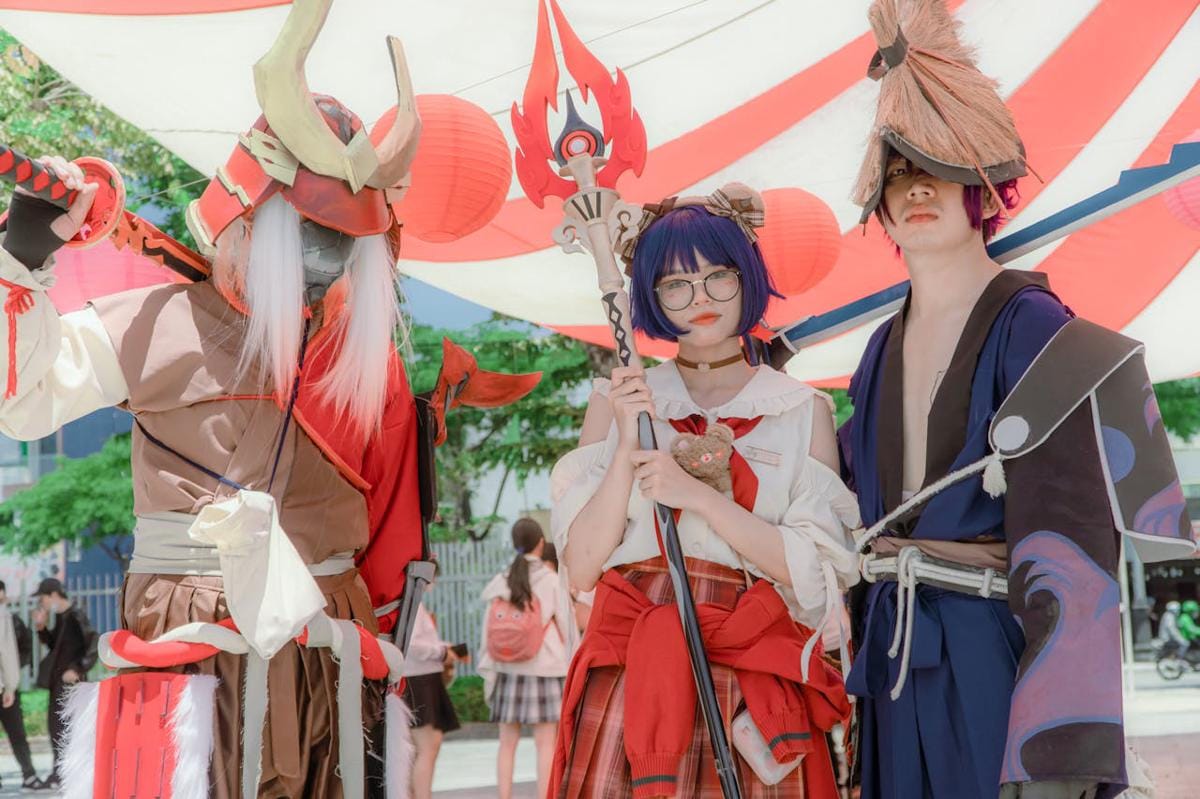
Since the first wave of the Korean Wave entered Indonesia through the Endless Love drama quadrilogy in the early 2000s, then exploded with BTS and BLACKPINK in the 2010s, millions of young Indonesians did not just listen. They learned. They watched behind-the-scenes footage, dissected choreography, analyzed song structure, studied how idols build connections with fans, and understood how content is distributed massively on social media.
K-Pop fandom is a creative school with no official curriculum, but with very high standards.
Within fan communities, young Indonesians learned to edit video with frame-by-frame precision. They learned visual branding from how Korean agencies construct album concepts. They learned copywriting from how fanbases build narratives on Twitter. They learned community management from how fandoms organize streaming parties, voting, and global campaigns.
Research from the Journal of Innovative and Creativity (2025) notes that creator exchange programs between Indonesia and Korea, including content production workshops, gave local players real exposure to Korean-style production and creative marketing standards. But that knowledge transfer had already happened far earlier, and far more massively, through a much more informal channel: through the fandom itself.
From Consumer to Creator
There is a consistent pattern in the journeys of many of today's Indonesian content creators.
They start in the fandom. They make fan edits, manage fanbase accounts, write long threads about their idols on Twitter. From there, they learn that good content has structure, has rhythm, and has the ability to build an emotional bond with an audience.
Kumparan once documented the journey of an Indonesian K-Pop content creator who started as a fanboy, then grew into a professional creator collaborating with fellow K-Pop creators in Indonesia. Stories like this are not the exception.
This phenomenon is not a coincidence. As local creative-industry platforms have noted, many content creators were born from fandom activity before eventually becoming widely known professionally. Music fans create mash-up videos, fan art, and derivative content that builds real skills, because the standards of fandom communities are genuinely strict.
The generation that grew up with K-Pop did not only inherit a high standard of taste. They inherited a production mindset.
Standards Carried Over, Identity Added
Notice what has happened to Indonesia's music landscape since the mid-2020s.
Musicians like Bernadya, Hindia, Sal Priadi, and Nadin Amizah dominate the Indonesian Spotify charts not because they imitate K-Pop. They dominate because they bring high production standards into music that is entirely Indonesian, in lyrics, emotion, and cultural reference. Bernadya released her debut album Sialnya, Hidup Harus Tetap Berjalan in June 2024 and immediately became Top Indonesian Artist at Spotify Wrapped 2024. She had just turned 20 when her song "Satu Bulan" surpassed 200 million streams on Spotify.
This is not a generational coincidence.
Young Indonesians who grew up with K-Pop were exposed to very high music production standards from a young age. They heard clear mixing, carefully considered song structures, and cohesive visual concepts. When they later made their own music or became producers, that standard was already embedded.
A Jakpat survey shows that 74 percent of Indonesian respondents now belong to a local artist fanbase, a figure far higher than the 40 percent for K-Pop. This does not mean K-Pop has been abandoned. It means local music now meets expectations that previously only international music could fulfill.
What Happens on the Charts Is Not Just Taste
Tsurezure Lab's analysis of the Spotify Daily Charts Top 50 across five Southeast Asian countries records that Indo Pop's share on Spotify Indonesia rose from around 60 percent in 2023 to around 78 percent in 2026. Over the same period, K-Pop's share fell from around five percent to low single digits.
The negative correlation between the growth of Indo Pop and the decline of K-Pop in Indonesia reaches a value of r = -0.79. Put simply: almost every time local music rises, K-Pop falls.
But this number does not tell what is really happening behind the movement.
What shifted is not only listener preference. What shifted is production capacity. When young Indonesians raised on K-Pop's high standards start creating their own content, with lyrics close to everyday Indonesian life, with references that do not need translating, and with audio quality that holds its own, the competition changes fundamentally.
Musicians from outside Jakarta such as Faris Adam, Toton Caribo, Niken Salindry, and Dek Aroel now stand alongside Bernadya and Hindia on the national charts. Previously, that was nearly impossible. Streaming platforms opened up distribution. But what allows them to compete on quality is a generation of listeners and creators whose standards were already shaped by long exposure to world-class production, including K-Pop.
When Fandom Meets Identity
There is one dimension often missed in this discussion. K-Pop taught young Indonesians something paradoxical: how to love a culture that is not their own with great intensity, while quietly sharpening the question of their own identity.
Many Indonesian K-Pop fans went through a moment when they realized that the emotional closeness they felt toward Korean-language songs could, and should, also be felt toward work from their own land. That process did not happen overnight. But the result is visible now.
Songs with a touch of regional language, with specific geographic references, with anxieties that do not need to be recoded into a Korean context, find listeners who are ready not only emotionally but also aesthetically. Listeners who know the difference between good production and careless production.
The rise of the hip-dut genre through Tenxi, the entry of music from Eastern Indonesia onto the national charts, and the popularity of koplo on streaming platforms all show that local identity no longer has to be packaged in a K-Pop or Western format to be widely accepted. Local identity itself now has a market.
Implications for Brands and Industry
For brands that have long relied on K-Pop names to reach young Indonesians, the figures above are a signal that needs to be read seriously.
The generation previously identified as "K-Pop fans" has not disappeared. They grew up. They are now creators, musicians, producers, and consumers far more conscious of their cultural choices. Their loyalty is no longer to a particular genre, but to quality and authenticity.
This is a far more structural shift than a mere streaming trend. Brands that understand it early will hold a very different position in Indonesia's cultural ecosystem over the next five years.
Not the End of K-Pop. But Indonesia's Turning Point.
Indonesia remained the world's third-largest K-Pop market in 2025, based on YouTube view data compiled by K-Pop Radar. BLACKPINK held a two-day concert in Jakarta in November 2025, and the tickets sold out quickly.
K-Pop is not leaving. But its position is changing.
From the only benchmark of quality to one among many references. From an object of consumption to raw material for shaping taste. From a destination to a point of departure.
The generation raised by K-Pop is not betraying their idols when they begin supporting Bernadya or Hindia or a musician from Makassar who just went viral on TikTok. They are doing the most logical thing: using everything they learned from the world's best industry, then building something that can only be born from Indonesia.
And that, in fact, is a greater achievement than simply winning on the charts.
Sources
Anwar, D.C.R. (in Ruang.id). "Musik Lokal Menggeser Dominasi K-Pop di Indonesia." Ruang, May 2026.
Industrikreatif.co.id. "Dunia Fandom di Era Digital: Komunitas, Kreativitas, dan Teknologi." PT. Industri Kreatif Nusantara, August 2025.
Jakpat. "Minat Musik K-Pop di Indonesia Menurun, Musisi Lokal Kini Lebih Dilirik." Cited in Metro TV News, May 2026.
Joecy.org. "Korean Wave Sebagai Penggerak Ekonomi Kreatif." Journal of Innovative and Creativity, Vol. 5(3), 2025.
K-Pop Radar / Space Oddity. "Korea, Japan, Indonesia Top K-Pop Markets in 2025." Cited in The Korea Herald, 22 January 2026.
Kumparan. "Bermula dari Fanboy, Berujung Jadi Kreator Konten K-Pop." Kumparan, March 2019.
The Southeast Asia Desk. "The K-Pop Era Is Over, Indonesia Writes the New Trend, and It's Rising." The Southeast Asia Desk, May 2026.
Tsurezure Lab [@tsurezure_lab]. Analysis of Spotify Daily Charts Top 50 across five Southeast Asian countries, 2023 to May 2026. Cited in The Southeast Asia Desk, May 2026.
VOI English. "Javanese Pop Enters Indonesian Music Listeners' Trends in 2024 on Spotify." VOI, December 2024.
Wikipedia. "Riizing Loud (RIIZE World Tour)." Accessed June 2026.