Gen Alpha and Perfume: Indonesia Has Its Own "Sephora Kids"
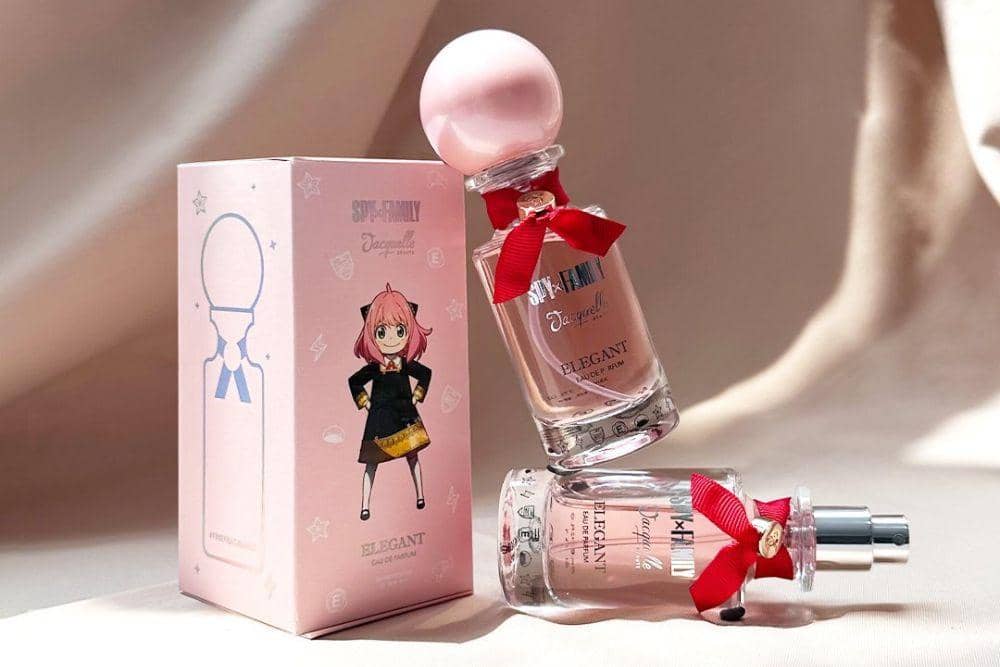
Indonesia’s version of the “Sephora Kids” phenomenon is emerging through the perfume trend among Gen Alpha, with children aged 10–18 lining up for products priced at IDR 100,000–300,000 in various cities.
Two key drivers are parents who build emotional associations with scents from an early age, and TikTok’s algorithm, which distributes content without clear age boundaries.
This trend raises concerns about the safety of chemicals such as alcohol and phthalates on children’s skin, as well as the ethical responsibilities of brands, marketplaces, and parents in protecting young consumers.
Saturday morning. At Pondok Indah Mall in Jakarta on Saturday (16/5/2026), a queue had formed before the mall even opened. As posted by the account @jakselloud, most of those waiting were not late teens or college students. Most were aged 10 to 18. All of it for a single bottle of perfume priced between Rp100,000 and Rp300,000. The queue is said to have stretched out as early as 8 a.m., though one Instagram user commented that the line actually started at 5 a.m.
This scene was not a one-time event. Nor is it unique to a single city. It is the Indonesian version of a phenomenon that, a year earlier, had already shaken public conversation in the West: Sephora Kids.
What Sephora Kids Is, and Why We Need to Talk About It
Sephora Kids is a viral term describing the trend of Gen Alpha children, generally aged eight to 14, obsessed with buying and using expensive skincare and cosmetic products from retailers like Sephora and Ulta. The trend has triggered serious concern in many countries. Humanium.org, an international children's rights organization, noted that this trend presents a double risk: physical, because the ingredients in adult products are not necessarily safe for children's skin, and psychological, because it encourages adultification (forced maturation through consumption patterns) from an early age.
In Indonesia, the product is not anti-aging serum or retinol. The product is perfume. Three types of brands dominate the conversation: a local perfume brand close to the gaming world, a local perfume brand that went viral on TikTok, and a luxury European perfume brand whose dupes circulate widely on marketplaces. The mechanism is similar, and so are the risks, even more complex in some aspects.
Interestingly, this focus on perfume is not unique to Indonesia. A survey by The Benchmarking Company in August 2024 of more than 2,600 parents found that 71 percent of children aged 7 to 17 had at some point asked for an expensive perfume product as a birthday or holiday gift. Perfume was in fact the most frequently requested category, ahead of specific cosmetic brands, Sephora/Ulta gift cards, and hair care devices. In other words, what is visible in Indonesia is not a perfume anomaly amid a global trend dominated by skincare, but a local version of a global pattern that turns out to be driven by perfume as well.
Three Ways This Trend Reaches Children
These three brands do not merely sell fragrance. Each serves a different psychological need in children who are forming their identities.
The first brand is a local perfume brand that built its entry point through collaboration with the gaming world. Partnerships with well-known esports teams and the launch of special-edition variants are no coincidence. This strategy grants "social permission" to boys to care about fragrance, something that in previous generations was often considered irrelevant to them. The price is fairly affordable, but the products often sell out. The long queues at its pop-up stores are not just transactions but social events that mark community.
The second brand reaches a wider market through TikTok virality. Its price is more affordable and its distribution is even, reaching small towns. This is what makes it a symbol that the trend is not a Jakarta-only phenomenon.
The third brand, a luxury European perfume, operates on a different layer. This brand is known from creator content and, more importantly, from parents' cabinets. Some children buy the original product. Some buy dupes from marketplaces. Others, and this is the most concerning, do not know the difference. They carry dupes because the price matches their pocket money, but they lack enough knowledge to verify what they are buying.
Two Mechanisms Driving This Trend
To understand why this trend grows so fast, we need to look at two forces working at the same time: one coming from inside the home, the other from the phone screen.
Parental Priming: Parents Planting the Seed Without Realizing
Millennials and Gen Z are Indonesia's first generation with high fragrance literacy. Perfume collections are already common in the bathrooms of urban households. Spraying perfume on a child before going to an event is a small habit that seems trivial.
But from a neuroscience perspective, this habit has a far deeper impact than we assume. The sense of smell is the only sense with a direct pathway to the amygdala and hippocampus, the brain's centers of emotion and memory.
The sense of smell, unlike other senses, does not pass through the thalamus and is routed directly to the limbic system, including the amygdala (the emotion center) and the hippocampus (the memory center) (Sullivan et al., 2015). Because of this "hardwiring," memories triggered by scent tend to be more emotional and originate from an earlier period in a person's life than memories from other senses (McDonough, 2024). The association between fragrance, a sense of safety, and "important moments" can become embedded in a child's memory long before they know a brand.
When these local perfume brands appear on TikTok, they are not introducing something foreign. They are activating something that parents planted long ago without intending to.
TikTok as an Accelerator of Adultification
The second mechanism works from the outside. TikTok flattens the geography of consumption: a child in Jogja or Wonosobo and a child in Jakarta consume exactly the same content. Beyond that, TikTok's algorithm significantly accelerates the consumption timeline.
Perfume in TikTok content is never sold as mere fragrance. It is always linked to personality, aura, and rizz, all the language of maturity and attraction. This is a mechanism identical to the global version of Sephora Kids: it is not children who want to be naughty, but an algorithm that does not recognize the concept of age-appropriate content. The same content appears on the screens of young adults and on the screens of elementary school children because the algorithm does not distinguish between the two.
One more thing makes this perfume trend different from, for example, the Labubu trend also favored by Gen Alpha. Labubu is dominated by girls. Perfume reaches both boys and girls at once, largely thanks to gaming collaborations that open the door for boys to enter this category.
Parents Are Split, and Both Sides Have a Point
Parents' responses are not uniform. This is where the debate becomes most interesting and most honest.
Some parents see an interest in fragrance as a legitimate form of self-expression that can be guided. The TikTok account @ichiscent, run by a young child who reviews perfume, is a frequently cited example. The child's father actively guides and supports the hobby. This view represents the group that believes an interest in fragrance can be a healthy space for identity exploration, as long as there is conscious parental involvement.
Other parents feel the situation is not that simple. A Threads post from a mother that was widely reshared sums up this unease:
"[brand] please stop running campaigns that affect these elementary school kids. My fourth-grader used to wear a children's perfume, now smells like a grown man.. I don't want to buy it but what can I do, all of their schoolmates use it."
This complaint contains two things at once. First, an objection to age-appropriateness. Second, and this is important, an implicit acknowledgment of real peer pressure even at the elementary school level. This parent is not merely disagreeing with their child's aesthetic choice. They face a real dilemma between the values they want to instill and the social pressure their child feels every day at school.
Neither of these groups is entirely wrong. One sees potential; the other sees risk. A productive debate must in fact place both within a single frame.
Risks That Have Not Been Discussed Much
Public discussion of this trend has mostly stopped at questions of aesthetics and identity: is it "appropriate" for an elementary school child to wear adult perfume? That question matters, but there is another dimension that is more concrete and more urgent, namely the risk to physical health.
The account @underagum on Threads wrote something that deserves wider attention:
"The chemical composition of perfume often isn't explained, and there are several perfume ingredients that are safe for adults but dangerous for kids. Something as simple as alcohol can be an irritant for a child's still-sensitive skin. Not to mention phthalates that disrupt a child's hormones."
This concern is not excessive. Alcohol functions as a solvent in almost all spray perfumes. On a child's skin, whose protective layer is not yet as strong as an adult's, alcohol can become an irritant that causes irritation and dryness. More serious are phthalates, chemical compounds used as fragrance binders so that scent lasts longer.
Several types of phthalates, including DEP and DBP, function as scent retainers in cosmetics and perfume (Braun et al., 2013). Phthalates fall into the category of endocrine disruptors, or hormone-system disruptors that can potentially hinder a child's hormonal development, especially those still in the growth phase.
In humans, phthalate exposure early in life is associated with a number of findings: male infants show a shorter anogenital distance, girls experience delayed puberty (Braun et al., 2013), and children under the age of seven show changes in gray matter and white matter volume (Werder et al., 2025). A child's brain is indeed highly vulnerable to toxicants like these, because their blood-brain barrier and metabolic system are not yet mature (Werder et al., 2025).
Children's vulnerability to phthalates is even higher than it appears on the surface. Braun et al. (2013) noted that children absorb phthalates in larger doses per unit of body weight than adults, because they need more food and water relative to their body mass, frequently put their hands in their mouths, and have a higher respiratory rate.
Furthermore, this impact is not even across sexes. Werder et al. (2025) found that the effect of phthalates on gray matter appears stronger in boys. This finding adds an important dimension to the discussion of a perfume trend that now reaches boys through gaming collaborations: they are not only a new commercial audience but also possibly more biologically vulnerable to the impact of phthalates.
Similar risks have also begun to be documented in care products consumed by children through social media trends. Hales et al. published the first study specifically examining TikTok skincare videos from creators aged 7 to 18. On average, a child used six products, some even more than 12, at an average cost of USD 168 per month (around Rp2.7 million), with some over USD 500. The most-watched videos contained an average of 11 active ingredients that risk causing irritation, sun sensitivity, and potentially lifelong contact allergies. Although the object is skincare, the pattern is relevant to perfume: an algorithm-driven trend pushes children to consume products with active ingredients that are not necessarily safe for a still-developing body.
The global Sephora Kids framework identifies the same risk: the ingredients in adult cosmetic products have not been verified as safe for young users.
What worsens the situation in Indonesia is the matter of dupe and counterfeit perfumes from marketplaces. These products, which are in fact the most affordable for the children's segment, generally do not have a clear composition label. The licensing process with the Food and Drug Monitoring Agency (BPOM) is also not as complex as for the original products, so unsafe contents are harder to detect before the product reaches the consumer. A child who does not know the difference between a dupe and the original, and buys based on price, in fact faces the greatest risk.
Where Does Responsibility Lie?
This question does not have a single answer. But public conversation needs to place responsibility in the right place, not only on parents' shoulders.
The local perfume brands driving this trend need to consider the ethical limits of marketing that indirectly reaches children far below the intended target demographic. Gaming collaborations that target teens and young adults effectively attract a far younger audience. When pop-up queues are dominated by elementary school children, that is a signal to be responded to, not celebrated.
Marketplaces like Shopee and Tokopedia need stricter guardrails for perfume products, especially those with misleading listings or that implicitly target impulse purchases by children with limited pocket money. The absence of adequate composition information on counterfeit products is a gap that needs to be closed from the platform side.
Parents face a difficult irony. Unintentional parental priming is one of the entry points of this trend. Awareness that small daily habits, such as spraying perfume on a child, are part of an unwritten consumption curriculum needs to become part of a broader digital parenting literacy.
The algorithm is the factor most often missed in discussion. TikTok has no mechanism to distinguish perfume content for young adults from content that reaches children's screens. This is not a problem parents can solve alone, however aware and active they are.
When "Smelling Like a Grown Man" Becomes a Sign of the Times
The fourth-grader who once wore a perfume designed specifically for children now wants something different because their friends wear it.
Not because they are seeking comfort spending amid economic pressure. Not because they understand what adultification is. The reason is at once far simpler and far more systemic: the algorithm shows the same content to everyone regardless of age, parents have unknowingly planted an emotional association with fragrance long ago, and clever brands know exactly how to touch that point.
Indonesia has its own Sephora Kids. They smell of viral perfume, not drugstore foundation. They stand in line for hours on a Saturday morning, some from distant cities, for a small bottle that promises something bigger than mere scent: recognition, community, and identity.
The question is no longer whether this phenomenon deserves attention. The question is who is willing to take part of the responsibility for making sure these children are safe within it.
Sources:
Braun, J. M., Sathyanarayana, S., & Hauser, R. (2013). Phthalate exposure and children's health. Current Opinion in Pediatrics, 25(2), 247–254.Hales et al. (2025). TikTok teen skin care routines are harmful. Northwestern University.
McDonough, M. (2024, April). The connections between smell, memory, and health. Harvard Medicine Magazine.
Sullivan, R. M., Wilson, D. A., Ravel, N., & Mouly, A.-M. (2015). Olfactory memory networks: From emotional learning to social behaviors. Frontiers in Behavioral Neuroscience, 9, 36.
The Benchmarking Company. (2024, August). Gen Z's & Alphas' parents tell all on their kids' beauty obsessions. Global Cosmetic Industry.
erder, E. J., Lu, K., Liu, C.-W., Thistle, J. E., Rager, J. E., Li, G., Wu, Z., Li, T., Wang, L., Sandler, D. P., Gilmore, J. H., Piven, J., Zhu, H., Lin, W., & Engel, S. M. (2025). Early life phthalate exposure impacts gray matter and white matter volume in infants and young children. Environmental Research, 279, Article 121826.