34% of Indonesians Now Rely on TikTok for News
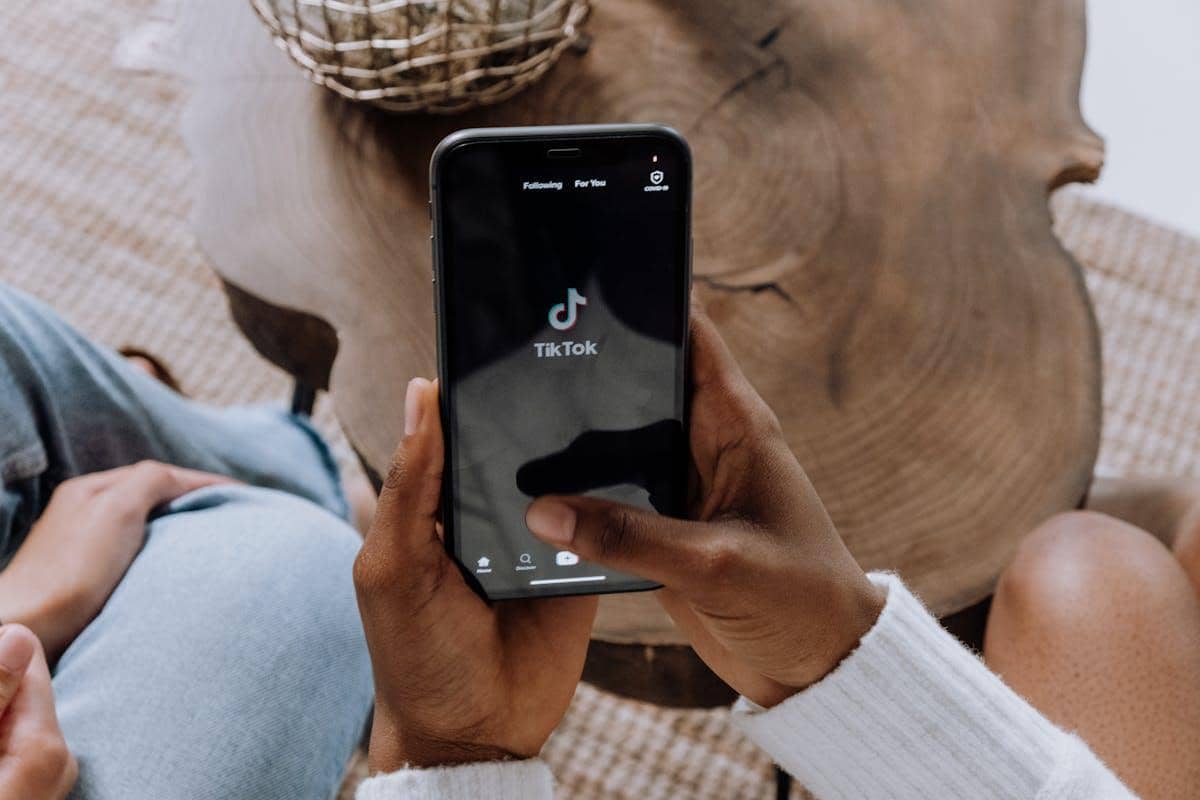
The use of TikTok as a news source in Indonesia surged from 11% in 2021 to 34% in 2025, making it the fastest-growing platform for information consumption.
Around 51% of young people trust content creators more than conventional media, alongside the rising consumption of short-form video news, which is perceived as more relevant and authentic.
Although 92% of social media users have been exposed to misinformation, the public continues to rely on platforms such as TikTok. However, during major crises, audiences tend to return to mainstream media in search of greater accuracy and reliability.
Five years ago, only 11% of Indonesians got their news from TikTok. Today, the figure is 34%. According to the Reuters Institute Digital News Report 2025, analyzed by the News and Media Research Centre at the University of Canberra, more than 60% of Indonesians distrust or feel ambivalent toward the news they read or watch. Over the same period, TikTok grew as a news source from 11% of users in 2021 to 34% in 2025. That is a 23-point rise in four years, making it the fastest-growing platform of all. Five years of data explain why, and why this is not a problem that can be solved by making content more viral.
Imagine you hear about major flooding in your hometown. You do not open a news site. You open TikTok.
This is not a hypothetical scenario. The pattern has been documented by at least three different research institutions over the past five years, and the numbers are all moving in the same direction.
Not a New Trend, but One That Has Been Running for a Long Time
The Ministry of Communication and Information Technology (Kemkominfo), together with Katadata Insight Center, has been recording the symptoms since 2020. In the 2022 Indonesia Digital Literacy Status Report, more than 70% of respondents named social media as their primary source of information. Only 30% still relied on print and online media.
What stands out more: print media and radio are now trusted by less than 1% of respondents. Television still holds on, but its figure shrank to 43.5% in 2022.
TikTok showed signs of its rise long before it became a topic of public discussion. Its use as an information platform jumped from 17% (2020) to 40% (2022), nearly doubling in two years.
This figure matters because it proves that what is happening today is not the result of a single trend or one event. It is the accumulation of a consistent shift that began at the start of the decade.
A Surprising Pace
The Reuters Institute 2025 data confirms what was already visible in 2022. As many as 57% of Indonesians use social media as a general news source, and 40% rely on it as their primary news source.
One figure speaks loudest: 75% of Indonesian news consumers admit they sometimes, occasionally, or often avoid mainstream news. This is higher than the 42-country average in the same survey (71%) and higher than Australia at 69%.
They avoid news not because they do not care. Reuters Institute research found that the biggest reason is fatigue: too much political content, too much coverage of conflict, too far removed from daily life.
WhatsApp is still used by 43% of Indonesians for news, but the figure has dropped 17 percentage points compared to five years earlier. Facebook sits at 39%, seen as a platform for an older generation. TikTok has climbed to 34%, specifically for consuming news and information, not just entertainment.
Why Are Audiences Shifting Who They Trust?
The Reuters Institute Digital News Report 2026 offers a sharper explanation.
As many as 51% of respondents aged 18 to 24 said they pay more attention to content creators and personal figures than to conventional media, which was chosen by only 39%. Amy Ross-Arguedas, a researcher at the Reuters Institute for the Study of Journalism, noted that young people view creators as more relatable, relevant, and authentic figures compared to newsrooms.
It is not only about who is speaking, but also how they speak. Video-based news consumption rose from 52% (2020) to 65% (2025) globally, and this phenomenon is far stronger in Asia, including Indonesia, India, and Thailand, than in European countries. Short, audiovisual, and personal formats fit precisely with how young Asians consume information today.
Reuters Institute 2026 also recorded a significant decline in news interest: only 35% of young people have high interest in news, down from around 60% a decade ago. As many as 42% admit they often or sometimes avoid news altogether.
A Paradox That Cannot Be Ignored
This is where the most critical figure appears.
The 2022 Indonesia Digital Literacy Status Report (Kemkominfo and Katadata Insight Center) noted that 92% of social media users had encountered hoaxes on these platforms. By contrast, only 16% had encountered hoaxes on online media.
The most trusted platform is the platform that spreads the most false information.
This is not a strange contradiction. It is the result of how trust works in the age of social media: people do not always choose the most accurate source. They choose the source that feels closest, most relevant, and least exhausting.
Research from ISEAS (Institute of Southeast Asian Studies, 2025) on the 2024 Presidential Election adds another dimension. TikTok's algorithm tends to reinforce beliefs users already hold, forming echo chambers, a condition in which a person is only exposed to information that aligns with their own beliefs and is closed off from different viewpoints. This is precisely what limits exposure to different perspectives. In a political context, this mechanism accelerates the spread of disinformation, even when users feel they are consuming accurate information.
The Algorithm as Information Infrastructure
Indonesia became the second-largest TikTok user base in the world as of February 2025, with 107.7 million users, surpassing the number of Facebook users in the same country.
That scale changes the nature of the problem. A platform whose algorithm is optimized for watch time, not for verification, has now become the primary information infrastructure for much of Indonesian society. That is a technical statement, not a moral one. But the consequences are felt in any sector that depends on the accurate distribution of information: politics, public health, consumer protection.
What makes this problem heavier: 92% of social media users had been exposed to hoaxes in 2022, when TikTok's user base in Indonesia was still far smaller than 107.7 million. The platform's scale has grown; data on the rate of hoax exposure at this new scale is not yet available, but there is no structural reason to assume the figure will shrink.
Verification: What the Algorithm Cannot Replicate
In the midst of this shift, there is one function that has not moved to the platforms.
Komaruddin Hidayat, Chair of the Press Council, stated at the 2026 World Press Freedom Day commemoration in Jakarta that mainstream media remains the public's primary reference when facing a major crisis. When accuracy becomes the priority and information must be reliable, audiences return to spaces that have standards of verification and editorial accountability. That is a function difficult for algorithm-based platforms to replicate, and in many ways it grows more important as exposure to hoaxes spreads.
What remains the work: presenting those standards in the format audiences choose today. Reuters Institute 2026 noted that the balanced analytical news format, long the standard of journalism, now competes with more partisan and entertaining approaches. That is not a verdict on the format's relevance, but a description of a new competitive landscape. The verification standards that media possess are needed most, on the condition that they appear where the audience is.
What This Means for Brands and Policymakers
For brand executives: audiences are not only switching platforms. They are switching the type of figure they trust. Content creators are no longer just promotional influencers; they are a primary news source for the largest segment of Indonesia's population.
For policymakers: the Indonesia Digital Literacy Index stood at 3.54 out of 5 in 2022, up slightly from 3.49 in 2021 (Kemkominfo). That increase does not keep pace with the speed of the shift in how society consumes information. In an ecosystem where 92% of social media users have been exposed to hoaxes, slow-moving literacy figures are a structural risk.
Sources
Ministry of Communication and Information Technology (Kemkominfo) and Katadata Insight Center. Indonesia Digital Literacy Status 2022. Published 1 February 2023. Methodology: national survey. Reported by Asia News Network / The Jakarta Post.
Park, Sora, Fisher, Caroline and Mardjianto, Lilik. "Social media dominates news consumption in Indonesia as TikTok surges." 360info, 16 July 2025. Based on the Reuters Institute Digital News Report 2025, analyzed by the News and Media Research Centre, University of Canberra. Methodology: YouGov survey, January to February 2025.
Park, Sora, Fisher, Caroline and Mardjianto, Lilik. "Social media domination in Indonesians' news consumption." The Jakarta Post, 15 July 2025.
Aranditio, Stephanus. "Young People Now Trust Content Creators More Than Media Analytics." Kompas.id, 14 May 2026. Based on the Reuters Institute online discussion, "From Creators to Newsrooms: How Young Audiences Interact with News," 14 May 2026, and the Reuters Institute Digital News Report 2026.
Jalli, Nuurrianti, Unggraini, Ika Ningtyas and Setianto, Yearry Panji. "How TikTok's Visual Politics Shaped Indonesia's 2024 Election." ISEAS Perspective, No. 52, 21 July 2025. Institute of Southeast Asian Studies, Singapore.
Newman, Nic et al. Digital News Report 2025: Overview and Key Findings. Reuters Institute for the Study of Journalism, University of Oxford.