- 18 to 24 years: 32.83 million
- 25 to 34 years: 32.08 million
- 35 to 44 years: 24.3 million
- 45 to 54 years: 10.69 million
- 55 years and above: 8.1 million
Indonesia TikTok Demographics: 4 in 10 Users Are 35 or Older
Intinya Sih
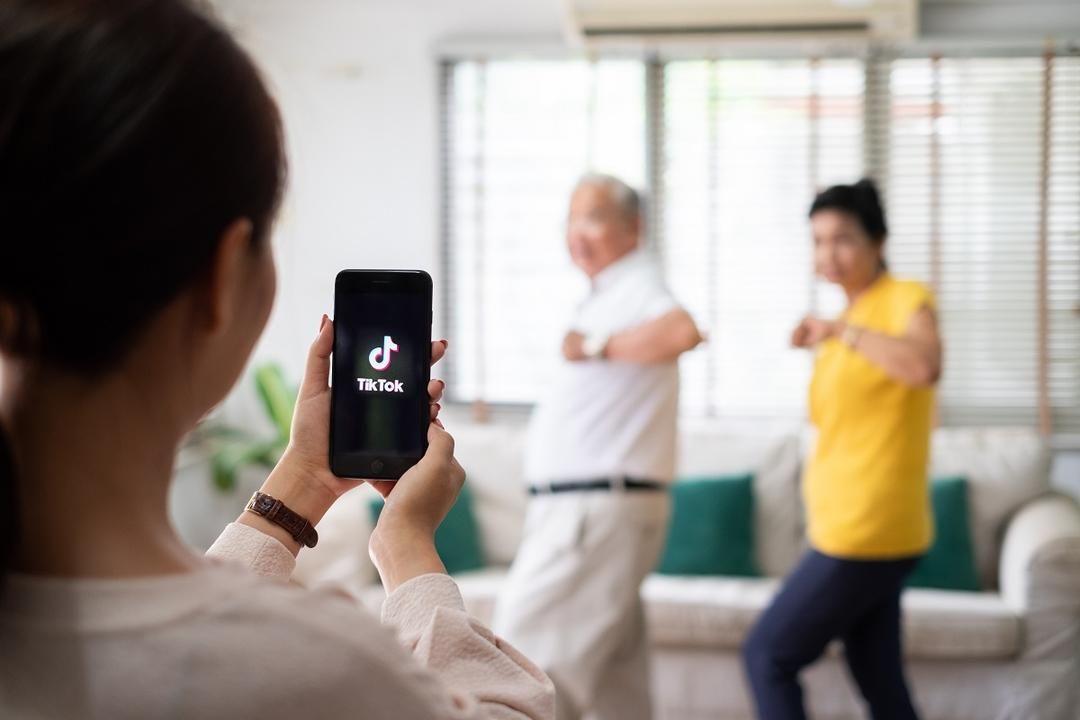
Four in ten TikTok users in Indonesia are aged 35 and above, equivalent to 43 million people—signaling that the platform is no longer dominated by Gen Z.
The data points to a major demographic shift across social media: Facebook is now primarily driven by users aged 35–55, while WhatsApp and YouTube remain cross-generational platforms with high usage intensity.
For brands, marketing strategies need to evolve accordingly. Campaigns that focus solely on Gen Z audiences on TikTok risk overlooking the segment with the strongest purchasing power: consumers aged 25–44.
This section summary was AI-assisted and reviewed by our editorial team.
The framing that "social media is only for young people" no longer holds true for the Indonesian market. Four out of ten TikTok users in Indonesia are aged 35 and above. That translates to roughly 43 million TikTok users in this age range—a figure larger than the entire population of Malaysia.
For the past decade, targeting Indonesian social media users almost always meant targeting young people. That assumption has now fallen behind the data. Brands still designing campaigns around this outdated equation are reaching a market far smaller than the one actually available.
Context: The Scale of Social Media in Indonesia
To understand why these demographic findings matter, it helps to look at the bigger picture first.
The average Indonesian spends 3 hours and 32 minutes on social media every day, according to Hashmeta (2025). Digital 2026: Indonesia, released by We Are Social in November 2025, records a slightly different figure of 21 hours and 50 minutes per week. The discrepancy is expected, since survey methodology and app tracking rarely produce identical numbers. What stays consistent between them is the scale: Indonesia ranks among the countries with the highest social media usage time in the world.
Indonesia's total active social media user base reached 191.3 million people as of early 2025, with a penetration rate of 68.7 percent of the total population and 7.6 percent growth compared to the previous year. On top of that, the average active user accesses 7.7 different platforms each month—a sign that user attention is not concentrated in a single place.
But that 3.5 hours per day is not one homogeneous block of attention. The time is split across different platforms, at different hours, and among age groups far more diverse than commonly assumed. This is where the old assumption begins to crack.
Who Is Actually on TikTok in Indonesia
TikTok Indonesia recorded 108 million users aged 18 and above as of early 2025, according to The Global Statistics (April 2025). Broken down by age group, the picture looks like this:
Three numbers from this data deserve closer attention.
First, the 18 to 24 age group—often considered TikTok's core audience—accounts for only 30 percent of total users. That means just three in ten Indonesian TikTok users come from this group, not eight in ten as media planning assumptions often suggest.
Second, when you add up all users aged 35 and above, the total reaches roughly 43 million people, or 40 percent of the entire user base. This is larger than the 18 to 24 group and larger than the 25 to 34 group individually. The 35 to 44 segment, numbering 24.3 million, deserves special note because it holds the most stable household purchasing power in Indonesia. These are heads of households, parents of school-age children, and financial decision-makers.
Third, the 55-and-above group contributes 8.1 million active users. To grasp the scale of that figure, 8.1 million is larger than the entire population of Singapore. In other words, a group that typically falls off the radar of any TikTok campaign turns out to be the size of a city-state.
Facebook Shows a Similar Pattern
TikTok is not the only platform experiencing a demographic shift. Facebook is the earliest and clearest example of how a platform's age composition can change dramatically over time.
Indonesian Android users spent an average of 12 hours and 50 minutes per month on Facebook in November 2024, according to Statista. That duration is substantial, and today much of it is driven by a different age group than it was a decade ago.
Young Indonesians abandoned Facebook as their primary platform long ago, but that hasn't left it empty. What remains is an active ecosystem for religious communities, alumni groups, local marketplaces, and regional news consumption—with the 35 to 55 age group as its main driver.
WhatsApp and YouTube: Cross-Generational Connectors
Not every platform has undergone a demographic shift. Some were cross-generational from the start.
Nine out of ten Indonesian internet users are active on WhatsApp every month—across ages, regions, and income levels. Average daily time on WhatsApp reaches 1 hour and 52 minutes, just one minute below TikTok (1 hour 53 minutes), according to Digital 2026: Indonesia, released by We Are Social in November 2025.
YouTube shows a different pattern. The average YouTube session lasts 16 minutes and 49 seconds—the highest of any platform in Indonesia, followed by Snack Video in second place. It is a lean-back platform (where the audience watches passively for longer durations) used widely across all productive age groups.
A consistent pattern emerges across all platforms: young people tend to open apps frequently in short bursts, while the 35-and-above group opens them less often but stays longer each time.
Three Generations, Three Ways of Consuming Content
Although total daily time is similar, different age groups fill those 3.5 hours in very different ways.
TikTok is opened an average of 12.7 times a day per active user—far higher than Instagram at 7.8 times and Facebook at 5.3 times, according to Hashmeta (2025). But this average hides significant variation between age groups. Users aged 18 to 24 tend to open TikTok in short sessions scattered throughout the day, producing high open frequency but short individual sessions. Users aged 35 and above, by contrast, open the app less often but spend more time each visit.
The differences also show up in active hours. Indonesian social media traffic peaks twice a day: first between 7:00 and 9:00 a.m., and again between 6:00 and 9:00 p.m., according to Jakpat (2024). What differs between age groups is not the timing but the platform and context. In the morning, younger users tend to scroll TikTok and Instagram before heading to work or class, while the 35-and-above group checks family WhatsApp groups and Facebook more often. In the evening, younger users shift to TikTok and YouTube Shorts, while older users consume more long-form YouTube and community content on Facebook.
On content format, video fills 78 percent of social media time in Indonesia, according to Hashmeta (2025). This shows that video is no longer just one option in a content strategy—it has become the default format. But the type of video consumed varies by platform. In Jakpat's 2024 survey Indonesia Mobile Entertainment & Social Media Trends, 42 percent of respondents considered TikTok the most entertaining platform, while one in four chose Instagram as the most informative. This indicates that users already hold different expectations for each platform and know exactly where to go for different needs.
What This Means for Brands?
There are three direct implications of this demographic shift that brands need to consider.
First, "targeting Gen Z on TikTok" is no longer a sharp enough strategy. Of TikTok Indonesia's 108 million users, 43 million—or 40 percent—are aged 35 and above. A campaign that automatically equates TikTok with Gen Z misses the very group that holds the largest household purchasing power.
Second, Facebook should not be crossed off the media plan so quickly. For product categories such as consumer goods, fintech, insurance, and education that target heads of households, Facebook still offers high reach. What has changed is not Facebook's relevance in absolute terms, but its audience profile.
Third, social commerce is not just a young people's story. Indonesia's social commerce reached USD 14.8 billion in 2024 and is growing 34 percent per year, with TikTok Shop leading the market at a 43 percent share, according to Hashmeta (2025). Importantly, most of that purchasing power sits within the 25 to 44 age group—precisely the group rarely described in everyday narratives as a "social media market." On top of that, 72 percent of Indonesian consumers trust user-generated content more than content created directly by brands, making strategies that rely on creators from relevant age groups increasingly important.
This also aligns with brand discovery data. Social media ads (37.3 percent) and social media comments (32.6 percent) have become the second- and third-largest sources of brand discovery, just behind search engines (38.3 percent), according to Digital 2026: Indonesia. In other words, social media has become the starting point of the purchase journey—and that starting point is now passed through by every age group.
Conclusion
The "social media is for young people" framing is more than a decade old, and the data has changed.
The 3.5 hours per day on social media are now divided almost evenly across all of Indonesia's productive age groups, with different platforms and consumption patterns. The sharper question for brands is therefore no longer "how do we reach young people on social media," but "which age group, on which platform, is most relevant for our product, and how do we speak to each one effectively." Ad budgets still resting on old assumptions will ultimately target a segment far smaller than what the market actually offers.
Data sources: We Are Social, Digital 2026: Indonesia (November 2025); Jakpat, Indonesia Mobile Entertainment & Social Media Trends H1 2024; Hashmeta, Social Media Landscape Indonesia (2025); The Global Statistics, Indonesia TikTok Statistics 2025 (April 2025); Statista, Facebook monthly time spent Indonesia (November 2024); Meltwater, Social Media Trends Indonesia (2024).