Local Music Dominates 78% of Indonesia's Spotify Charts as K-Pop Fades
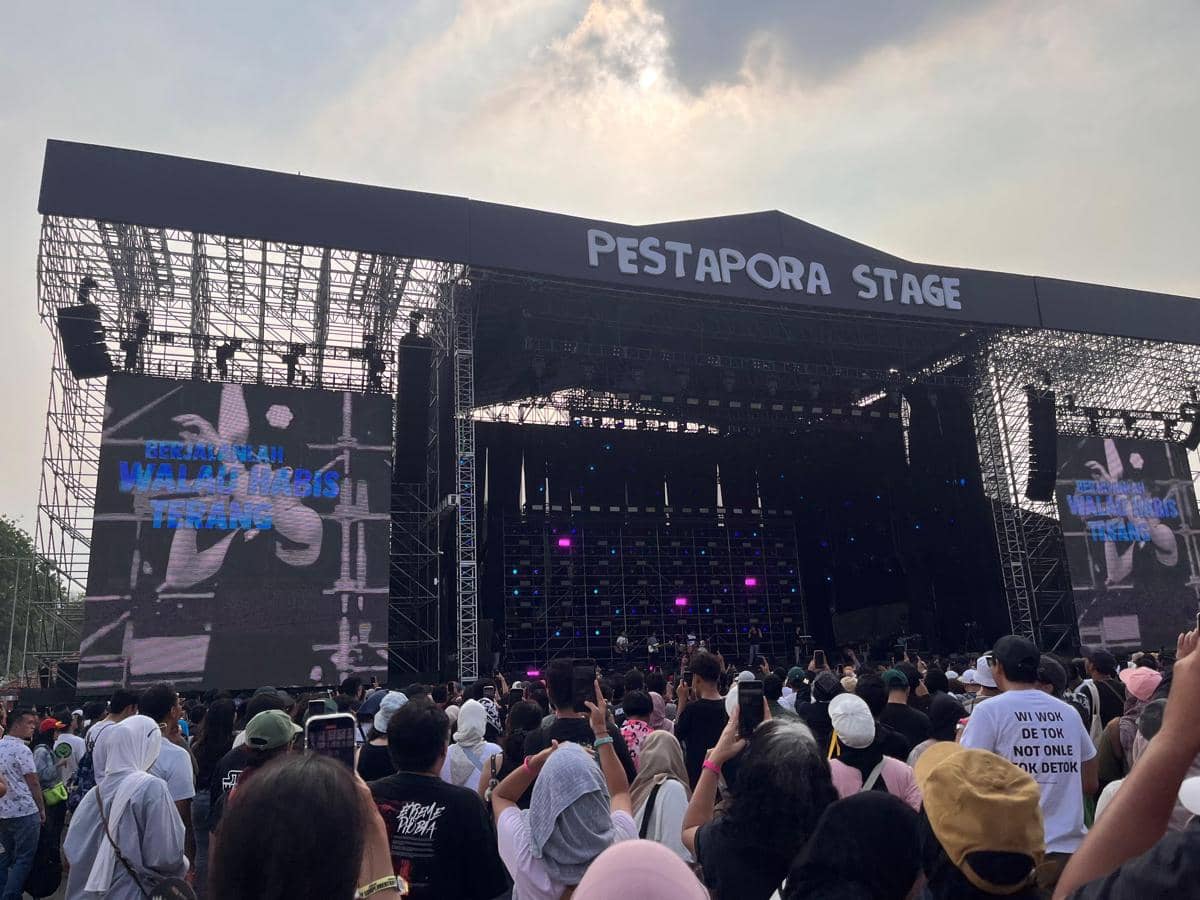
Local Indonesian music dominated 78% of Spotify’s charts in 2026, up from around 60% in 2023, while K-pop’s share dropped sharply to single digits.
This dominance was driven by local musicians such as Hindia, Bernadya, and Idgitaf, who occupied eight of the top ten spots, signaling that listeners’ tastes are becoming more diverse and closer to their everyday lives.
The strength of local music is fueled by lyrics that resonate with Gen Z and Millennials, growing cultural identity awareness, and the major role of social media in expanding the reach of Indonesian songs.
Local music is increasingly dominating Spotify charts across Southeast Asia. But compared with other countries in the region, Indonesia shows the most consistent pattern. Findings from Tsurezure Lab show that Indo Pop has consistently held around 60 to 80 percent of Indonesia's weekly Spotify share throughout the analysis period. So Indonesian local music is not just starting to rise now; it has long been the dominant force on domestic streaming charts.
Between 2023 and 2026, that dominance grew even stronger. Indo Pop's share is said to have increased from around 60 percent in 2023 to around 78 percent in 2026.
This finding appears in Tsurezure Lab's analysis of the Spotify Daily Charts Top 50 across five Southeast Asian countries. In that research, Indonesia stood out as the country with the most stable dominance of local music. Indo Pop's share rose from around 60 percent in 2023 to around 78 percent in 2026. At the same time, K-Pop's share fell from around five percent to just low single digits.
Tsurezure Lab notes that Indonesia is not simply experiencing a "rise" in local music. Instead, Indonesia is a case where a genre that was already dominant from the start became even bigger.
"It's less a story of 'rising' and more 'something that was already overwhelmingly dominant grew even stronger'."
The findings also show a strong negative correlation between the growth of Indo Pop and the decline of K-Pop in Indonesia, with a value of r = -0.79. Put simply: almost every time Indo Pop climbs the chart, K-Pop drops. Picture a seesaw. When one side goes up, the other goes down. The relationship between Indo Pop and K-Pop on Indonesia's Spotify charts is similar to that, though not perfect. A value of -1 would mean a very precise seesaw (every time one rises by 1, the other falls by exactly 1). A value of 0 would mean no relationship at all. The figure -0.79 leans toward -1, meaning the pattern is strong, though not absolute.
Indonesia Differs From Other Southeast Asian Countries
Every country in Southeast Asia has a different pattern of digital music consumption. Tsurezure Lab compared them, and the pattern is not uniform.
In the Philippines, for example, Original Pilipino Music (OPM) experienced strong growth throughout the analysis period. In Thailand, T-Pop and Thai Hip-Hop also strengthened, while K-Pop declined fairly sharply. Malaysia showed a different phenomenon, because much of the local music that grew there actually came from Indonesia.
Tsurezure Lab noted that Indo Pop in Malaysia rose slowly from around 18 percent in 2023 to around 22 percent in 2026. Indonesian songs such as "Tampar" by Juicy Luicy and works by Bernadya are said to be appearing more frequently on Malaysian charts due to the closeness of the Malay and Indonesian languages.
Meanwhile, Singapore appeared more stable, with a more diverse genre distribution compared with other countries.
Even so, Indonesia remains the most unique case because the dominance of local music has been in place from the start. So the change visible here is not a small shift but the strengthening of something that was already large.
Indonesia's Spotify Charts Increasingly Filled With Local Musicians
An IDN Research Institute analysis of the Indonesia Spotify Weekly Chart throughout 2024 to 2026 showed a similar pattern. Local artist names increasingly dominate the top positions of the weekly chart.
In several periods during 2025 and 2026, the international artists who remained on the weekly top-artist list were limited to big names like Bruno Mars and Taylor Swift. The rest of the chart was filled by Indonesian musicians with an increasingly diverse range of musical styles.
Since mid-2025, eight out of 10 songs on Indonesia's weekly Spotify chart have also been dominated by local artists. Names such as Hindia, Bernadya, Idgitaf, and Raim Laode appear more and more often in the top positions.
This change shows that Indonesian listeners are not only listening to local music because of language. Their taste is also growing more open to a variety of genres and to musical identities closer to their daily lives.
Local Music Is No Longer Dominated by Heartbreak Songs
Another interesting change is visible in the type of music climbing the chart. Where heartbreak songs dominated Indonesia's streaming charts a few years ago, that trend has begun to shift.
Music with a more uplifting feel is starting to gain more space. One example is the revival of the HipDut genre through Tenxi, who made it onto Spotify's top-artist list in mid to late 2025.
Beyond that, music previously considered outside the mainstream is also starting to enter the digital charts. Songs from Eastern Indonesia with upbeat rhythms are beginning to appear on Spotify's top charts. Koplo music is also gaining more space on streaming platforms.
For example, the song "Kicau Mania" briefly entered Spotify's Local Pulse Jakarta from the first week of April 2026 to the second week of May 2026.
This phenomenon shows that streaming platforms open up greater opportunities for local genres that previously struggled to gain exposure in mainstream media.
Why Is Local Music Getting Stronger?
Several factors help reinforce the dominance of local music on Indonesia's streaming platforms.
The first is the relevance of lyrics. Many local songs use themes close to the lives of young Indonesians, ranging from personal relationships and economic anxieties to the everyday dynamics of friendship.
This matters because Spotify users in Indonesia are dominated by younger age groups. Start.io data shows that the 18 to 24 age group accounts for 64.9 percent of Indonesian Spotify users, while the 25 to 34 age group reaches 33.6 percent.
The second is a rising awareness of cultural and regional identity. Young Indonesians are starting to see local languages and regional identity as something both authentic and modern. As a result, songs with a touch of regional language or local nuance feel closer and more relevant.
The third is the influence of social media, especially TikTok and Instagram. Songs that become the backdrop of content, memes, or short-video trends have a far greater chance of entering the streaming charts.
In addition, songs with memorable hooks spread faster on social media and get played repeatedly on streaming platforms.
Production factors also play a role. Local musicians now increasingly understand the character of digital music distribution. Songs are produced to be more compatible with streaming consumption patterns, whether in terms of duration, song structure, or audio quality.
New Opportunities for Indonesia's Music Industry
The dominance of local music on Spotify shows that Indonesia's music industry is entering a new phase. Local listeners are no longer just a market for global music; they are increasingly active in building their own domestic music ecosystem.
For labels, streaming platforms, and brands, this change opens new opportunities to understand the behavior of young Indonesian audiences.
Local music is now no longer just an alternative. In Indonesia, local music has become the mainstream.
Tsurezure Lab's findings show that this trend is happening not only in Indonesia but also across various Southeast Asian countries that are starting to strengthen their own local musical identities. But compared with other countries, Indonesia appears the most consistent in maintaining the dominance of domestic music.
In the context of digital culture, this situation shows that globalization does not always make local taste disappear. Instead, in the streaming era, local identity can grow even stronger when supported by algorithms, digital communities, and more open distribution.
Sources: Tsurezure Lab, Spotify Daily Charts Top 50 SEA 5 Countries; Spotify Weekly Chart Indonesia;