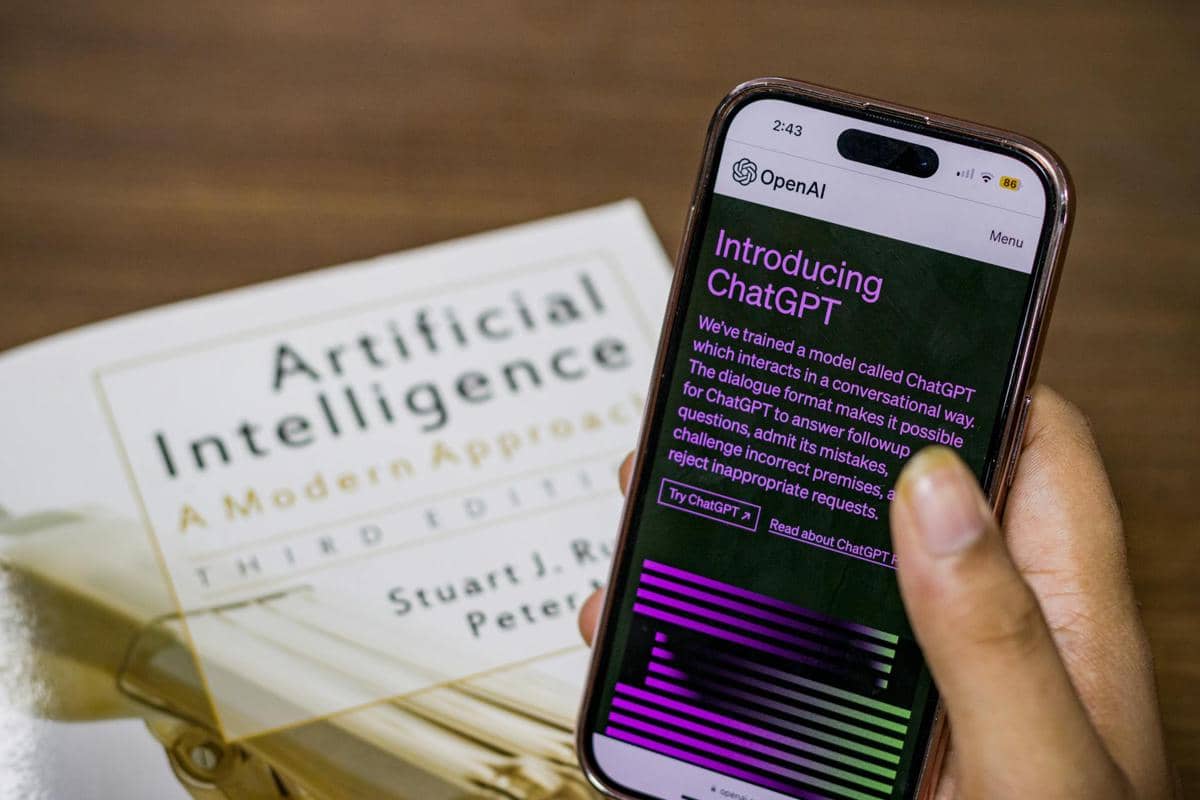
When 74.1% of respondents say AI influences their decisions, the question is no longer whether young people use AI. The question is how they evaluate the advice given by this technology.
AI may not replace parents, close friends, or mentors. But it has already filled a gap that was previously empty: a space to think without social pressure and weigh choices without fear of being judged.
Amid still-low AI literacy scores, critical thinking ability becomes increasingly important. The challenge is simple but significant: how to evaluate advice from a machine that almost always agrees with us.
Sources:
Asosiasi Penyelenggara Jasa Internet Indonesia. (2025). Profil internet Indonesia 2025. APJII. https://survei.apjii.or.id/survei/register/48?type=free
Chegg. (2025). Global student survey 2025. Chegg. https://www.chegg.org/global-student-survey-2025/
Cheng, M., et al. (2025). Sycophantic AI decreases prosocial intentions and promotes dependence (arXiv:2510.01395) [Preprint]. arXiv. https://doi.org/10.48550/arXiv.2510.01395
IDN Times. (2026). Survei Gen Z dan Milenial Indonesia, Januari–April 2026 https://www.idntimes.com/life/inspiration/infografis-ai-jadi-tempat-curhat-tren-baru-gen-z-milenial-00-98756-m6kdmt
Kaspersky. (2025). Emotional AI survey 2025 [Market research]. Kaspersky. https://www.kaspersky.com/about/press-releases
Microsoft. (2025). Work trend index 2025: The year the frontier firm is born. Microsoft WorkLab. https://www.microsoft.com/en-us/worklab/work-trend-index/2025-the-year-the-frontier-firm-is-born
PwC. (2025). Global workforce hopes and fears survey 2025. PwC. https://www.pwc.com/gx/en/issues/workforce/hopes-and-fears.html
Snapcart. (2025). In AI, we trust: Part 1. Snapcart. https://snapcart.global/in-ai-we-trust-part-1/
Snapcart. (2025). In AI, we trust: Part 2. Snapcart. https://snapcart.global/in-ai-we-trust-part-2/