12.2 Million Users in Indonesia, Time for Brands to Join Threads

Indonesia ranks fourth globally with 12.2 million Threads users as of April 2026, surpassing other Southeast Asian countries such as the Philippines, Vietnam, and Malaysia.
Threads' standout features—like "Add a Topic," the local flavor of its timeline, and organic small-business community spaces—make the platform appealing to businesses of all sizes looking to reach relevant audiences.
Effective strategies on Threads emphasize consistent posting, two-way interaction, and local relevance, helping brands and small businesses build organic engagement without relying on big ad spend.

Indonesia has officially landed in the top four countries by Threads user count worldwide. According to a report from We Are Social and Manochi, as of April 2026 Indonesia has 12.2 million Threads users, trailing only India (41.6 million), the United States (33.85 million), and Japan (16.85 million). That figure also puts Indonesia well ahead of its Southeast Asian neighbors, the Philippines (6.3 million), Vietnam (6 million), and Malaysia (5.75 million), by nearly double.
But what's more interesting than the raw numbers is how the platform has started catching the serious attention of everyone from small businesses to major brands. Behind the steadily climbing user base, a shift in behavior is underway that makes Threads feel distinct from other social platforms and that's what's drawing businesses to take it seriously.
Not Just a "Twitter Rival"
Ever since Meta launched it as an answer to X (formerly Twitter), Threads has often been dismissed as a mere clone. The dual-feed structure, an algorithm-ranked "For You" feed and a purely chronological "Following" feed, now also exists on X, so it's no longer a meaningful point of difference.
The real distinctions lie in three things instead: how Threads organizes topics, the local flavor that comes through in the timeline, and the organic rise of small businesses (UMKM) on the platform.
1. Topic Grouping, Not Just Hashtags
Threads originally launched without a hashtag feature — an odd choice for a new social platform. The reasoning became clear later: Threads was building toward something bigger, the "Add a Topic" feature. Unlike hashtags, which are freeform and merely act as labels, Threads' topic tags function as interest markers tied directly into the search and recommendation system, letting conversations be grouped more neatly under specific keywords.
For brands and small businesses, this means a bigger shot at reaching new audiences without depending entirely on follower count. Just attach a relevant topic, and a post has a chance to surface to people who are genuinely interested in that subject — not only to the existing circle of followers.
Beyond topic grouping, Threads has also rolled out features like simple polls built into the composer, along with an option X doesn't have: adding music to posts. This combination of features is really what sets it apart most concretely from being just "Twitter with a new coat" (Buffer, 2026).
2. A Strong Sense of Local Flavor in the Timeline
Another trait users often notice is the local character of their timeline. Users in Yogyakarta, for instance, report seeing more content and discussion related to Jogja than users from other cities do.
It's worth noting this likely isn't the result of explicit city-level location targeting by the algorithm. A better explanation is the interest-graph effect: when a user frequently engages with local accounts and topics — through a bio that mentions their city, participation in local topic tags, or searches related to a particular area — the system keeps serving up similar content. The result is a timeline that feels like a collection of interconnected "local rooms" rather than one giant, uniform feed shown to everyone worldwide.
For businesses targeting a specific city or region, this trait can be a real advantage, since organic reach feels more geographically relevant than on other platforms with more "random" timelines.
3. Small-Business Forums Growing Organically
These traits combine to produce a fairly distinctive phenomenon: small-business (UMKM) forums springing up organically on Threads. Unlike marketplaces that require ad spend or complicated SEO tactics, small business owners use community threads and topic tags to promote products and connect directly with potential buyers.
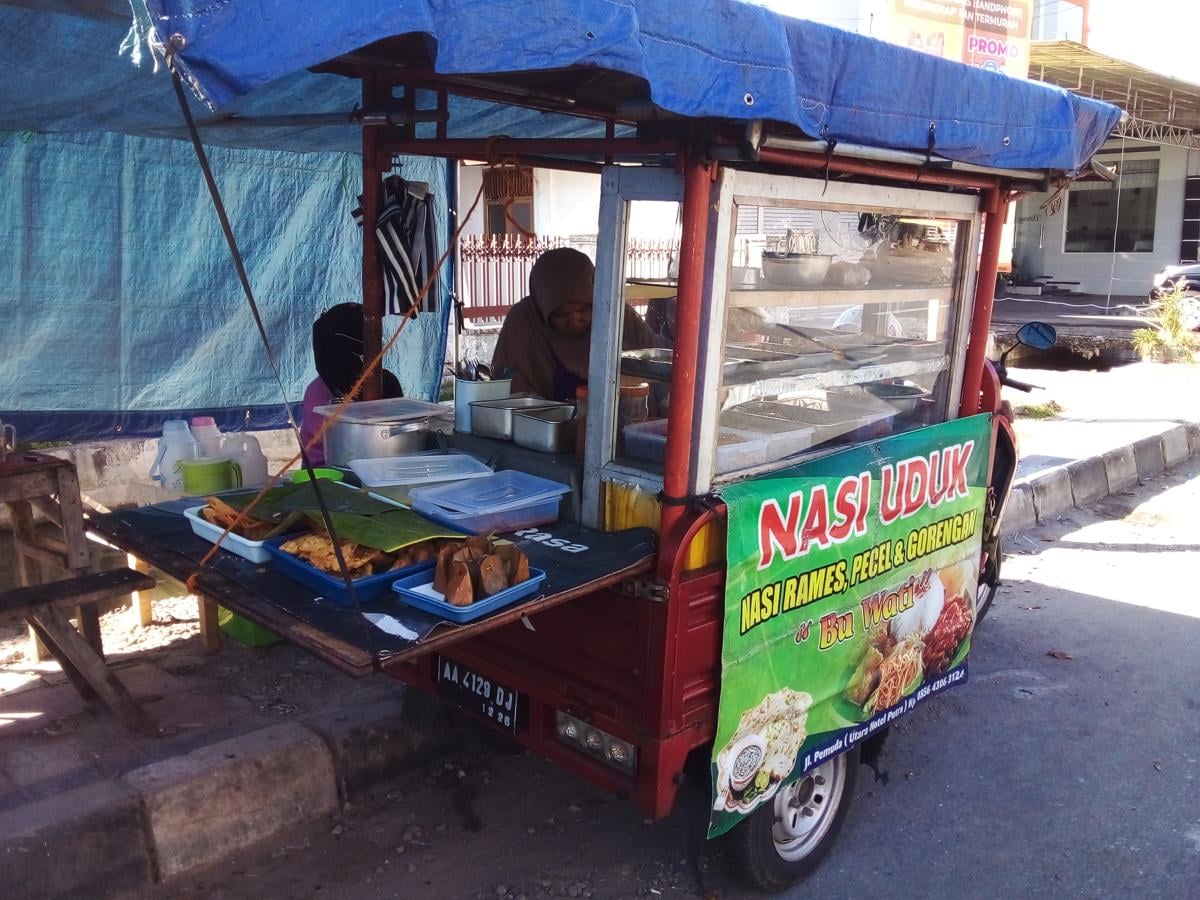
The combination of topic grouping and local flavor makes this approach relatively effective for small businesses. A home-based food seller or a maker of local handicrafts, for example, stands a better chance of being discovered by buyers in the same city, without having to go head-to-head with national brands that have far bigger marketing budgets.
Bonus: On the Weight of Conversation
One more thing often cited as setting Threads apart from X is how much weight is given to conversation. Instagram's head, Adam Mosseri, has said that on Threads, the total value of someone's replies is treated as roughly equal to the value of their posts, and the system tends to downrank content that's purely designed to bait shallow engagement.
This point functions more as a bonus than a core differentiator. A "one-way broadcast" style tends to underperform on Threads, but brands and small businesses that actively reply to comments and join discussions still benefit from the combination of topic grouping and local flavor discussed above.
Brands Are Starting to "Farm" Engagement
Meanwhile, bigger brands have also started taking Threads seriously, particularly for building organic engagement. Common tactics include actively replying to comments, asking light-hearted questions to spark discussion, and jumping into viral conversations relevant to their industry. Examples include Tzu Chi Hospital, Rumah Sakit Happy Land, Kahf, and Somethinc.
This approach fits well with how Threads' algorithm favors real-time interaction. Since the timeline tends to favor fresh content, brands that stay active and responsive have a better shot at staying visible to their audience, compared to relying on a single promotional post and then walking away.
What Does This Mean for Businesses in Indonesia?
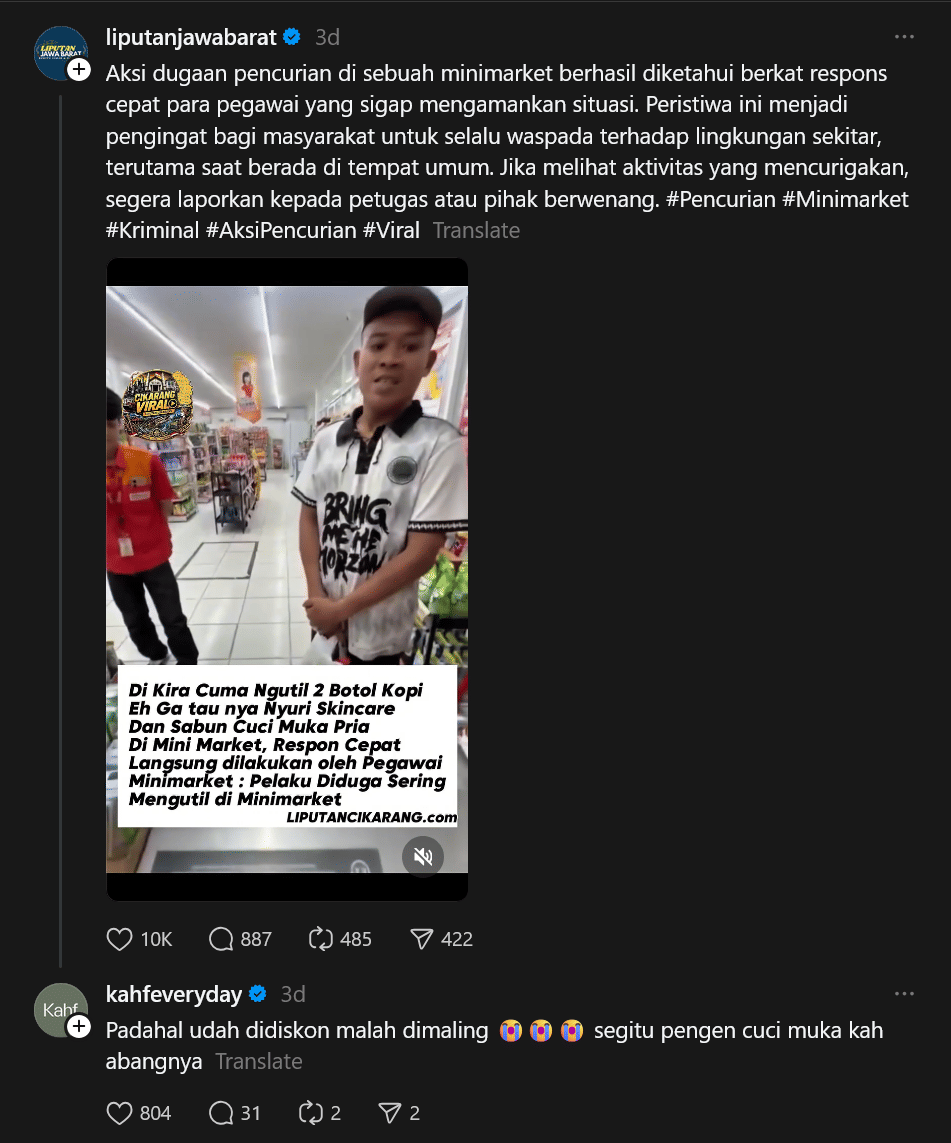
Kahf onThreads (threads.com/kahfeveryday) Given the growing user base and the platform's distinctive algorithmic traits, there are a few things businesses and marketers who want to get serious about Threads should keep in mind:
First, consistency matters more than one post that "goes viral." Because the timeline shifts quickly, a steady posting cadence tends to have more impact than chasing the occasional viral hit.
Second, local relevance is its own advantage. For small businesses targeting a specific city or region, the segmented nature of Threads' algorithm can be leveraged to reach buyers who are geographically closer and more relevant. That said, this doesn't mean national-scale brands have no shot, Kahf's consistency is proof that a brand can make good use of the algorithm and timing.
Third, two-way interaction carries more value than one-way promotion. Replying to comments, joining discussions, and responding quickly seem to suit the platform's character far better than a conventional ad-style "broadcast" approach.
Given Indonesia's consistent place among the top users of new social platforms, from TikTok to now Threads, this opportunity will likely keep drawing interest from businesses, especially small businesses looking for a low-cost promotional channel with reach that's still relevant to their target market.
User data for Threads is based on a report from We Are Social and Manochi, published by DataIndonesia.id, as of April 2026. The figures are estimates of potential ad reach on Threads and may not fully represent the number of unique active users.