Baca artikel IDN Research Institute lainnya di IDN App
It helps you see more of our articles when you search on Google
Perfect Victim Syndrome: 376,000 Cases of GBV Against Women, Only 4.2%
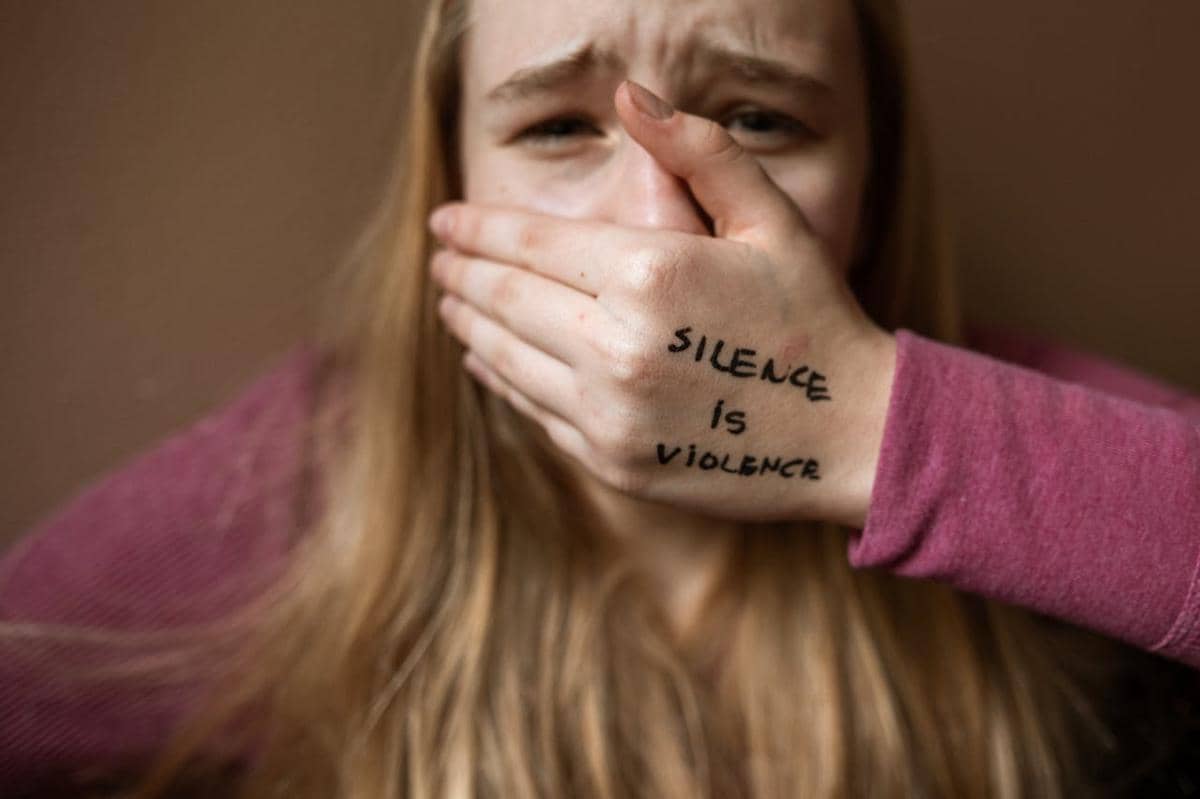
Illustration depicting violence (pexels.com/RDNE Stock project)
  • Throughout 2025, Indonesia recorded 376,529 cases of gender-based violence against women. However, only around 4.2% of survivors reported the abuse to a trusted authority or support service.

  • The phenomenon known as "perfect victim syndrome" often leads survivors to be doubted or blamed if they do not fit society's idealized image of a victim. As a result, many cases of violence remain unreported, allowing perpetrators to evade accountability.

  • Although Indonesia has made legal progress through measures such as the Sexual Violence Crime Law (UU TPKS) and the establishment of Sexual Violence Prevention and Handling Task Forces (Satgas PPKPT), implementation remains uneven due to persistent victim-blaming attitudes and weak institutional protection.

Disclaimer: This was created using Artificial Intelligence (AI)

Throughout 2025, institutions in Indonesia recorded 376,529 cases of gender-based violence against women (GBV). In the overlapping period, a survey on women's lived experiences estimated that only 4.2% of women who experienced violence disclosed it to someone they trusted. The gap between these two figures is the central subject of analysis in this article.

That gap is not fully explained by the courage of victims. Much of it is shaped by how the public, law enforcement, and the legal system assess a victim's credibility before listening to their account. In victimology, the study of crime victims, this pattern of judgment is known as perfect victim syndrome. This article maps the data on violence against women in Indonesia, explains the measurement instruments that produce it, and shows how the "perfect victim" standard operates at the point between occurrence and documentation.

What Is Perfect Victim Syndrome?

Perfect victim syndrome describes a mindset, both in general society and within the legal system, that only recognizes victims of violence if they appear "to have suffered enough," "to have resisted enough," or "to be innocent enough."

Victims considered to meet this standard typically report immediately, have no romantic history with the perpetrator, cry in the "right" way, have no past that can be questioned, and can explain every one of their decisions with logic that others can easily follow. Victims who do not meet all of these criteria tend to be questioned, doubted, or even blamed.

This concept is closely related to victim blaming, the tendency to shift part of the responsibility for violence onto the victim. Moreover, this mindset does not only live in social media comment sections. It also surfaces at police desks, in courtrooms, in campus task force offices, and in everyday family conversations.

Why Is Perfect Victim Syndrome Important to Discuss in Indonesia?

In Indonesia, the impact of this mindset can be measured through data. The number of cases of violence against women is high, while reporting rates remain low. Most violence occurs in the personal sphere, precisely in relationships that make it hardest for victims to fit the "perfect victim" image: partners, family members, or close acquaintances.

Because of this, how the public and institutions interpret cases of violence also determines whether victims feel safe enough to report. The following data shows how large the gap is between violence that occurs and violence that is recorded.

The Data Landscape: Four Measurement Instruments

Figures on violence against women in Indonesia come from different instruments, with different methods and coverage. Reading data accurately requires an understanding of what each instrument actually measures.

CATAHU Komnas Perempuan 2025: 376,529 Recorded Cases

The Annual Record (CATAHU) of Komnas Perempuan 2025, released on March 6, 2026, recorded 376,529 cases of Gender-Based Violence Against Women (GBV) throughout 2025. This figure represents a 14.07% increase from the previous year (330,097 cases) and is the highest in the past decade.

Some 89.76% of those cases (337,961 cases) occurred in the personal sphere: within the home, in marital relationships, and in intimate partnerships. The most frequently reported form of violence was sexual violence (37.51%), followed by psychological (32.48%), physical (18.93%), and economic (11.07%).

From direct complaints to Komnas Perempuan across 234 working days, 3,682 cases were verified, with an average of 19 cases per day requiring a response.

SPHPN 2024: The Real Picture of Violence Against Women

Meanwhile, the 2024 National Survey on Women's Lived Experiences (SPHPN) from KemenPPPA measured women's direct experiences through a survey of 13,914 respondents across 178 regencies and cities. The results showed that 1 in 4 women aged 15 to 64 had experienced physical and/or sexual violence, with a prevalence of 7.2% for physical violence and 5.3% for sexual violence.

These two sets of data need to be read together. SPHPN measures actual prevalence through surveys, while CATAHU counts cases that reach various institutions. A rise in the number of reports in CATAHU does not automatically mean violence has increased. It may be that more victims are beginning to speak up. Based on both data sources, the reality of violence against women is far greater than what is captured by any single system.

Digital Violence: 2,382 Cases of Online GBV

Violence against women is no longer confined to physical spaces. Data from the Southeast Asia Freedom of Expression Network (SAFEnet) recorded 2,382 reports of Online Gender-Based Violence (KBGO) throughout 2025, an increase of approximately 25% compared to 2024. The most frequently reported types were threats to distribute intimate content (1,150 cases), online sexual extortion (592 cases), and non-consensual sharing of intimate images or NCII (280 cases). The most commonly used platform was WhatsApp.

In the CATAHU of Komnas Perempuan, online GBV became the most dominant form of public violence in 2025 with 1,091 cases. This data reflects a shift in the landscape of violence toward digital spaces.

Femicide: One Woman Every Two Days

At the most extreme point of this spectrum lies femicide, the killing of women because of their sex or gender.

The Femicide Monitoring Report of Komnas Perempuan for the period November 2024 to October 2025 identified 239 femicide cases out of a total of 453 cases of women's killings monitored from digital media. Data from Jakarta Feminist recorded a figure equivalent to one woman killed every two days in Indonesia.

The Indonesian Legal Resource Center (ILRC) monitored 61 femicide cases throughout 2025, with 20 of them constituting sexual femicide, an increase from 18 cases in 2024.

Intimate femicide, killings by husbands, ex-husbands, boyfriends, or ex-boyfriends, consistently remains the highest type each year. Most cases do not begin with a single sudden act, but with a long and repeated escalation of violence. This escalation often goes undetected because it is never reported.

Why Do Victims of Violence Against Women Rarely Report?

Reporting data shows a large gap between the number of cases that occur and the number that are reported. SPHPN 2024 recorded that only 4.2% of women reported violence to someone they trusted, and even this figure represents an improvement from the previous period.

Komnas Perempuan estimates that at least 33 cases of violence against women occur every hour in Indonesia, or nearly 800 cases per day. By comparison, data from Pusiknas Bareskrim Polri shows that the police handled an average of 59 women and children protection (PPA) cases per day throughout 2020 to 2024.

The gap is large: around 800 incidents compared to 59 reports per day. Komnas Perempuan Chairperson Maria Ulfah Anshor described it as an iceberg phenomenon. "Those who report are just the tip of the iceberg. If only 4,472 people report, the actual violence occurring in society is far greater," she said.

The problem is not only about victims' courage to report. An equally determining factor is the response they receive after speaking up. The following three cases show how that response works in practice.

The YTR Case: Why "Why Didn't You Run?" Is the Wrong Question

The YTR case provides a concrete picture of why the question "why didn't you run?" is misguided, and serves as an example of dating violence that led to captivity.

On June 10, 2026, YTR's family received news that the 29-year-old woman was being treated in the emergency room of Hasan Sadikin Hospital, Bandung, with severe injuries across her body, including damage to both eyes, slash wounds, and cigarette burn marks. When the doctor asked, she initially said she had fallen in the bathroom, then admitted that she had been tortured. From her account, it was revealed that she had been held captive by her partner, Taufik Hidayat, for nearly three years, moving from one rented room to another in the Cileunyi area, Bandung Regency. A formal report to the West Java Regional Police was only filed by the family on June 12, 2026, with case number LP/B/1145/VI/2026/SPKT/POLDA JAWA BARAT. Taufik Hidayat remains a fugitive to this day.

From the start of the captivity, Taufik Hidayat deliberately damaged YTR's vision. Unable to see, unable to walk, and forbidden from touching a phone, YTR was entirely dependent on the perpetrator for survival, including for food and drink. She had even sent word to her father that she was doing fine.

This condition is known in psychology as coercive control, a pattern of systematic control and coercion that gradually strips the victim of autonomy until "leaving" is no longer a conceivable option, let alone an actionable one. YTR's initial answer to the doctor that she had fallen in the bathroom was part of a survival response, not a lie without reason. A victim who has been conditioned to protect her perpetrator is dependent on that perpetrator as her only access to life.

Victims with a profile like YTR's are in fact the most vulnerable to being judged by the perfect victim standard, precisely because she did not flee immediately, had at one point said she was fine, and no report had been made from the start. In many cases, it is exactly these conditions that allow violence to continue for three years undetected.

The UIN Suska Riau Case: When "Heartbreak" Is Used as an Explanation

On the morning of February 26, 2026, FAP (23) was waiting for her undergraduate thesis proposal seminar in the second-floor examination room of the Faculty of Sharia and Law at the State Islamic University Sultan Syarif Kasim (UIN Suska) Riau.

At around 7.30 a.m. local time, her campus acquaintance, Raihan Mujafar (21), arrived carrying an axe and a machete. After a brief altercation, Raihan swung the axe. FAP sustained eight slash wounds to her forehead, neck, back, and left hand, which she had raised to deflect the attack.

Police later revealed that Raihan had been planning the attack since November 2025, three months before carrying it out, including sharpening the weapons at home before leaving for campus. The motive that emerged was that he felt neglected after FAP chose to focus on completing her thesis, while the two had been close during their community service program (KKN).

Although the case drew considerable public sympathy, it still prompted questions challenging whether FAP had been "clear enough" in rejecting him, or whether she had sent confusing signals. Questions like these reflect the habit of searching for the victim's contribution to the violence they experienced. When the case file was declared P-21 (complete) on June 12, 2026, and was to be referred to court, the legal process was moving forward, but the narrative outside the courtroom is much harder to control.

Institutional Barriers: When Campus Task Forces Fall Short of Protecting

Failure to protect victims does not always come from the general public. In a number of cases, victims also face barriers when trying to access available protection mechanisms, including within educational institutions.

Sanata Dharma University (USD) Yogyakarta, for example, established a Task Force for the Prevention and Handling of Violence in Higher Education (Satgas PPKPT) on June 1, 2025, through Rector's Decree Number 207/Rektor/V/2025. Structurally, this task force was formed as a safe space for victims of violence within the campus environment. In practice, a number of victims who reported said the process was lengthy, the follow-up lacked transparency, and the perpetrators received no clear sanctions. Some eventually withdrew their reports, concluding that the process would not lead to any meaningful outcome. When a report is withdrawn, it is often read as evidence that the case was not serious enough, rather than as evidence that the system has failed.

This pattern is not exclusive to any one university. Research and reports from various campuses show that students frequently face institutional barriers when reporting sexual violence, especially when the perpetrator holds a position of power or a power-related relationship on campus. Stigma against victims, processes that are unfriendly to survivors, and the absence of transparency lead many victims to conclude that reporting only adds to their burden without reducing the danger. Such conditions can erode the trust of both victims and potential reporters in the available handling mechanisms.

How Perfect Victim Syndrome Benefits Perpetrators

Perfect victim syndrome does not always arise from malicious intent. It often stems from a framework of thinking so deeply socialized that it feels like common sense.

This pattern appears when people ask "why were you spending time with him?" to a victim attacked by an acquaintance, when people judge "how could you not have escaped?" toward a woman kept in a state of helplessness, or when a campus task force spends more time discussing procedures than victim safety.

The party that benefits most from this mindset is the perpetrator. As long as public attention is focused on whether the victim meets certain standards, the perpetrator does not need to be held accountable for their actions. The burden of proof shifts from "what did the perpetrator do?" to "did the victim behave correctly?"

As a result, other women currently enduring violence conclude that speaking up risks having them treated the same way. This condition also helps explain why reporting data is always far below incident data. The cause is not solely that victims lack courage, but that speaking up often makes their situation worse.

2026 Police Data: Progress and a Still-Wide Gap

Structural progress is underway. The Indonesian National Police (Polri) has established the PPA-PPO Directorate in 11 Regional Police (Polda) and 22 District Police (Polres) as of early 2026, to strengthen victims' access to legal protection. Throughout January 1 to 27, 2026, the police recorded 2,751 PPA cases with 2,884 victims.

The Law on Sexual Violence Crimes (UU TPKS) also provides a more comprehensive legal framework than previous regulations. The Deputy of KemenPPPA noted that the increase in reporting in the 2025 data was likely influenced by public campaigns, the passage of UU TPKS, and civil society interventions in vulnerable areas.

Regulatory progress does not automatically change culture. As long as the perfect victim standard continues to be used to test victims' credibility, whether by the public, law enforcement, or educational institutions, the protection systems already built will not function optimally.

How to Avoid Victim Blaming and Perfect Victim Syndrome

The change needed is multilayered and cannot be resolved with a single regulation or campaign.

First, the way violence cases are interpreted needs to shift. Instead of asking "why didn't the victim run?", the more appropriate questions are what prevented them from running and who is responsible for that situation. Instead of asking whether the victim was clear enough in refusing, the focus should be on why any refusal was not considered sufficient by the perpetrator.

Second, the way institutions respond to reports needs to be reassessed. Task forces, police, and protection agencies should be evaluated not only by the number of reports received, but by how many victims feel safer after reporting. Transparency in follow-up and genuine commitment to victims are prerequisites, not extras.

Third, the way the public and media speak about violence needs to be more consciously considered. Narratives that explain violence as the result of "heartbreak" or "excessive love" end up normalizing that violence, and give perpetrators a context that, in the public eye, feels like a reasonable explanation.

For Policymakers: Existing Regulations, Legal Gaps, and the Pending Agenda

The Legal Framework Exists, But Implementation Remains Uneven

The problem of violence against women in Indonesia is not the absence of law, but the distance between rules on paper and their enforcement on the ground.

Law Number 12 of 2022 on Sexual Violence Crimes (UU TPKS) recognizes more forms of sexual violence than the provisions of the Criminal Code (KUHP) and provides a framework for victim recovery. Its implementation remains inconsistent. In Komnas Perempuan's account of the first two years of UU TPKS, law enforcement officers still frequently reject or have not yet understood the substance of this law, resulting in some cases being processed under general criminal provisions that lead to lighter sentences.

On campuses, the Satgas PPKPT has a legal basis in Minister of Education, Culture, Research and Technology Regulation Number 55 of 2024, which replaces Permendikbud Number 30 of 2021 and expands the scope from sexual violence to include bullying and intolerance. As of May 2026, only around half of the 4,416 higher education institutions have established a Satgas PPKPT, largely due to resource constraints. Oversight of task force performance has so far relied on internal reporting to LLDikti and the ministry, while service organizations and Komnas Perempuan observe that task forces often need external protection themselves, as their members are vulnerable to pressure from the reported parties.

At the police level, the PPA-PPO Directorate was only established in 11 Regional Police (Polda) and 22 District Police (Polres) as of early 2026. Many areas still do not have direct access to this specialized unit.

Legal Gaps Directly Related to the "Perfect Victim Syndrome" Standard

Several legal gaps clarify why perfect victim syndrome does not only exist in the social sphere, but is also built into the legal framework itself.

Femicide is not yet recognized as a distinct legal category. Komnas Perempuan affirms that there is no explicitly regulated femicide offense, so gender-based killings are recorded as ordinary homicide. Without this data differentiation, the state will struggle to develop measurable prevention policies.

Coercive control is not explicitly recognized in Indonesian law. Cases like YTR's can be charged under provisions for severe assault, but the pattern of systematic control over years does not have its own legal category. ILRC considers the assault provisions in the KUHP to be formulated in a gender-neutral manner, such that they fail to capture the power imbalances underlying dating violence, which is also not yet covered as domestic violence.

Basic services are still not evenly distributed. According to the Minister of PPPA, as of July 2025 there were still 4 provinces and 147 regencies and cities without a Regional Technical Implementation Unit for Women and Children's Protection (UPTD PPA). All four provinces are newly established regions in Papua. In those areas, victims have no formal services they can access, even before considering reporting to the police.

Victims who withdraw their reports also lack adequate structural protection. Report withdrawals are often read as a sign that the case is not serious, when it is more accurately understood as an indicator that the protection mechanism needs to be evaluated.

When Data on Violence Against Women Has Yet to Speak With One Voice

A number of institutions have put forward concrete agendas. Komnas Perempuan is developing a roadmap for femicide data collection and is pushing for a recording system that separates gender-based killings from general homicide, as a basis for prevention policy.

ILRC is urging judges to apply the sentencing guidelines in Book I of the KUHP by taking into account sadistic methods, the impact on victims and their families, and the motive and purpose of the killing as aggravating factors, including recognizing sexual violence as an element in cases of women's killings.

Cross-institutional data integration is also still incomplete. Three main systems, SIMFONI PPA owned by KemenPPPA, SintasPuan owned by Komnas Perempuan, and Titian Perempuan owned by the Service Providers Forum (FPL), still use different definitions and platforms. The Minister of PPPA acknowledges that data from all three systems is not yet fully integrated, making it prone to fragmentation and double-counting. Without interoperability, the national picture of who the victims are, where they are, and what happens after they report remains incomplete.

Implications: Reading Data as a Mirror of Social Standards

When the law does not yet recognize coercive control, femicide, or layered patterns of violence as distinct categories, the legal system itself is also operating the perfect victim standard, acknowledging only violence that is simple in form and easy to prove. Reforming the legal framework and the data system is, therefore, part of the effort to shift that standard.

Three implications follow from this reading of the data:

  1. Task forces, police, and protection agencies should be evaluated not only by the number of reports received, but by how many victims feel safer after reporting. Transparency in follow-up is a prerequisite, not a bonus.

  2. Report withdrawals deserve to be treated as an indicator that requires investigation, not as a sign that the case is not serious.

  3. Public and media narratives that explain violence as the result of "heartbreak" or "excessive love" actually normalize violence and give perpetrators a context that feels reasonable in the eyes of the public.

Conclusion

standard has a direct impact on the low reporting of violence against women in Indonesia. Throughout 2025, 376,529 cases were recorded, while only a small fraction entered the formal reporting channel. This gap shows that the problem does not stop at the courage of victims, but also at the response they receive.

The cases of YTR, FAP, and the barriers experienced by victims on campuses illustrate how the perfect victim standard operates on the ground. As long as that standard continues to be used to test whether a victim deserves to be believed, a genuinely safe space for women will remain difficult to realize, even when the legal framework and institutional structures are already in place.

Data in this article comes from different instruments and cannot be compared directly. The CATAHU of Komnas Perempuan counts cases reported to institutions, thus reflecting the reach of reporting. SPHPN KemenPPPA measures actual prevalence through population-based surveys. Femicide data from Komnas Perempuan, Jakarta Feminist, and ILRC comes from digital media monitoring, making it a lower bound rather than a complete count. The comparison of estimated incidents (approximately 800 cases per day) with police caseloads (59 cases per day, 2020 to 2024) is illustrative of the scale of the gap, not a precise ratio. All figures are presented exactly as released by their sources. The names of victims mentioned have been widely reported in national media.

References

ANTARA News. (2026). ILRC: Terjadi peningkatan kasus femisida seksual pada 2025. https://www.antaranews.com/berita/5567888/ilrc-terjadi-peningkatan-kasus-femisida-seksual-pada-2025

Databoks. (2025). WhatsApp medium kekerasan gender online terbanyak di Indonesia pada 2025. Katadata. https://databoks.katadata.co.id/demografi/statistik/699d3a5ce5106/whatsapp-medium-kekerasan-gender-online-terbanyak-di-indonesia-pada-2025

Harian Jogja. (2026). Kasus femisida seksual di Indonesia meningkat sepanjang 2025. https://news.harianjogja.com/r-1256081/kasus-femisida-seksual-di-indonesia-meningkat-sepanjang-2025

Hukumonline. (2026). Komnas Perempuan susun peta jalan pendataan femisida, dorong standardisasi data hingga kebijakan hukum. https://www.hukumonline.com/berita/a/komnas-perempuan-susun-peta-jalan-pendataan-femisida--dorong-standardisasi-data-hingga-kebijakan-hukum-lt69b78a94c3316/

Kementerian Pemberdayaan Perempuan dan Perlindungan Anak. (2025). Menteri PPPA: Banyak perempuan dan anak korban kekerasan tidak berani melapor. https://www.kemenpppa.go.id/siaran-pers/menteri-pppa-banyak-perempuan-dan-anak-korban-kekerasan-tidak-berani-melapor

Kementerian Pemberdayaan Perempuan dan Perlindungan Anak. (2025). Angka kekerasan terhadap perempuan di Indonesia menurun. https://www.kemenpppa.go.id/siaran-pers/angka-kekerasan-terhadap-perempuan-di-indonesia-menurun

Kementerian Pemberdayaan Perempuan dan Perlindungan Anak. (2025). Kemen PPPA, Komnas Perempuan, dan FPL perkuat integrasi data korban kekerasan. https://kemenpppa.go.id/siaran-pers/kemen-pppa-komnas-perempuan-dan-fpl-perkuat-integrasi-data-korban-kekerasan

Kementerian Pendidikan Dasar dan Menengah. (t.t.). Dukungan sebaya merawat: Aksi mahasiswa dalam pencegahan dan penanganan kekerasan seksual. https://cerdasberkarakter.kemendikdasmen.go.id/dukungan-sebaya-merawat-aksi-mahasiswa-dalam-pencegahan-dan-penanganan-kekerasan-seksual-2/

Komisi Nasional Anti Kekerasan terhadap Perempuan. (2026, 6 Maret). Siaran pers Komnas Perempuan: Peluncuran catatan tahunan kekerasan terhadap perempuan 2025. https://komnasperempuan.go.id/siaran-pers-detail/siaran-pers-komnas-perempuan-peluncuran-catatan-tahunan-kekerasan-terhadap-perempuan-2025

Komisi Nasional Anti Kekerasan terhadap Perempuan. (2022). Komnas Perempuan luncurkan kajian dan rekomendasi kebijakan femisida di Indonesia. https://komnasperempuan.go.id/kabar-perempuan-detail/komnas-perempuan-luncurkan-kajian-dan-rekomendasi-kebijakan-femisida-di-indonesia

Kompas. (2026a, 19 Juni). Kondisi mengenaskan perempuan Bandung usai 3 tahun disekap pacar. https://bandung.kompas.com/read/2026/06/19/074657478/kondisi-mengenaskan-perempuan-bandung-usai-3-tahun-disekap-pacar

Kompas. (2026b, 28 Februari). Kronologi mahasiswi UIN Suska Riau dibacok teman sendiri, pelaku sudah .... https://regional.kompas.com/read/2026/02/28/072450878/kronologi-mahasiswi-uin-suska-riau-dibacok-teman-sendiri-pelaku-sudah

Kompas. (2026c, 19 Mei). Perguruan tinggi yang punya satgas PPKPT baru setengah dari total 4.416. https://www.kompas.com/edu/read/2026/05/19/201000471/perguruan-tinggi-yang-punya-satgas-ppkpt-baru-setengah-dari-total-4.416

Kompas.id. (2025). Pola baru femisida: Kekerasan digital dan pembunuhan anak perempuan kian brutal. https://www.kompas.id/artikel/en-pola-baru-femisida-kekerasan-digital-dan-pembunuhan-anak-perempuan-kian-brutal

Lembaga Layanan Pendidikan Tinggi Wilayah III. (2025). Surat pemberitahuan perubahan Permendikbudristek dan Satgas. https://lldikti3.kemdikbud.go.id/surat-pemberitahuan-perubahan-permendikbudristek-dan-satgas/

Magdalene. (2026). Evaluasi UPTD PPA. https://magdalene.co/story/evaluasi-uptd-ppa/

Pusat Informasi Kriminal Nasional Badan Reserse Kriminal Kepolisian Negara Republik Indonesia. (2026). Dit. PPA–PPO di sebelas Polda: Dari yang tersembunyi menjadi tercatat. https://pusiknas.polri.go.id/detail_artikel/dit_ppa–ppo_di_sebelas_polda:_dari_yang_tersembunyi_menjadi_tercatat

Suara.com. (2025, 13 November). Kasus femisida melonjak, Komnas Perempuan sebut negara belum akui sebagai kejahatan serius. https://www.suara.com/news/2025/11/13/161304/kasus-femisida-melonjak-komnas-perempuan-sebut-negara-belum-akui-sebagai-kejahatan-serius

Tempo. (2026). ILRC: Penyiksaan perempuan di Bandung mengarah ke femisida. https://www.tempo.co/politik/ilrc-penyiksaan-perempuan-di-bandung-mengarah-ke-femisida-2270860

FAQ on Perfect Victim Syndrome

What is meant by perfect victim syndrome?

Perfect victim syndrome is a mindset that only acknowledges victims of violence if they appear to have suffered enough, to have resisted enough, or to be innocent enough. Victims who do not fit this ideal image tend to be doubted or blamed before their account is believed.

What is the difference between perfect victim syndrome and victim blaming?

Victim blaming is the act of shifting part of the responsibility for violence onto the victim. Perfect victim syndrome is the standard underlying that act, a set of criteria about how a victim "should" behave. It is this standard that is then used to blame victims who are deemed not to have met it.

Why do victims of violence often not report?

Based on SPHPN 2024, only 4.2% of women reported violence to someone they trusted. Beyond personal barriers, many victims hold back because of the response awaiting them after speaking up, ranging from questions that place blame on them to institutional processes that lack transparency.

What are examples of perfect victim syndrome?

Examples appear when the public asks "why didn't you run?" to a victim held captive in a state of helplessness, or when a victim of sexual violence is doubted because they once had a close relationship with the perpetrator. Questions like these place the burden of proof on the victim's behavior, not on the perpetrator's actions.

What is its impact on victims?

This mindset makes victims hesitant to report and can prolong violence because cases go undetected. On a broader level, it widens the gap between the number of violent incidents that occur and the number that are recorded, so that many cases never enter the protection system.

Editorial Team

Related Article