Indonesia accounts for 6.68 percent of Character.AI's global traffic, ranking second after the United States. A survey by IDN Times, published in the Indonesia Millennial and Gen Z Report 2027, found that more than 70 percent of respondents had confided in AI, with most doing so because their surrounding environment failed to provide an adequate safe space. This shift is changing the standard of digital interaction that brands now have to contend with.
70% of Indonesian Gen Z and Millennials Have Confided in AI
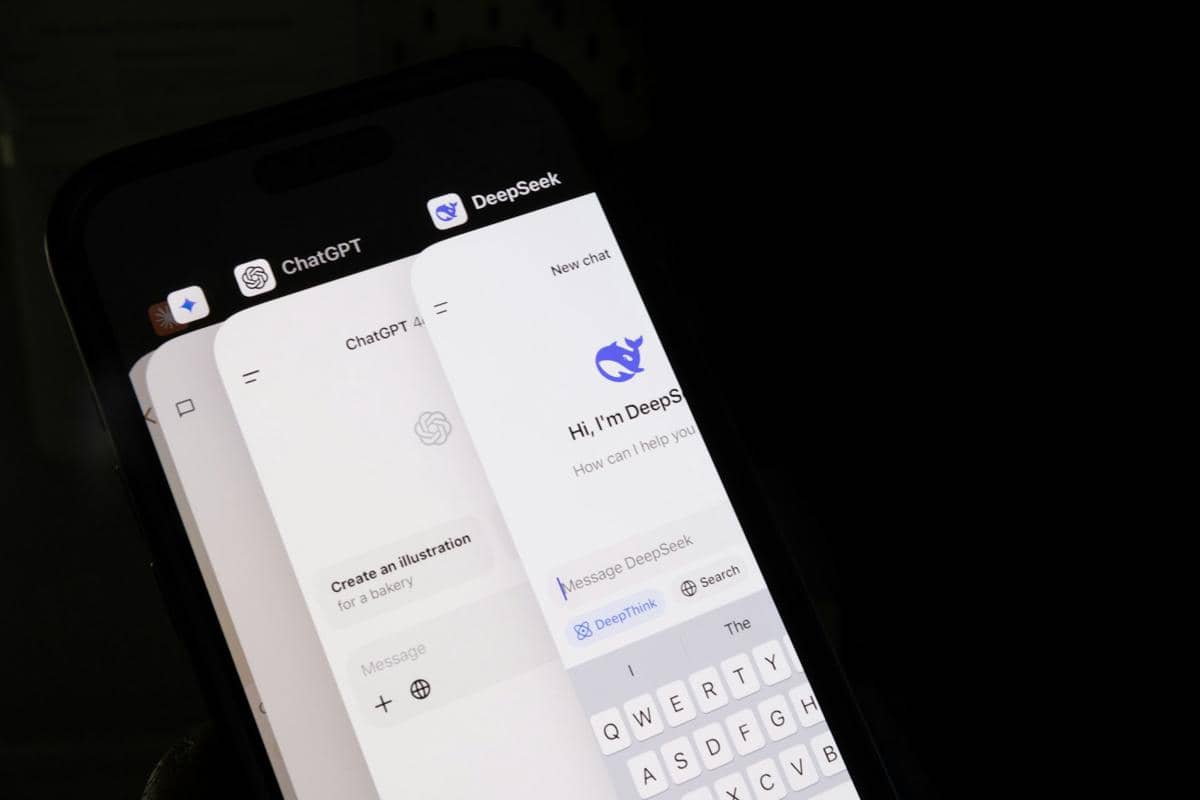
AI chat bot (unsplash.com/Solen Feyissa)
AI Leaves the Desk
The public first came to know artificial intelligence through the promise of productivity: summarizing documents, building presentations, writing code. For most of the past two years, industry conversation about AI has revolved around that territory.
But usage patterns are shifting. Citing a report by Marc Zao-Sanders published in Harvard Business Review (2025), therapy and companionship topped the list of generative AI use cases in 2025, outranking technical work and information search. The report compiled its ranking through qualitative curation of public discussions on Reddit and Quora, so its findings reflect the conversations of active users, with a level of representativeness that differs from a probability-based survey.
This shift has given rise to an entirely new product category. Character.AI, Replika, Chai, Emochi, Nomi, and Kindroid build experiences distinct from the typical work assistant. Users come to talk, not to get answers.
The mechanics are different too. Through prompts, conversation triggers, and sample dialogue, users shape a character that responds consistently in line with the personality they design. That character can be an anime figure, a game character, or an original creation. What makes this experience distinctive is that users can also build an alternate persona for themselves. They don't need to show up as their authentic self, and can experiment with different characters, emotions, and scenarios without risking their personal identity. Some users even carry on continuous roleplay with the characters they've created.
This phenomenon is expanding the scope of what counts as a parasocial relationship. The term has traditionally been attached to the one-way relationship between an audience and a public figure or content creator. AI companions add a new layer, because the party on the other end responds, remembers details from earlier conversations, and adapts to the user's preferences. A relationship that once ran in only one direction now feels reciprocal, even though one side of it is a system.
Indonesia Ranks Second Worldwide
Indonesia's position on this map stands out. Based on Semrush traffic data June 2026 published in the Indonesia Millennial and Gen Z Report 2027 (IDN Research Institute, 2026), Indonesia ranks as the second-largest country accessing Character.AI globally. Its share reaches 6.68 percent of total traffic, equivalent to 13.01 million monthly visits — behind the United States (32.83 percent, 63.89 million visits) and ahead of Brazil (4.96 percent), India (4.62 percent), and Mexico (3.41 percent).
One figure deserves particular attention: 95.42 percent of users in Indonesia access the platform via mobile devices, far above the global average. The character of this market differs from that of the United States, where desktop's share reaches 16.83 percent.
A similar pattern shows up in download data. Citing Appfigures data reported by TechCrunch (2025), the United States leads global AI companion app downloads with a 16 percent share, followed by the Philippines at 11 percent, Brazil at 10 percent, Indonesia at 8 percent, and Mexico at 7 percent. Total downloads in this app category surpassed 220 million by July 2025, growing 88 percent year-on-year in the first half of that year. Mastercard (2025) reports that more than 100 million people worldwide interact with personified chatbots.
The commercial side is moving at the same pace. Still citing Appfigures, the category generated USD 82 million in the first half of 2025 and is projected to surpass USD 120 million for the full year. Consumer spending in this category totaled USD 221 million through July 2025, while revenue for 2025 grew 64 percent compared to the same period the previous year. There are 337 active revenue-generating apps in the category, 128 of which launched in 2025 alone.
Two things are worth noting. First, AI companion adoption in Indonesia has moved well beyond the niche phase — a volume of 13 million visits puts it on the same scale as mainstream entertainment app categories. Second, a market this large is served almost entirely by foreign products that, to this day, still cannot handle Indonesian naturally. That gap has drawn little attention from local players so far.
Why Gen Z Chooses to Confide in AI
Global data offers an initial frame. A Pew Research Center survey of 1,458 American teenagers aged 13 to 17, conducted September 25 to October 9, 2025 and released in December 2025, found that 64 percent of respondents had used an AI chatbot. Roughly three in ten teens use one daily, and 9 percent use Character.AI specifically.
The picture in Indonesia shows a similar pattern at a different intensity. Citing a survey of 183 Gen Z and Millennial respondents conducted January through April 2026 and published in the Indonesia Millennial and Gen Z Report 2027 (IDN Research Institute, 2026), more than 70 percent of respondents said they had confided in AI. Gen Z does so at a higher rate — 81.1 percent — compared to 63.6 percent among Millennials.
The reasons behind these figures matter more than the figures themselves. As many as 43.7 percent of respondents chose AI because the environment around them did not provide an adequate safe space. Among respondents who felt that lack, 88 percent turned to AI as a substitute.
The most frequently discussed topics reveal the weight of these conversations. The top three, in order, are overthinking and anxiety, career and the future, and burnout — all squarely in the territory of serious life burdens, far from the realm of entertainment.
The three main reasons respondents feel comfortable talking to AI are round-the-clock availability (73.3 percent), the absence of judgment (68.9 percent), and privacy (54.8 percent). Together, these create a conversational space with near-zero social risk. For a generation that has grown up highly conscious of self-image in digital spaces, the absence of social risk carries value of its own.
A gender dimension is also visible. Women (64.4 percent) find it easier to share personal and emotional matters with AI than men do. This pattern is consistent with findings on emotional labor and the need for safe spaces that aren't always available in real life.
Methodological note: this survey involved 183 Gen Z and Millennial respondents, so the figures above should be read as directional indicators for the urban digital population, with limited precision for national generalization.
How Emotional Closeness Takes Shape
Character.AI's user profile shows a sharp age concentration. Citing SQ Magazine (2025), users aged 18 to 24 make up the majority at 53.1 percent, followed by the 25-to-34 age group at 24.5 percent. This figure is an aggregator's processing of web traffic data, so it reflects the profile of site visitors. Its user base sits precisely in the age range now shaping long-term relationship patterns.
The academic literature on user attachment to AI companions is fairly well developed, though most of the references it draws on come from an international context. The study by Xie and Pentina (2022) of 14 active Replika users is frequently cited as a reference, including in Indonesian papers. That study found that individuals experiencing distress and a lack of human companionship tend to develop attachment to chatbots when they perceive the chatbot's responses as emotional support and a source of security. Because this research is based on an international sample, its findings need to be read as an analytical framework for the Indonesian context rather than a direct description of it.
A number of studies set specifically in the Indonesian context offer a closer picture.
Ulfa's (2024) thesis at Universitas Gadjah Mada conducted a phenomenological study of three Replika users in Indonesia. The research reads the chatbot as a social actor through the lens of Actor-Network Theory, the Computers Are Social Actors framework, computer-mediated communication, and social penetration theory. Its findings show that users treat the system with the same social norms they would apply when dealing with another person.
Another study at Universitas Indonesia examined the emotional gratification of Indonesian Replika users through two informants, drawing on Bartsch's concept of emotional gratification. The study identified three forms of emotional satisfaction felt most intensely: contemplative emotional experiences, social sharing of emotions, and vicarious release of emotion. Together, these describe AI's function as both a space for reflection and a channel for emotional release.
The study closest to today's phenomenon comes from Zega and Lase (2026), researchers in Communication Studies at Universitas Kristen Indonesia. Using Interpretative Phenomenological Analysis, this phenomenological study observed seven Gen Z women aged 17 to 24 who developed emotional closeness with male AI characters on Character.AI. Its findings show that digital intimacy forms through three pathways: a sense of safety from the absence of judgment, consistent responsiveness, and users' active involvement in shaping the relationship's narrative. Four of the seven informants described the AI character as a partner or emotional companion.
The third pathway is worth underlining. Closeness doesn't emerge merely from the sophistication of the system — it emerges because users help build it themselves. They write backstories, define characters, and sustain the relationship's continuity over time. That involvement is what turns a functional interaction into something that feels personal, and it explains why the alternate-persona feature has become a core element of platforms in this category.
Complement, Substitute, or Both
AI's influence on users' lives is already measurable. The IMGR 2027 survey found that 74.1 percent of respondents acknowledged that AI had influenced decisions in their lives. This figure moves the discussion beyond mere comfort and into the question of influence — and makes the question of whether AI substitutes for human relationships one worth asking.
Global data shows a divided stance. Citing a survey by the Institute for Family Studies with YouGov of 2,000 American respondents aged 18 to 39 (Wang & Toscano, 2024), one in four young adults believes an AI partner could potentially replace real-world romance. At the same time, 57 percent said they reject the concept of an AI friend on ethical grounds or because it makes them uncomfortable, preferring human relationships instead. Both figures come from the same survey and show acceptance that is far from a consensus.
A Wiingy survey of 1,532 Gen Z respondents aged 18 to 26 found that 77 percent reported having a personal or emotional connection with AI, with 41 percent describing themselves as being in a relationship with AI. Respondents were concentrated in the United States (63 percent) and the United Kingdom (26 percent), so the findings reflect a Western market. Wiingy itself is a private tutoring service provider, and its survey serves as company publicity material. An even more extreme figure comes from a Joi AI survey of 2,000 Gen Z respondents, which found that 80 percent said they would consider marrying an AI. That last survey was conducted by an AI companion service provider, so its results should be read as an indication of perception trends with potential vested-interest bias built in.
The risk side of this has already entered legal territory. Common Sense Media, together with Stanford University's Brainstorm Lab for Mental Health Innovation (2025), released a risk assessment concluding that AI companions are unsafe for use by those under 18, given their potential to create emotional dependency. Character.AI itself faces a number of lawsuits over the impact on young users. The most widely reported was filed by Megan Garcia in October 2024, the mother of Sewell Setzer III, a 14-year-old who died in February 2024 after intense interaction with a chatbot on the platform. Lawsuits with similar allegations have been filed by families in Colorado, Texas, and New York, including claims that the chatbot fostered emotional dependency, isolated teenagers from those close to them, and exposed them to age-inappropriate content.
According to CNN (2026), court filings dated January 7, 2026 show that Character.AI, its two co-founders, and Google have agreed to settle the Garcia lawsuit along with four other cases across those three states. Garcia named Google as a defendant on the grounds that the company helped create the underlying technology. Google has since rehired Shazeer and De Freitas. The settlement amount was not disclosed, and the agreement still requires finalization. A week after the settlement was announced, Character.AI and the Social Media Victims Law Center, representing the plaintiffs, issued a joint statement saying the two would continue working together to promote the safety of young users. Before that settlement was reached, Character.AI announced on October 29, 2025 a ban on open-ended conversations with its AI personas for users under 18, alongside the rollout of an age-verification system combining an internal model and third-party services. That policy took full effect on November 25, 2025.
The most reasonable reading of this body of data is that AI's place in its users' social lives depends on the context of use. For some, AI functions as a complement — a space to hold things that are hard to share with anyone else — and the finding that 88 percent of respondents facing a safe-space deficit turned to AI points to a real compensatory function. For others, that same comfort risks reducing the drive to build new relationships.
Here lies the irony. The more comfortable someone becomes with AI interaction that is always responsive and never refuses, the more inadequate human interaction — full of uncertainty as it is — can start to feel. The difference in outcomes between users is shaped by intensity of use, initial motivation, and the state of their social networks before they started using AI.
Implications for Brands: Personalization, Boundaries, and the Language Gap
The growth of AI companions sends three signals to brands.
The first signal concerns the standard of experience. Consumers have grown accustomed to digital interactions that feel personal, responsive, and aware of conversational context. This expectation formed well before companion apps became popular — McKinsey (2021) research had already found that more than 70 percent of consumers expect personalization from the brands they use. Companion apps have raised that ceiling even further, and the expectation carries over into other channels.
The second signal concerns its limits. Citing Avaya (2025) research among American adult consumers, the share of consumers describing themselves as very familiar with AI rose from 25 percent in 2021 to 57 percent in 2025. At the same time, 73 percent of respondents said they would likely switch to another brand if a company offered only AI with no pathway to a human agent. As many as 87 percent of consumers want transparency about when AI is being used, and 90 percent want the option to reach a human to remain available. Verizon (2025) research among 5,000 consumers and 500 senior executives across seven countries reinforces this finding: 88 percent of respondents reported satisfaction with interactions handled by a human, compared to only 60 percent for AI-based interactions. Those seven countries did not include Indonesia, so the figures should be read as a directional indication.
That 28-point gap points to something important. The comfort AI companion users feel is specific to a context they themselves have chosen — an emotional conversation, with a character they designed themselves, with no commercial interest behind it. That condition does not automatically carry over when consumers encounter a brand's AI in a transactional setting. The trust AI companions build grows out of a sense of safety, and brands that ignore that principle risk getting the opposite result.
The third signal is an opportunity that remains wide open. A market of 13 million monthly visits with 95.42 percent mobile penetration is currently served by products that have yet to master the nuances of Indonesian. Linguistic stiffness is a direct barrier in a product category whose value rests precisely on the quality of conversation. For local developers, this gap is both technical and cultural, encompassing an understanding of social context, everyday registers of language, and cultural references that foreign models simply don't have.
For brands considering investment in this layer of the customer experience, three conditions need to be met: users know they are talking to a system, an escalation path to a human is available, and personalization stops before it enters territory that feels emotionally manipulative.
Closing
Emotional closeness with AI shows that technology now fills part of humans' social and emotional needs, far beyond its original function of getting work done. Indonesia's position as the second-largest access point for Character.AI worldwide marks that this shift is already happening here, at scale.
The finding that 43.7 percent of respondents chose AI because their surrounding environment failed to provide an adequate safe space pushes this question beyond the realm of technology. Millennials, Gen Z, and even Generation Alpha are drawn to this technology because it offers something they often can't find in the real world: a space to express themselves without consequence, connection without risk, and control over the story they're living.
What remains is the question of how this role will coexist alongside human relationships. For policymakers, it's a matter of age limits and digital literacy. For local developers, it's a matter of a large, still-untapped market. For brands, it's a matter of how far personalization can go before it costs them trust.
References
Avaya. (2025). AI for customer experience: Living with AI, longing for connection. Avaya. Retrieved August 6, 2026, from https://www.avaya.com/en/blogs/living-with-ai-longing-for-connection/
Common Sense Media. (2025). AI risk assessment: Social AI companions. Common Sense Media. Retrieved August 6, 2026, from https://www.commonsensemedia.org/sites/default/files/pug/csm-ai-risk-assessment-social-ai-companions_final.pdf
Duffy, C. (2026, January 7). Character.AI and Google agree to settle lawsuits over teen mental health harms and suicides. CNN Business. Retrieved August 6, 2026, from https://edition.cnn.com/2026/01/07/business/character-ai-google-settle-teen-suicide-lawsuit
IDN Research Institute. (2026). Indonesia Millennial and Gen Z Report 2027. IDN Media.
Koetsier, J. (2025, April 29). 80% of Gen Zers would marry an AI: Study. Forbes. Retrieved August 6, 2026, from https://www.forbes.com/sites/johnkoetsier/2025/04/29/80-of-gen-zers-would-marry-an-ai-study/
Mastercard. (2025). Can AI replace human companionship? Gen Z, millennials are curious. Mastercard. Retrieved August 6, 2026, from https://www.mastercard.com/us/en/news-and-trends/stories/2025/in-tech-ai-relationships.html
McKinsey & Company. (2021, November 12). The value of getting personalization right, or wrong, is multiplying. McKinsey & Company. Retrieved August 6, 2026, from https://www.mckinsey.com/capabilities/growth-marketing-and-sales/our-insights/the-value-of-getting-personalization-right-or-wrong-is-multiplying
Perez, S. (2025, August 12). AI companion apps on track to pull in $120M in 2025. TechCrunch. Retrieved August 6, 2026, from https://techcrunch.com/2025/08/12/ai-companion-apps-on-track-to-pull-in-120m-in-2025
Pew Research Center. (2025, December 9). Teens, social media and AI chatbots 2025. Pew Research Center. Retrieved August 6, 2026, from https://www.pewresearch.org/internet/2025/12/09/teens-social-media-and-ai-chatbots-2025/
Semrush. (2026). Character.ai website traffic, ranking, analytics. Semrush. Retrieved August 6, 2026, from https://www.semrush.com/website/character.ai/overview/
SQ Magazine. (2025). Character AI statistics 2026: How many users? SQ Magazine. Retrieved August 6, 2026, from https://sqmagazine.co.uk/character-ai-statistics/
Ulfa, D. S. (2024). Komunikasi yang termediasi dengan chatbot sebagai aktor sosial: Studi fenomenologi pengalaman pengguna aplikasi chatbot Replika di Indonesia [Master's thesis, Universitas Gadjah Mada]. Universitas Gadjah Mada Repository. Retrieved August 6, 2026, from https://etd.repository.ugm.ac.id/penelitian/detail/236231
Hanum, R. S. (2023). Analisis interaksi manusia dengan chatbot sosial dalam membentuk kepuasan emosional pengguna: Studi pengguna aplikasi chatbot sosial Replika [Master's thesis, Universitas Indonesia]. Universitas Indonesia Library.
Verizon. (2025, August 13). AI and the empathy gap: Finding the balance between AI and human first customer experience. Verizon. Retrieved August 6, 2026, from https://www.verizon.com/about/news/ai-and-human-first-customer-experience
Wang, W., & Toscano, M. (2024). Artificial intelligence and relationships: 1 in 4 young adults believe AI partners could replace real-life romance. Institute for Family Studies. Retrieved August 6, 2026, from https://ifstudies.org/ifs-admin/resources/briefs/ifsbrief-ai-relationships-november2024-1.pdf
Wiingy. (2025, September 3). Wiingy survey finds Gen Z forms deep emotional connections with AI and believes it could govern better than humans. GlobeNewswire. Retrieved August 6, 2026, from https://www.globenewswire.com/news-release/2025/09/03/3143779/0/en/Wiingy-Survey-Finds-Gen-Z-Forms-Deep-Emotional-Connections-with-AI-and-Believes-It-Could-Govern-Better-Than-Humans.html
Xie, T., & Pentina, I. (2022). Attachment theory as a framework to understand relationships with social chatbots: A case study of Replika. In Proceedings of the 55th Hawaii International Conference on System Sciences (pp. 2046–2055). https://doi.org/10.24251/HICSS.2022.258
Zao-Sanders, M. (2025, April 9). How people are really using gen AI in 2025. Harvard Business Review. Retrieved August 6, 2026, from https://hbr.org/2025/04/how-people-are-really-using-gen-ai-in-2025
Zega, F. J., & Lase, F. J. (2026). Studi fenomenologis keintiman digital perempuan dalam hubungan emosional dengan karakter AI laki-laki. Jurnal Network Media, 9(2), 607–624. Retrieved August 6, 2026, from https://jurnal.dharmawangsa.ac.id/index.php/junetmedia/article/viewFile/9624/pdf
Curated For You
- When Events Get Busier, Does Their Value Grow Too?12 Oct 2026, 11:09 WIB
- 7 out of 10 Indonesian Consumers Choose to Shop via Live Shopping19 Aug 2026, 09:13 WIB
- The Persona Economy of Nassar: From Nastar Bong to Sold-Out Tickets17 Sep 2026, 10:00 WIB
- Cancel Culture: Why Consumers Don't Hesitate to Walk Away From a Brand07 Aug 2026, 11:00 WIB
- Nostalgia Marketing: Why Is the Creative Industry Selling the Past?06 Aug 2026, 14:00 WIB
Topics
Editorial Team
EditorNadia Agatha Pramesthi
Related Article
IDN Research Institute Launches ICMR 2027: Visibility to Velocity22 Oct 2026, 14:30 WIB
76% of Consumers Feel the Inflation, Only 19% Worry About Lifestyle22 Oct 2026, 10:00 WIB
Consumers 40+: Age Advances, but Desires Don’t Age21 Oct 2026, 10:00 WIB
59.1% Use PayLater to Manage Their Finances: Is It Like a Credit Card?20 Oct 2026, 10:00 WIB
Outbound Travel Is Falling: What Is Changing in How We Take Holidays19 Oct 2026, 10:00 WIB
Indonesian Property: Homes Not Yet Livable, New Houses Not Selling16 Oct 2026, 10:00 WIB
Consumers Are Aware of Self-Care, but How Do They Prioritise It?15 Oct 2026, 10:00 WIB
Brand Movement: Reading Change Across the Consumer Journey14 Oct 2026, 10:00 WIB
Indonesia’s Poverty Rate Is Falling, but How Conditions Really Like?13 Oct 2026, 10:00 WIB
When Events Get Busier, Does Their Value Grow Too?12 Oct 2026, 11:09 WIB
The Surplus of Entrepreneurs: A Good Sign for Indonesia's Economy?09 Oct 2026, 08:00 WIB
Marketplace Tax in November: Will Online Shopping Be More Expensive?07 Oct 2026, 15:26 WIB
Bali's Tourism Is Growing, but Where Is Tourist Spending Going?06 Oct 2026, 10:00 WIB
Thrifting: A Brand Equity Test That Advertising Cannot Buy05 Oct 2026, 09:50 WIB
Jakarta Is Losing Migrants, But Where Are They Going?02 Oct 2026, 14:46 WIB
BI Rate Hike: How Brands Should Prepare for the Shift01 Oct 2026, 10:13 WIB
When Public Trust Falls, What Happens to the Economy?30 Sep 2026, 14:12 WIB
Rupiah Weakens, Import Prices Rise: Will Young Consumers Go Local?29 Sep 2026, 14:59 WIB
As Budgets Tighten, Consumers Reorder Their Spending Priorities28 Sep 2026, 11:29 WIB
Solar PV in Indonesia: Vast Potential Only Now Being Pursued25 Sep 2026, 09:36 WIB