Rupiah Weakens, Import Prices Rise: Will Young Consumers Go Local?
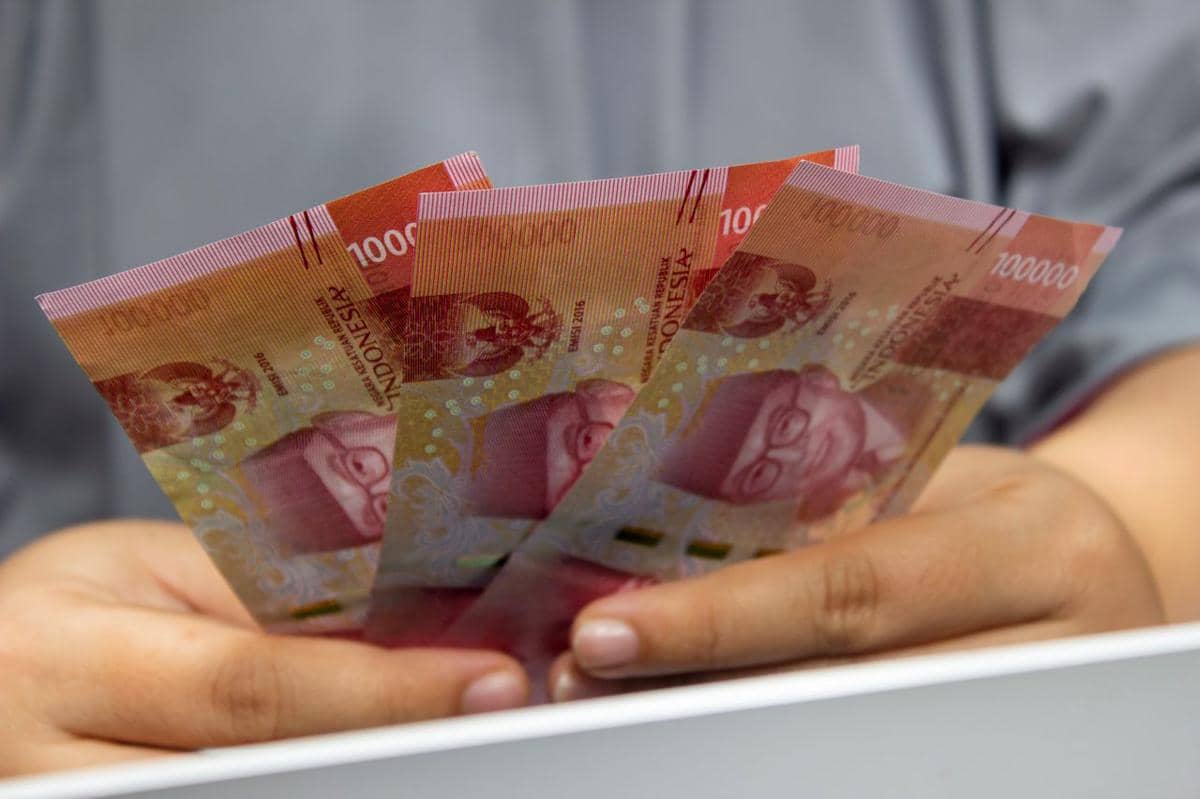
The import price index for Q2 2026 rose 25.45% year-on-year as the rupiah reached Rp17,855 per US dollar, yet consumer inflation in August stood at 3.19%.
Consumers are increasingly seeking value-for-money; price and promotions influence their choices, but the data does not yet prove that young consumers are switching directly from global to local brands.
Local and global brands alike face import cost pressure; quality, innovation, transparency, trust, and commensurate benefits determine repurchase.
Import prices in Indonesia have risen sharply compared with last year. Statistics Indonesia (BPS) recorded that the Import Price Index (IHM) for the second quarter of 2026 rose 25.45% year-on-year and 14.19% compared with the previous quarter. In the foreign exchange market, Bank Indonesia (BI) recorded the rupiah at Rp17,855 per US dollar on 18 August 2026.
For marketers, these macro figures do not stop at the trade balance. Changes in import costs can eventually feed into pricing, product mix, and even consumer decisions at the shelf. As products with imported components become more expensive, the question shifts: are young consumers starting to look for local alternatives?
The available data offers a more layered answer. Price pressure does heighten the importance of value-for-money, but it has yet to show young consumers moving directly from global brands to local ones.
Import Prices Rise, and the Pressure Reaches Consumers
The increase in the IHM was not uniform across groups of goods. BPS recorded that oil and gas import prices rose 37.97% year-on-year, while non-oil-and-gas import prices rose 23.10%. The increases came amid pressure from global commodity prices and the rupiah exchange rate.
Citing its August 2026 Monetary Policy Review, BI stated that the war in the Middle East had once again pushed up global oil and commodity prices. The rupiah's level on 18 August means one US dollar was roughly 6% more expensive than the end-2025 JISDOR rate of Rp16,782. BI also stated that rupiah stabilization is aimed at containing the spillover of imported inflation.
However, cost pressure on the import side does not automatically translate into consumer price increases of the same magnitude. Consumer inflation in June 2026, the final month of the second quarter, was recorded at 3.34% year-on-year. BPS subsequently recorded August 2026 inflation at 3.19%, with core inflation at 2.92%. At the wholesale level, the Wholesale Price Index (IHPB) for June 2026 rose 6.51%.
The difference in the pace of increase between import prices and consumer prices indicates that higher import prices have not yet been reflected in consumer prices to the same degree. Purchase contracts, older inventory, distribution costs, margins, and producers' pricing strategies can cause part of the increase to be absorbed or delayed.
Solihin, Chairman of Aprindo (the Indonesian Retailers Association), as reported by CNBC Indonesia in May 2026, said that price increases at the producer level, for example due to plastic prices, are ultimately passed on to consumer selling prices.
This is where pricing becomes relevant for brands. The question is not merely whether costs are rising, but how much of the cost increase can be passed on to consumers without leaving the product uncompetitive.
When Prices Start to Affect the Value Equation
Indonesian consumers' price sensitivity was already visible before the surge in import prices in the second quarter. Worldpanel by Numerator, in its Indonesia FMCG Outlook 2026, describes households that shop with a value orientation. In the home care category, consumers buy less often and use products more sparingly. FMCG consumption in major cities and rural areas has declined, while secondary cities have been relatively better able to absorb price increases.
The PwC Voice of the Consumer 2026 survey of 503 Indonesian respondents, conducted from February to March 2026, found that 77% of consumers prioritize benefits commensurate with cost when choosing health and wellness products. In the same category, 64% of respondents cited price as a key factor. The survey focuses on the health category, but the pattern is consistent with Worldpanel's findings.
For marketers, this means the value proposition is increasingly being put to the test. When consumers are more price-sensitive, a price gap does not stand alone. Consumers also weigh what benefits they receive for every rupiah spent.
Aprindo, in the same statement, observed that a shift toward cheaper products has been under way since late 2025. Consumers who were once loyal to a particular shampoo brand are now choosing more affordable options.
For Gen Z specifically, public data measuring price sensitivity in Indonesia in 2026 remains limited. The closest data comes from a Jakpat survey in April 2025, which found that promotions and discounts were a strong trigger for purchasing local products among 65% of Gen Z respondents.
This means that the 2026 price pressure arrives amid value-seeking behavior that had already taken shape. Consumers did not just start calculating this year. What has changed is the growing importance of the value equation in purchase decisions.
Do Local Brands Gain an Opening?
Local products entered 2026 with an already strong user base. A Jakpat survey of 1,394 respondents on 10–14 April 2025 found that 95% of respondents use local products. Three out of five have been using them for more than three years. Price affordability (72%) was the main reason for choosing local products, and was most pronounced among Gen X.
This is an important note for reading the opportunity for market switching. Price is indeed a reason for choosing local products, but its influence is most pronounced among older age groups. The assumption that Gen Z chooses local primarily because of price still needs to be tested.
Has the rise in import prices then suppressed demand for imported consumer goods? BPS data does not yet show this clearly. In June 2026, the value of consumer goods imports still grew 17.46% year-on-year. Because this figure is value-based, the data is not sufficient to conclude that demand for imported goods has increased. Still, at the least, no sharp contraction in the value of consumer goods imports is yet visible. In March 2026, consumer goods imports did fall 10.81%, so the movement is better read as fluctuation.
There is one factor that is often overlooked in discussions of local versus global brands: the cost structures of the two are not always as different as the labels suggest. Raw materials and auxiliary materials are Indonesia's largest import group, and their value rose 38.94% year-on-year in June 2026.
For local brands that depend on imported inputs, such as packaging, chemicals, or components, a weaker rupiah can create the same cost pressure. Under such conditions, the price gap with global brands can narrow.
The available data is not sufficient to conclude that the 2026 price pressure has driven young consumers to switch from global to local brands. What is clearer is a change in competitive context: as consumers pay more attention to value-for-money, local brands gain room to win consumer consideration, while global brands need to strengthen the rationale behind their price premium.
Cheap Alone Is Not Enough
Price can be an entry point, but it is not necessarily the reason consumers stay. Jakpat recorded that pride in domestic products (56%) and ease of obtaining products (56%) also contribute to the choice of local. On the other hand, doubts about quality and exaggerated claims remain barriers for local products.
The skincare category offers a clear example, although its data dates from 2025. A Populix survey of 1,100 millennials and Gen Z respondents, released in May 2025, found that 87% of respondents use local skincare. Consumers interested in foreign products cited innovation and technology (56%) and better raw materials (48%) as their main reasons. More competitive pricing was cited by only 11% of respondents.
In this category, price advantage is not the only source of competitive advantage. Global brands still have room to maintain a price premium when consumers see innovation and ingredients as benefits commensurate with the price.
Trust also determines retention. In the same 2026 PwC survey, 88% of respondents said trust in a brand is as important as price and quality. A total of 81% are willing to switch to a more transparent brand. At the regional level, YouGov reported that nearly nine in ten Gen Z consumers in Southeast Asia have stopped buying from a brand after losing trust in it.
Competition is also becoming more crowded. Worldpanel's Brand Footprint 2026 report found that only 44% of FMCG brands grew in 2025, down from 62% the previous year. Around 80% of the brands that grew succeeded in adding new buyers.
These figures make customer acquisition an important part of the competition. When consumers are increasingly active in evaluating their options, a local or global label alone is not enough to win consideration, let alone secure repeat purchase.
Implications for Industry Players
If consumers are becoming more price-sensitive, every brand must be able to answer one question: what value do consumers get when they choose our product?
This question is not only about pricing. For marketers, the answer touches on value proposition, customer acquisition, retention, and how a brand maintains its price position amid shifts in purchasing power.
For local brands
First, use price as an entry point, then retain consumers through quality. The biggest barriers for local products are doubts about quality and exaggerated claims. Measurable claims, clear ingredient information, and product test evidence help turn trial into repeat purchase.
Second, use promotions as a customer acquisition tool. Promotions have been shown to attract Gen Z, and Worldpanel data shows that brand growth relies heavily on adding buyers. The challenge is then not only to secure the first purchase, but to ensure the product experience is strong enough to generate the next one.
Third, map cost exposure before making low prices the primary weapon. If raw materials and packaging depend on imports, the price advantage can shrink when the exchange rate moves. Low-price positioning needs to be built on a cost structure that can be sustained.
For global brands
First, make the rationale behind the price premium visible. Populix data shows that young consumers choose foreign products because of innovation and ingredients. When the price gap widens, these advantages need to be communicated concretely, with claims that can be substantiated.
Second, prepare a more flexible price architecture. Worldpanel emphasizes the importance of varied pack sizes and pricing structures that adapt to shoppers' circumstances. Small-size variants or value formats can keep a brand within the consideration set of consumers who are economizing.
Third, do not rely on brand equity as the only safeguard. For Gen Z, trust is one of the important factors in sustaining a relationship with a brand. YouGov data shows that a loss of trust can make them stop buying.
The 2026 price pressure has not proven that young people are abandoning global brands. What is visible is consumers who are increasingly careful in weighing what they get for every rupiah.
For marketers, the question then shifts from simply "what is our product's price?" to "why do consumers feel that price is worth paying?" Amid cost pressure and increasingly crowded competition, a brand's ability to translate price into perceived value becomes an important part of competitive strategy.
References
(Titles of Indonesian-language sources are kept in the original, with an English gloss in brackets.)
Badan Pusat Statistik. (2026, 1 September). Indeks Harga Ekspor dan Indeks Harga Impor Indonesia Triwulan II-2026 masing-masing naik sebesar 10,92% dan 14,19% dibandingkan triwulan sebelumnya [Export and import price indices of Indonesia for Q2 2026 rose by 10.92% and 14.19% respectively compared with the previous quarter] [Official Statistical News]. Retrieved 23 September 2026, from https://www.bps.go.id/id/pressrelease/2026/09/01/2613/indeks-harga-ekspor-dan-indeks-harga-impor-indonesia-triwulan-ii-2026-masing-masing-naik-sebesar-10-92-persen-dan-14-19-persen-dibandingkan-triwulan-sebelumnya.html
Badan Pusat Statistik. (2026, 1 September). Inflasi year-on-year (y-on-y) pada Agustus 2026 sebesar 3,19 persen [Year-on-year (y-on-y) inflation in August 2026 was 3.19 percent] [Official Statistical News]. Retrieved 23 September 2026, from https://www.bps.go.id/id/pressrelease/2026/09/01/2611/inflasi-year-on-year--y-on-y--pada-agustus-2026-sebesar-3-19-persen-.html
Badan Pusat Statistik. (2026, 31 August). Statistik perdagangan luar negeri bulanan impor Juni 2026 [Monthly foreign trade statistics: Imports, June 2026]. Retrieved 23 September 2026, from https://www.bps.go.id/id/publication/2026/08/31/0ce6cf7a4d238bc6da50fce1/statistik-perdagangan-luar-negeri-bulanan-impor-juni-2026.html
Badan Pusat Statistik. (2026). Berita resmi statistik [Official statistical news] [Wholesale Price Index, June 2026]. Retrieved 23 September 2026, from https://www.bps.go.id/en/pressrelease
Bank Indonesia. (2026, 21 August). Tinjauan kebijakan moneter Agustus 2026 [Monetary policy review, August 2026]. Retrieved 23 September 2026, from https://www.bi.go.id/id/publikasi/laporan/Pages/TKM-Agustus-2026.aspx
CNBC Indonesia. (2026, 12 May). Diam-diam banyak warga RI mulai pilih beli barang murah, ada apa? [Quietly, many Indonesians are starting to choose cheaper goods—what's going on?]. Retrieved 23 September 2026, from https://www.cnbcindonesia.com/news/20260512141218-4-734414/diam-diam-banyak-warga-ri-mulai-pilih-beli-barang-murah-ada-apa
CNN Indonesia. (2026, 3 August). BPS catat impor RI tembus US$25,91 M per Juni 2026, ini penyebabnya [BPS records Indonesia's imports reaching US$25.91 billion as of June 2026; here is why]. Retrieved 23 September 2026, from https://www.cnnindonesia.com/ekonomi/20260803145742-532-1388036/bps-catat-impor-ri-tembus-us-2591-m-per-juni-2026-ini-penyebabnya
Fortune Indonesia. (2025, 16 May). Gen Z-milenial pilih skincare lokal, meski banjir produk impor [Gen Z and millennials choose local skincare despite a flood of imported products]. Retrieved 23 September 2026, from https://www.fortuneidn.com/business/survei-gen-z-milenial-pilih-skincare-lokal-meski-banjir-produk-impor-00-4pj81-w4v19z
Jakpat. (2025, 22 August). Local products gain momentum in Indonesia. Retrieved 23 September 2026, from https://insight.jakpat.net/local-products-gain-momentum-in-indonesia/
Kontan. (2025, 30 December). Rupiah akhir 2025: Menguat 0,10% di perdagangan terakhir, pelemahan tahunan 3,96% [Rupiah at end-2025: Strengthens 0.10% in final trading, annual weakening of 3.96%]. Retrieved 23 September 2026, from https://pusatdata.kontan.co.id/news/rupiah-akhir-2025-menguat-010-di-perdagangan-terakhir-pelemahan-tahunan-396
Kontan. (2026, 4 May). BPS: Impor barang konsumsi Maret turun 10,81%, bahan baku dan barang modal naik [BPS: Consumer goods imports fell 10.81% in March, raw materials and capital goods rose]. Retrieved 23 September 2026, from https://nasional.kontan.co.id/news/bps-impor-barang-konsumsi-maret-turun-1081-bahan-baku-dan-barang-modal-naik
Media Asuransi. (2025, 17 May). Survei Populix: Meskipun dibanjiri produk luar, skincare lokal masih juara [Populix survey: Despite being flooded with foreign products, local skincare is still the champion]. Retrieved 23 September 2026, from https://mediaasuransinews.co.id/ekonomi-bisnis/survei-populix-meskipun-dibanjiri-produk-luar-skincare-lokal-masih-juara/
Periskop.id. (2026, 3 August). BPS: Impor RI semester I 2026 capai US$136,24 miliar [BPS: Indonesia's imports in the first half of 2026 reach US$136.24 billion]. Retrieved 23 September 2026, from https://periskop.id/ekonomi/20260803/bps-impor-ri-semester-i2026-capai-us13624-miliar
PwC Indonesia. (2026, 3 September). Masyarakat Indonesia semakin mengandalkan teknologi, sumber terpercaya dan komunitas dalam menjalani gaya hidup yang lebih sehat, menurut survei PwC [Indonesians increasingly rely on technology, trusted sources, and community in pursuing healthier lifestyles, according to a PwC survey] [Press release]. Retrieved 23 September 2026, from https://www.pwc.com/id/en/media-centre/press-release/2026/indonesian/voice-of-the-consumer-survey-2026.html
RRI. (2026, 16 July). Laporan Brand Footprint 2026: Persaingan merek FMCG di Indonesia kian ketat [Brand Footprint 2026 report: FMCG brand competition in Indonesia grows fiercer]. Retrieved 23 September 2026, from https://rri.co.id/ekonomi/bisnis/2572361/laporan-brand-footprint-2026-persaingan-merek-fmcg-di-indonesia-kian-ketat
Tabloid Bintang. (2026, July). Persaingan FMCG makin ketat, Worldpanel ungkap strategi agar merek terus tumbuh [FMCG competition intensifies; Worldpanel reveals strategies for brands to keep growing]. Retrieved 23 September 2026, from https://www.tabloidbintang.com/gaya-hidup/216980-persaingan-fmcg-makin-ketat-worldpanel-ungkap-strategi-agar-merek-terus-tumbuh
Tempo. (2026, 1 September). Analis memprediksi rupiah melemah pada September [Analysts predict the rupiah will weaken in September]. Retrieved 23 September 2026, from https://www.tempo.co/ekonomi/analis-memprediksi-rupiah-melemah-pada-september-2284847
Worldpanel by Numerator. (2026, 8 June). Shoppers' quest for value and inspiration is reshaping Indonesian FMCG. Retrieved 23 September 2026, from https://worldpanelbynumerator.com/insights/indonesia-fmcg-outlook-2026
YouGov. (2026, 18 March). APAC report: The Gen Z brand leaderboard. Retrieved 23 September 2026, from https://yougov.com/reports/54323-apac-report-the-gen-z-brand-leaderboard