59.1% Use PayLater to Manage Their Finances: Is It Like a Credit Card?
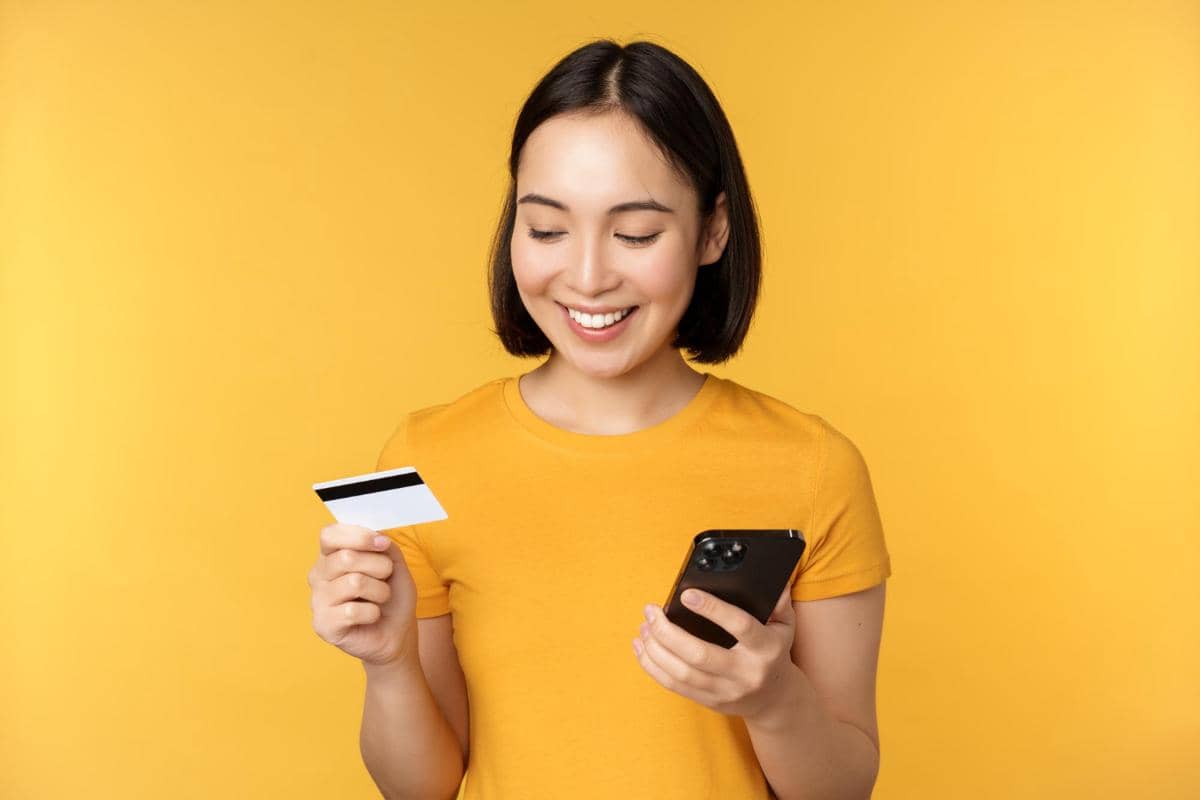
A KIC-OVO Finansial survey of Gen Z and millennials found that 59.1% use PayLater to manage their finances, exceeding the 41.1% who cite a lack of funds.
As of August 2026, bank BNPL credit reached Rp31.41 trillion and financing company BNPL financing reached Rp13.61 trillion; integration with QRIS is extending its use to everyday transactions.
Easy applications and flexible payments widen access to PayLater, but the bill must still be paid; OJK is tightening rules on eligibility assessment, consumer protection, and debt collection.
What do we usually think when someone uses PayLater? Perhaps that they don’t have enough money to pay right now. However, a survey by Katadata Insight Center (KIC) and OVO Finansial points to a more interesting reason: 59.1 percent of respondents use PayLater as a tool for managing their finances.
That figure is even higher than the proportion of respondents who use PayLater because they lack sufficient funds, at 41.1 percent. Meanwhile, 40 percent of respondents cited cashback or promotions as one of their reasons for using it, and 36.1 percent use it because they worry about unexpected expenses.
These findings make PayLater look somewhat different from a mere facility for buying something when money is not yet available. For some users, the service is also positioned as a way to manage when money leaves their budget.
At this point, PayLater becomes interesting to examine not only as a payment method but as part of how consumers manage their finances. Is its role beginning to resemble that of the credit card, which has long given consumers the option to use something now and pay for it later?
PayLater Is No Longer Just an Option at Checkout
That question becomes even more relevant when we look at how PayLater has developed in Indonesia.
According to a press release from the Financial Services Authority (OJK) issued on October 5, 2026, outstanding BNPL credit from banks reached Rp31.41 trillion across 34 million accounts as of August 2026. This was growth of 29.10 percent year-on-year (yoy), although it still accounts for only 0.34 percent of total bank credit. In the same period, BNPL financing by financing companies grew 36.57 percent yoy to Rp13.61 trillion.
This scale shows that PayLater is no longer a service on the fringes of the payment system. However, growth figures alone do not explain the more interesting change: PayLater is beginning to be used in contexts broader than paying for purchases at e-commerce checkout.
For several years, consumers generally encountered PayLater only once they were already inside a shopping platform that offered it. Now, the option to pay later is beginning to connect with the payment infrastructure used in everyday transactions.
When PayLater Meets QRIS
QRIS has become one of the widest-reaching digital payment gateways in Indonesia. Citing a Bank Indonesia (BI) press release dated September 24, 2026, as of August 2026 QRIS acceptance reached 69.32 million users and 47.11 million merchants. With a single QR code standard, a wide variety of payment apps can be used at the same point of transaction.
This is where PayLater comes in. The official PayLater BCA page, for example, states that users can choose PayLater as the source of funds when paying through the QRIS feature in the myBCA app, at merchants that accept QRIS payments. Limits range from Rp1 million to Rp20 million, with tenors of 1, 3, 6, or 12 months. For transactions under Rp100,000, BCA offers a one-month tenor, in other words, pay later.
This example needs to be read precisely. The existence of this feature does not mean that every QRIS transaction can now be paid with PayLater. BCA itself states that merchants may refuse payment using PayLater BCA. Nevertheless, the example is enough to show that at least one BNPL service can already serve as a source of funds for QRIS transactions.
This change matters because it brings together two different functions. QRIS expands where consumers can make digital payments, while PayLater expands the choices about when payment is made. When the two meet, deferred payment can appear in more everyday transactions.
So, returning to the original question: why do consumers choose to delay payment if not solely because they don’t have the money at the time?
When PayLater Is Used to Manage Finances
The KIC and OVO Finansial survey of 2,153 Gen Z and millennial respondents (2025), as reported by Databoks, offers a clue.
A total of 59.1 percent of respondents cited using PayLater as a tool for managing their finances. Not having enough money came second at 41.1 percent, followed by the desire to collect cashback points or promotions at 40 percent and concern about unexpected expenses at 36.1 percent.
KIC Research Director Gundy Cahyadi explained that respondents felt PayLater helps them allocate and record their expenses each month. This means that some users do not position PayLater solely as a way out when their balance is insufficient. The service can also be understood as a tool for timing when money goes out.
These findings certainly do not mean that 59.1 percent of respondents use PayLater because they are in healthy financial condition, or that PayLater is always used for the same purpose. Respondents could choose more than one reason, so the categories “managing finances” and “not having enough money” may overlap.
Yet that overlap is precisely what makes it interesting. One person might use PayLater to organize cash flow on one occasion, but use it because their balance is insufficient on another. The line between “unable to pay now” and “choosing to pay later” thus becomes not always clear-cut.
This is where PayLater begins to touch on a larger question: how do consumers determine that something is affordable?
Affordability Is No Longer Just About Today’s Balance
In everyday life, affordability is usually measured in a simple way. There is a price on the label and a balance in the account. If the balance is enough, the item is considered affordable.
Deferred payment adds another question: not only whether the money is available now, but whether the payment obligation can still be accommodated within the budget after the transaction takes place.
Someone might have the money to pay for a need today, yet choose to delay payment so that those funds remain available for other needs before the next payday. In such a situation, the decision to use PayLater does not necessarily mean the item is beyond their means. What changes is when the expense is charged to the budget.
Thus, PayLater does not change the price of goods. What changes is the position of that payment within the consumer’s financial management.
The available data are also not sufficient to conclude that this change makes people spend more. What can be seen is that the timing of payment increasingly enters into consideration when consumers decide how an expense will be borne.
When Paying Later Becomes Ever Easier
That option has also become easier to access. The same KIC and OVO Finansial survey found that 63.1 percent of respondents like PayLater’s easy and fast application process. A total of 56.7 percent feel comfortable because PayLater can be used for many needs, from daily necessities to electronics. Meanwhile, 52.2 percent cited flexible payment and 50.9 percent appreciate the absence of physical collateral requirements.
Taken together, the barriers to using PayLater are shrinking. Applications have been made brief, the range of needs that can be financed has widened, and through QRIS, the transaction points that can be linked to the service have also increased.
In a flow like PayLater BCA’s, the source of funds can even be chosen directly when the consumer pays through QRIS. The decision to buy and the decision about how to pay for the transaction can ultimately occur in a single sequence.
The question then is no longer simply whether consumers can use PayLater, but how that convenience affects the way they account for obligations yet to come.
Convenience on the screen still ends in a bill on the due date.
Ease of Access Still Carries Consequences
The experience of paying may be getting lighter, but the obligation remains whole. The terms of PayLater BCA, for example, stipulate late payment penalties and even the possible blocking of the facility if the bill is not paid in full.
OJK data (2026) give a picture of this side at the industry level. As of August 2026, the gross non-performing financing (NPF) ratio of financing companies’ BNPL stood at 3.03 percent, almost the same as the gross NPF of the financing company industry as a whole at 3.04 percent.
On the regulatory side, OJK issued OJK Board of Commissioners Member Regulation (PADK) No. 2 of 2026 on May 4, 2026. As an implementation of POJK No. 32 of 2025 on the Implementation of BNPL, this regulation governs BNPL provision by financing companies and sharia financing companies. Its scope covers prudential principles, consumer protection, data management, eligibility analysis and credit scoring, information disclosure, and debt collection. The eligibility analysis concerning debtors’ age limits and income takes effect no later than July 1, 2026.
The direction of these rules shows that the easier it becomes to shift payment into the future, the more important it is to be able to account for the obligations that move there as well, on the part of both service providers and consumers.
From “Can Buy” to “When to Pay”
PayLater may not change the basic question in consumption. Consumers still need to consider whether they can afford to pay for something.
However, the way of answering that question now has an additional dimension. Beyond “how much does it cost?” and “is the money there or not?”, another question arises: “when does the money have to go out?”
The finding that 59.1 percent of respondents use PayLater to manage their finances becomes interesting in this context. The figure does not prove that PayLater makes consumers more consumptive, but it shows that, for some users, the service has taken on a function broader than financing purchases when money is unavailable.
PayLater gives consumers the option to shift the timing of payment. As that option becomes easier to use and appears in more and more transactions, the timing of payment becomes part of how consumers assess an expense.
In the end, consumers decide not only what they want to buy and how much it costs, but also when that expense will enter their financial calculations.
References
Bank Indonesia. (2026, September 24). FEKDI x IFSE 2026: Sinergi pacu ekonomi keuangan digital Indonesia [FEKDI x IFSE 2026: Synergy to accelerate Indonesia’s digital financial economy] [Press release]. Accessed October 7, 2026, from https://www.bi.go.id/id/publikasi/ruang-media/news-release/Pages/sp_2819626.aspx
Muhamad, N. (2025a, January 6). Alat atur keuangan, alasan terkuat Gen Z dan milenial menggunakan paylater [A financial management tool, the strongest reason Gen Z and millennials use paylater]. Databoks. Accessed October 7, 2026, from https://databoks.katadata.co.id/media/statistik/67496b0b7e22f/alat-atur-keuangan-alasan-terkuat-gen-z-dan-milenial-menggunakan-paylater
Muhamad, N. (2025b, January 6). Ini manfaat paylater dari segi kenyamanan menurut Gen Z dan milenial di Indonesia [These are paylater’s benefits in terms of convenience according to Gen Z and millennials in Indonesia]. Databoks. Accessed October 7, 2026, from https://databoks.katadata.co.id/media/statistik/6749754c41339/ini-manfaat-paylater-dari-segi-kenyamanan-menurut-gen-z-dan-milenial-di-indonesia
Otoritas Jasa Keuangan. (2026a). Peraturan Anggota Dewan Komisioner Otoritas Jasa Keuangan Nomor 2 Tahun 2026 tentang Penyelenggaraan Beli Sekarang Bayar Nanti (Buy Now Pay Later) bagi Perusahaan Pembiayaan dan Perusahaan Pembiayaan Syariah [Financial Services Authority Board of Commissioners Member Regulation No. 2 of 2026 on the Implementation of Buy Now Pay Later for Financing Companies and Sharia Financing Companies]. Accessed October 7, 2026, from https://ojk.go.id/id/regulasi/Pages/PADK-2-Tahun-2026-Penyelenggaraan-BNPL-Bagi-Perusahaan-Pembiayaan-dan-Perusahaan-Pembiayaan-Syariah.aspx
Otoritas Jasa Keuangan. (2026b, October 5). Siaran pers: Stabilitas sektor jasa keuangan terjaga di tengah meningkatnya tekanan perekonomian global [Press release: Financial services sector stability maintained amid rising global economic pressure] [Press release]. Accessed October 7, 2026, from https://ojk.go.id/id/berita-dan-kegiatan/siaran-pers/Pages/RDKB-September-2026.aspx
PT Bank Central Asia Tbk. (n.d.). Paylater BCA. Accessed October 7, 2026, from https://www.bca.co.id/Individu/layanan/e-banking/mybca/paylater-bca