Experience Comes Before Community: The Function Shift of Community
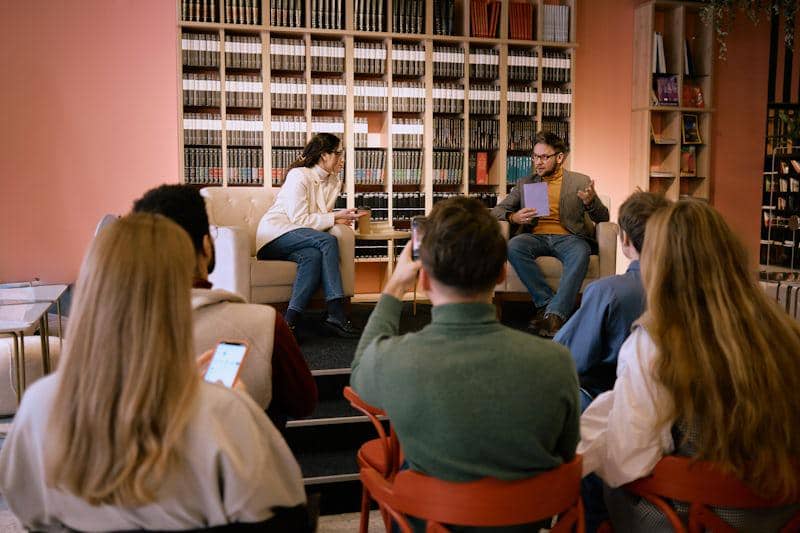
Community is shifting: consumers often choose a destination or activity first, then look for relevant people to do it with.
Open trips, travel buddies, and activities such as Join Dong bring participants together around a specific context, including timing, budget, interests, and the pace of the activity.
Community does not always require a lasting identity or long-term relationship; its value can come through information, safety, logistics, and shared experience when it is needed.
We have long tended to imagine community as the starting point of an experience. People join because they share an identity, interest, value, occupation, age, or background. Once inside the community, they then do various activities together.
However, patterns emerging across several categories point to a different sequence. Someone wants to go to a destination, then looks for a travel buddy. Someone wants to attend a concert, then looks for others who also want to go. Someone wants to go hiking on the weekend, then finds a group with a similar goal.
They do not always find a community first. They find the experience first, and then find people who want to experience it together.
This change looks simple, but it carries larger implications for how we understand community. A community does not always have to be an identity that consumers hold, or a place where they feel they must belong over the long term. In certain contexts, it can become an access layer to an experience: a gateway to discovering experiences, information, relevant people, and even the sense of safety needed to try something that may be difficult to do alone.
There is no national data measuring how widespread this behavior is in Indonesia. For that reason, the pattern is not yet sufficient to be called a mass behavioral shift. Nevertheless, signals from the travel, entertainment, and activity-based community sectors suggest that consumers now have more ways to find people who are relevant to the experiences they want to have.
The question, then, is not only why people join communities, but what they are actually looking for when they come to them.
Consumers Do Not Always Choose a Group Before Choosing an Experience
Domestic travel activity in Indonesia is itself very large in scale. Badan Pusat Statistik (BPS, 2026) recorded 107.44 million domestic tourist trips (wisatawan nusantara) in July 2026, while the total for domestic trips from January to July 2026 reached 737.85 million. The size of these figures indicates an active travel market, although the data do not explain how consumers form their travel groups.
A signal closer to this change can be seen in the growth of open trips and the search for travel buddies. In this model, a person does not need to have a group of their own before deciding on a trip. They can choose the destination and time first, then look for others with similar plans.
Backpacker Indonesia (2026), for example, has a dedicated space called “Cari Teman Jalan” (“Find a Travel Companion”) that connects users based on specific travel plans.
Platforms such as Togera (2026) take a similar approach, connecting users based on the destination and activity they want to do.
What is interesting is not merely the existence of these platforms, but the change in how consumers look for connection. They are not always looking for “friends” in the broad sense. They are looking for a friend to go to Bali with, a hiking friend, a concert friend, or someone departing on the same date.
The criteria can also become increasingly specific, ranging from budget, travel style, and activity pace to the purpose of the trip.
For this reason, going alone does not always mean wanting to be alone. There is a difference between deciding alone, traveling alone, and experiencing something alone. A person can decide on their own destination and travel dates, yet still want to share the experience with others. Nor do they have to make those people part of their permanent social circle.
Whereas choices were once often limited to the people already around us, the experience itself can now become the starting point for finding relevant people.
From “Who Do I Know?” to “Who Is a Good Fit for This Experience?”
This change makes the concept of compatibility increasingly important. When consumers look for travel companions, they are not actually seeking social relationships in the abstract. They are looking for someone who fits a particular context.
This explains why searches for a travel buddy are often accompanied by information about destination, dates, age, gender, city of origin, budget, and travel style. These criteria are not merely a way of choosing new friends. They are an effort to reduce the likelihood of friction while the experience is under way.
In this context, the definition of “friend” becomes more specific. A good concert friend is not necessarily a good companion for a long trip. A hiking friend is not necessarily suited to a trip at a relaxed pace. An open trip participant will not necessarily become a close friend once the trip is over.
Nevertheless, such relationships still hold value for as long as the context that brought the people together remains relevant.
This pattern broadens how we understand the formation of social groups. We are more familiar with the social circle: a person first knows a group of people, then chooses activities they can do together.
The model developing around travel buddies, open trips, and activity communities suggests another possibility. A person decides first what they want to do, then finds people who share a similar interest.
The difference lies in the starting point. In a social circle, people come before the activity. In an interest circle, the activity can come before the people.
Join Dong Shows How Activities Can Become a Gateway to Community
This pattern is not limited to travel. Join Dong offers a broader example of how an activity can become a gateway into a community.
According to a report by Detik Community Connect (2025), Join Dong has around 20 thousand members and offers a range of activities, from sports, culinary events, and concerts to traveling and voluntrips (volunteer trips). Members can choose the activities they want to take part in without having to start from one highly specific community identity.
This model is interesting because the relationship between activity and community is sequenced differently. Consumers can come because they are drawn to an activity, meet others who share the same interest, and then form connections that may carry on into the next activity.
Community can form as a consequence of an experience done together, rather than always being its prerequisite.
What Are Consumers Actually Looking For?
To sum up, the “join dong” behavior brings together three needs that have often been seen as pulling against one another: autonomy, connection, and compatibility.
Autonomy means consumers want to decide their own activities, dates, and destinations without having to wait for their circle of friends to be available. Connection means they still want part of the experience to be shared with others, whether for reasons of cost, safety, or because certain experiences are simply more enjoyable when shared.
Compatibility, meanwhile, means that the people they share the experience with need to be sufficiently well matched in budget, pace, and interests, so that an experience already planned does not turn into a source of friction.
In the past, satisfying all three at once was relatively difficult. Going with longtime friends meant possibly having to compromise on choices and timing, while going alone gave more control but reduced part of the shared experience.
Now, some consumers have another option: they can decide on the experience themselves first, and then choose who they want to share it with.
This is where the larger change begins to show. Consumers do not always need a single social group for all of their experiences. A concert friend is not necessarily a traveling friend, a hiking friend is not necessarily a hangout friend, and fellow open trip participants may be friends for just two days.
They can form different connections for different activities, while choosing for themselves when to be independent and when to connect with others.
For businesses that sell experiences, this makes the role of the people within an activity more interesting. They are no longer merely an audience or participants. In certain contexts, they help shape the experience that each of them feels.
Community Does Not Have to Be a Permanent Identity
This perspective also changes how we evaluate a community. Community is often associated with belonging, engagement, and retention. The longer someone stays and the more often they interact, the stronger the community is considered to be.
That model remains relevant for communities that are indeed built for the long term. However, not all communities serve that function.
Imagine an open trip. A chat group may be created a few weeks before departure. Activity becomes very intense during the trip, then gradually tapers off after all the participants return home.
That relationship may not develop into a long-term friendship, but this does not mean the community failed to fulfill its function.
During the trip, the group can help participants share information, organize logistics, split costs, feel safer, and enjoy the experience together. When the trip ends, those needs may end as well.
This means the duration of a relationship is not the only measure of a community’s value. In some contexts, the relevance of a relationship at the moment it is needed matters more than how long it lasts.
Consumers likewise do not always need a single community to meet all of their social needs. They can have concert friends who differ from their traveling friends, a hiking group that differs from their hangout group, or a particular community they join only when a fitting activity comes up.
Social relationships become more contextual. This does not mean relationships become shallower, but that the needs that bring people together become increasingly specific.
From Social Circle to Context Circle
If this pattern continues to develop, the concept of the interest circle could move further, toward the context circle. People are connected not only because they share an interest, but because they share a context for doing something.
Two people may have no prior relationship, yet both want to see a particular concert. A group of people may not share a social identity, yet all want to climb a mountain on the weekend. People from different cities can meet because they have the same travel destination.
That context may last only a few hours, a day, or a single trip. Yet for as long as the context is relevant, the connection still holds value.
This change does not mean the social circle becomes unimportant. Family, friends, professional communities, fandoms, and hobby groups remain strong sources of connection. What has changed is the number of paths available for forming a group.
Consumers can now find people based on family, friendship, work, fandom, hobbies, destination, activity, time, and even budget. They no longer depend entirely on the people already in their social circle to determine who an experience can be shared with.
When Experience Becomes the Meeting Point
Interestingly, this change also does not mean consumers are becoming more individualistic.
They still seek connection, but not always in the same way. They want control over their own choices, but do not always want to go through an entire experience alone. They want to meet other people, but do not always need those relationships to become a permanent part of their social lives.
Autonomy, connection, and compatibility can be present in a single decision.
For this reason, social relationships can become more modular. A concert friend is not necessarily a traveling friend. A hiking friend is not necessarily a hangout friend. A person met on an open trip may only be part of one journey, yet can still provide an experience that would not be the same if the trip were taken alone.
Ultimately, this change may not be about a diminishing human need for community. The need to connect remains; the paths to it simply become more varied.
There are relationships built on identity. There are those born from friendship. There are those that grow from a shared interest. And there are those that arise because two people happen to want to do the same thing at the same time.
Not every relationship has to last long to be meaningful. Not every community has to have a strong identity to have a function. And not everyone who meets in an experience needs to become part of one another’s social life afterward.
Perhaps what matters more and more is that there is room for people to find connections that fit what they want to do at that moment.
A community does not always have to be a place where people stay. Sometimes, it is enough for it to be a place where people meet when they have the same reason to come.
References
Badan Pusat Statistik. (2026, September 1). Juli 2026, kunjungan wisman di Indonesia mencapai 1,53 juta kunjungan, jumlah perjalanan wisnus 107,44 juta, jumlah perjalanan wisnas 802,67 ribu, dan tingkat penghunian kamar (TPK) di hotel bintang 54,54 persen [July 2026: International visitor arrivals in Indonesia reached 1.53 million, domestic tourist trips 107.44 million, outbound trips by Indonesian residents 802.67 thousand, and star-hotel room occupancy rate 54.54 percent].
https://www.bps.go.id/id/pressrelease/2026/09/01/2609/juli-2026--kunjungan-wisman-di-indonesia-mencapai-1-53-juta-kunjungan--jumlah-perjalanan-wisnus-107-44-juta--jumlah-perjalanan-wisnas-802-67-ribu--dan-tingkat-penghunian-kamar--tpk--di-hotel-bintang-54-54-persen-.html
Jenius. (2026). Jenius Study 2026: Perilaku Traveling Lintas Generasi [Jenius Study 2026: Cross-Generational Travel Behavior]. https://www.jenius.com/article/detail/jenius-study-2026-traveling/
Backpacker Indonesia. (2026). Cari Teman Jalan [Find a Travel Companion]. https://backpackerindonesia.com/forum/7/
Togera. (2026). Travel Buddy Platform. https://www.togera.online/
Detik Community Connect. (2025). Ada yang Nikah-Bikin Band, Join Dong Nyatuin Semua yang Sefrekuensi! [Some Got Married, Some Formed Bands: Join Dong Brings Together Everyone on the Same Wavelength!]. https://www.detik.com/community-connect/d-8176732/ada-yang-nikah-bikin-band-join-dong-nyatuin-semua-yang-sefrekuensi
ANTARA. (2026, May 18). Liburan multigenerasi jadi tren perjalanan wisata [Multigenerational holidays become a travel trend]. https://www.antaranews.com/berita/5572141/liburan-multigenerasi-jadi-tren-perjalanan-wisata