4 Brands Dominate the Electric Vehicle Market: Implications for Brands
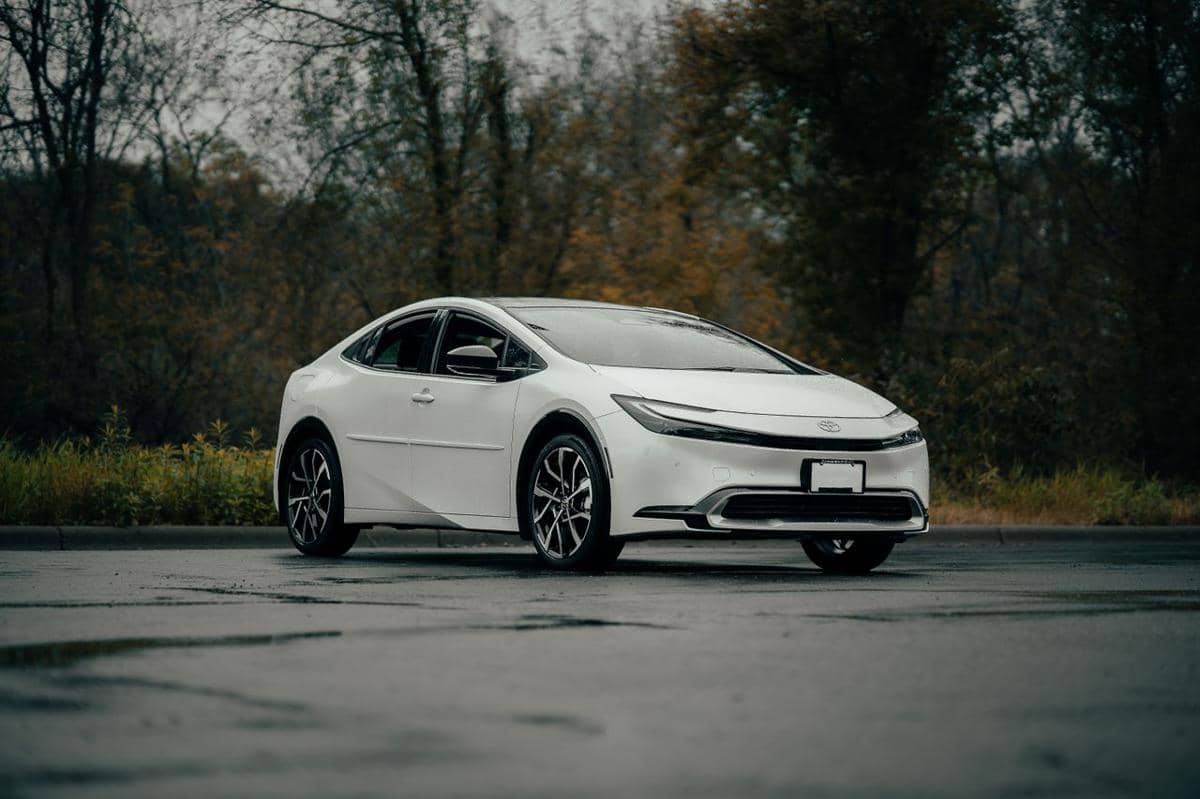
BEV distribution in June 2026 reached around 12,653 units, up 36.2% month-on-month and accounting for 16% of national wholesales, but this does not yet reflect end-consumer purchases.
The distribution surge was influenced by the low 2025 base, dealer stock replenishment, and BYD’s recovery; the new fiscal incentives had not yet taken effect in June 2026.
Four brands, BYD, Jaecoo, Geely, and Wuling, accounted for 77.17% of BEV distribution in June, leaving new entrants facing challenges in distribution networks, after-sales services, and consumer trust.
Distribution of electric vehicles in Indonesia has risen sharply again. Citing Dataindonesia.id (2026), distribution of battery electric vehicles (BEVs) from manufacturers to dealers reached 12,695 units in June 2026, up 35.76% from the previous month and 84.87% from June 2025. A slightly different figure was reported by Kompas Otomotif (2026a), based on Gaikindo data, at 12,653 units, representing a 36.2% month-on-month increase.
It is important to note that both figures measure wholesales, namely distribution from manufacturers to dealers. This figure does not necessarily reflect purchases by end consumers. The distinction is important for understanding what actually happened in June 2026.
Nevertheless, the surge does not mean that electric vehicles have become mainstream in Indonesia. Of the 77,550 units in total national car wholesales in June 2026, electric vehicles accounted for around 16%. This figure is the author’s calculation, obtained by dividing the Gaikindo BEV volume reported by Kompas Otomotif (2026a), which stood at 12,653 units, by total national wholesales in the same month.
For comparison, Kompas Otomotif (2026b) reported that BEVs accounted for 15.9% of the total national market from January to June 2026, with a cumulative volume of 69,739 units. In other words, the electric vehicle market is indeed growing rapidly, but its adoption rate remains relatively early compared with the automotive market as a whole.
At least three factors influenced the scale of this growth: the low comparison base in 2025, the nature of the data, which measures distribution rather than purchases, and the recovery of one manufacturer with a large market share. So, to what extent can the June 2026 figure be interpreted as a signal of rising consumer demand?
Electric Vehicles Are Growing Faster, but from a Low Base
The increase in electric vehicle distribution in June 2026 occurred as the national automotive industry also showed a positive trend. According to Kompas Otomotif (2026c), Gaikindo data showed that national car wholesales reached 77,550 units in June 2026, up 32.9% from June 2025, when the figure stood at 58,363 units. During the same period, retail sales from dealers to consumers reached 74,507 units, representing 19.6% year-on-year growth. On a monthly basis, the gap between the two was even wider. Wholesales rose 12% from May 2026, while retail sales increased by only 3.6%.
The difference between wholesales and retail growth is an important consideration. Distribution figures grew much faster than consumer purchases, indicating that part of the increase came from stock replenishment across the dealer network. Cumulatively, wholesales from January to June 2026 reached 436,564 units, or 15.9% higher than in the same period of the previous year.
The year-on-year growth recorded in June 2026 also needs to be considered alongside the previous year’s conditions. According to Stockbit Snips (2026), solid wholesales growth throughout the first half of 2026 was driven by a low-base effect, given that car sales in the first half of 2025 were relatively weak. Stockbit noted that June 2025 wholesales were the lowest monthly sales figure in 2025 outside the Ramadan and Eid al-Fitr periods. Average monthly sales during the first half of 2025 stood at around 62,800 units, while the figure reached approximately 72,800 units during the same period in 2026.
With such a low comparison base, the 84.87% growth in the electric vehicle segment and the 32.9% growth in the national market reflect a recovery from a low point and do not necessarily indicate an acceleration in demand.
Stockbit Snips (2026) assessed that the monthly increase in national car wholesales was driven primarily by the recovery of BYD sales to around 5,000 units, after falling to around 1,100 units in May 2026. This figure refers to BYD’s overall brand volume. Specifically for the BEV segment, Dataindonesia.id (2026) recorded BYD as the market leader with 3,439 units in June 2026.
This recovery pattern is most apparent at the model level. Citing Uzone (2026), distribution of the BYD Atto 1 surged from 26 units in May 2026 to 2,249 units in June 2026. An increase of this magnitude within a single month is more indicative of supply and distribution cycles than of a change in consumer interest.
Frequently Cited Factors, and When They Actually Took Effect
Several factors are often cited as drivers of electric vehicle market growth, ranging from fiscal incentives and a wider selection of models to increasingly affordable prices. Examining when each factor actually took effect helps distinguish the drivers that were already operating in June 2026 from those whose effects would only emerge later.
The role of fiscal incentives. One factor worth examining is the change in government incentive policies. The Government-Borne Value Added Tax (PPN DTP) program and import duty exemption for completely built-up (CBU) electric vehicles ended on December 31, 2025, and were not immediately extended at the beginning of 2026 (AstraOtoshop, 2026).
Not long after the incentives expired, electric vehicle distribution fell sharply in January 2026. Dataindonesia.id (2026) recorded a 52.97% decline from the previous month, while Kompas Otomotif (2026e) recorded a decline of around 52.1% from the December 2025 base of 21,021 units. The difference between the two figures resulted from differences in the data cuts used by each source. Regardless of which figure is used, January 2026 marked the deepest monthly decline between June 2025 and June 2026, based on the author’s calculation using the Gaikindo data series.
The government had indeed prepared a new PPN DTP scheme for pure electric vehicles, ranging from 40% to 100%, depending on the type of battery used, with a quota of 100,000 electric cars and 100,000 electric motorcycles. According to Pajakku (2026), the scheme was initially planned to take effect in June 2026.
That plan did not materialize. As reported by JPNN (2026), Finance Minister Purbaya Yudhi Sadewa announced a one-month delay on May 26, 2026, because the scheme’s calculations had not yet been finalized. Kompas.com (2026d) subsequently reported that the Minister of Finance Regulation serving as the legal basis for the new incentive was targeted for issuance in July 2026. By the end of June, however, its implementation remained uncertain. Bloomberg Technoz (2026) reported that Coordinating Minister for Economic Affairs Airlangga Hartarto stated on June 23, 2026, that the electric vehicle incentive had again been postponed by one month to August 2026 and was still under government review. Airlangga did not confirm the reason for the repeated delays, meaning that the August 2026 implementation target was also not yet final.
This means that the increase in electric vehicle distribution in June 2026 occurred before the fiscal incentives took effect. This finding reinforces the interpretation that the June surge was more closely associated with distribution cycles and a low comparison base.
The market’s sensitivity to fiscal policy was also evident in the preceding period. The PPN DTP program and import duty exemption for completely built-up (CBU) electric vehicles ended on December 31, 2025, and were not immediately extended (AstraOtoshop, 2026). Citing Kompas Otomotif (2026e), electric vehicle distribution in January 2026 fell by around 52.1% compared with December 2025, when it reached 21,021 units. Part of this decline represented normalization after consumers and dealers accelerated transactions ahead of the expiration of the incentives.
A wider variety of vehicle choices. Several developments often cited as drivers of the electric vehicle market actually occurred after June 2026, meaning their impact can only be measured in the second half of the year.
According to Gaikindo (2026), GIIAS 2026 took place from July 30 to August 9, 2026, at ICE BSD City and was attended by more than 65 brands, including 10 brands participating for the first time and 43 brands in the passenger car category. The event served as a launch platform for several new electric models.
As reported by Kompas Otomotif (2026f), Wuling officially launched the Aira EV on July 29, 2026, priced at Rp155 million for the Standard Range variant and Rp175 million for the Long Range variant. On the same day, Honda introduced the Super One. Citing Kompas Otomotif (2026g), Honda announced the price of the Super One on August 5, 2026, at Rp438 million on the road Jakarta, with a limited allocation of 100 units for 2026, all of which had been reserved before the official price was released. This price positioning indicates that the wave of new models following GIIAS occupies different price ranges, meaning that an increase in product choices does not automatically mean that entry-level prices continue to decline.
Because all of these events took place at the end of July, their contribution to market volume will only become visible in the August data and beyond. An increase in product choices could potentially expand the market, but its effect can only be measured once second-half data become available.
Increasingly accessible prices. Price changes are another factor that cannot be overlooked. When the Wuling Air ev was introduced in 2022, its initial price was around Rp238 million for the Standard Range variant (Wuling.id, 2022). A year later, as reported by Kompas Otomotif (2023), Wuling introduced the Air ev Lite at Rp206 million on the road Jakarta, which fell to Rp188.9 million after the PPN incentive.
Price comparisons across periods need to be considered with two caveats. First, prices in 2023 still benefited from the PPN incentive, whereas prices in July 2026 applied without incentives because the new scheme had not yet been issued. Second, nominal comparisons across years do not account for inflation, meaning that the actual decline in real prices is greater than what is visible from the nominal figures. This decline in entry-level prices makes electric vehicles increasingly affordable for consumer groups that had previously not considered electric vehicles as an option.
The Market Is Getting More Crowded, but Distribution Remains Concentrated Among Four Brands
The increase in distribution volume does not necessarily mean that all manufacturers are experiencing the same level of growth. According to Dataindonesia.id (2026), BYD distributed 3,439 units, Jaecoo 3,041 units, Geely 1,966 units, and Wuling 1,351 units in June 2026. Combined, the four brands accounted for 9,797 units, or 77.17% of total national electric vehicle distribution that month.
This dominance is also evident at the model level. Kompas Otomotif (2026a) reported that all ten of the best-selling electric vehicle models in June 2026 came from Chinese brands, led by the Jaecoo J5 with 3,041 units, BYD Atto 1 with 2,249 units, and Geely EX2 with 1,618 units. During the same period, the Hyundai Ioniq 5 recorded 91 units and the Toyota bZ4X recorded 10 units.
Such a high level of concentration shows that an increasing number of brands in the market does not automatically result in a more evenly distributed volume. The remaining 22.83% of June 2026 distribution was divided among all other brands, including Japanese and South Korean players that had yet to enter the top ten.
For brands newly entering the market, the challenge is not merely to introduce new products. They also need to build consumer trust, expand service networks, and ensure that their products are accessible across different regions. This process takes time before it can translate into significant sales volume.
Meanwhile, manufacturers that already have larger market shares may strengthen their positions through economies of scale in production, distribution networks, and customer loyalty. Thus, Indonesia’s electric vehicle market is indeed becoming more crowded, but the benefits of its growth remain concentrated among a number of key players.
Implications for Brands
For brands, the main finding from the June 2026 data lies in how the figures should be interpreted, rather than in the size of the figures themselves.
First, the indicator widely reported in the news is wholesales. This figure measures manufacturers’ decisions to replenish dealer networks, while the retail indicator is closer to reflecting consumer decisions. Teams developing market projections or assessing category potential should therefore distinguish between the two.
Second, year-on-year growth figures in 2026 contain a low-base effect from 2025. Comparing brand performance with the industry average without accounting for this effect risks producing conclusions that are overly optimistic.
Third, the market structure remains concentrated even as the number of brands increases. For new entrants, the most difficult tasks lie in distribution networks, after-sales services, and building consumer trust. All three require time before they can translate into volume.
Setting competitive prices, choosing the right launch timing, and capitalizing on market momentum can be equally important factors in driving adoption. At the same time, building distribution networks, after-sales services, and consumer trust represents a long-term investment that can determine competitiveness as the market matures.
This indicates that growth in Indonesia’s electric vehicle market depends not only on rising consumer interest, but also on the development of the ecosystem supporting the adoption process.
Conclusion
For industry players, the sales surge in June 2026 serves as a reminder that building a new category requires more than simply introducing products. Competitive prices, appropriate launch timing, policy support, and consumer trust all play a role in driving adoption. The real test for Indonesia’s electric vehicle market will take place in the second half of 2026, when the low-base effect begins to fade, new models from GIIAS 2026 enter the market, and greater clarity emerges around the incentive scheme.
Stockbit Snips (2026) identified two risk factors that need to be monitored: a weakening rupiah, which could increase component costs and selling prices, and rising interest rates. Both work in the opposite direction to the downward price trend that has supported adoption. Data from August to October 2026 will provide a clearer picture of how far consumer demand has actually grown.
Update as of August 14, 2026. The incentive scheme evolved considerably after the period covered by the article’s data. As reported by DDTCNews (2026), Finance Minister Purbaya Yudhi Sadewa stated on the sidelines of GIIAS 2026 on August 4, 2026, that the President would launch an electric vehicle stimulus within two to three weeks, covering around 500,000 electric motorcycles as well as PPN DTP of 40% and 100% for certain electric car categories. This coverage is substantially larger than the initial plan prepared in May 2026, which involved 100,000 electric cars and 100,000 electric motorcycles. Subsequently, ANTARA (2026) reported that President Prabowo Subianto launched a national electric motorcycle in Cikarang on August 13, 2026, and promised a low-interest, zero-down-payment financing scheme through Danantara, as well as a trade-in mechanism for owners of fuel-powered motorcycles. As of the preparation of this manuscript, the Minister of Finance Regulation governing PPN DTP for electric cars had not yet been issued. The article’s main argument therefore remains valid: the surge in distribution in June 2026 occurred before the new incentives took effect, meaning that the real test of consumer demand has shifted to the August–October 2026 data.
References
ANTARA. (2026, August 13). Prabowo janjikan insentif kredit ringan tanpa DP untuk motor listrik. Accessed August 14, 2026, from https://www.antaranews.com/berita/5692916/prabowo-janjikan-insentif-kredit-ringan-tanpa-dp-untuk-motor-listrik
AstraOtoshop. (2026, February 23). Insentif mobil listrik 2026: Nasib insentif EV, PPN, dan kepastian kebijakan Kementerian Keuangan terbaru. Accessed July 31, 2026, from https://astraotoshop.com/article/insentif-mobil-listrik-2026
Bisnis.com. (2026, June 30). Insentif kendaraan listrik diundur lagi, Menkeu Purbaya bilang begini. Accessed July 31, 2026, from https://otomotif.bisnis.com/read/20260630/46/1984364/insentif-kendaraan-listrik-diundur-lagi-menkeu-purbaya-bilang-begini
Bloomberg Technoz. (2026, June 23). Insentif kendaraan listrik kembali diundur jadi Agustus 2026. Accessed August 14, 2026, from https://www.bloombergtechnoz.com/detail-news/112692/insentif-kendaraan-listrik-kembali-diundur-jadi-agustus-2026
Dataindonesia.id. (2026, July 16). Penjualan mobil listrik Indonesia naik 35,76% pada Juni 2026, BYD mendominasi (R. K. Perdana, Author). Accessed July 31, 2026, from https://dataindonesia.id/otomotif-transportasi/detail/penjualan-mobil-listrik-indonesia-naik-3576-pada-juni-2026-byd-mendominasi
detikOto. (2026, July 30). Honda Super One meluncur, berapa harganya? Accessed July 31, 2026, from https://oto.detik.com/mobil/d-8596663/honda-super-one-meluncur-berapa-harganya
DDTCNews. (2026, August 5). Subsidi dan PPN DTP untuk kendaraan listrik akan segera diluncurkan. Accessed August 14, 2026, from https://news.ddtc.co.id/berita/nasional/1821393/subsidi-dan-ppn-dtp-untuk-kendaraan-listrik-akan-segera-diluncurkan
Gaikindo. (2026, July). GIIAS 2026 menjadi pameran otomotif dengan jumlah merek peserta terbanyak. Accessed July 31, 2026, from https://www.gaikindo.or.id/giias-2026-menjadi-pameran-otomotif-dengan-jumlah-merek-peserta-terbanyak/
JPNN. (2026, May 27). Pengumuman, insentif kendaraan listrik ditunda hingga Juli 2026, ini penyebabnya. Accessed July 31, 2026, from https://www.jpnn.com/news/pengumuman-insentif-kendaraan-listrik-ditunda-hingga-juli-2026-ini-penyebabnya
Kompas.com. (2026d, June 18). Aturan insentif EV terbit Juli 2026, motor listrik dapat bantuan Rp 5 juta. Accessed July 31, 2026, from https://money.kompas.com/read/2026/06/18/143320026/aturan-insentif-ev-terbit-juli-2026-motor-listrik-dapat-bantuan-rp-5-juta
Kompas Otomotif. (2023, August 14). Wuling Air EV Lite meluncur, harga Rp 188,9 juta. Accessed July 31, 2026, from https://otomotif.kompas.com/read/2023/08/14/160913715/wuling-air-ev-lite-meluncur-harga-rp-1889-juta
Kompas Otomotif. (2026a, July 15). Daftar mobil listrik terlaris Juni 2026: Jaecoo J5 tekuk BYD Atto 1. Accessed July 31, 2026, from https://otomotif.kompas.com/read/2026/07/15/070200615/daftar-mobil-listrik-terlaris-juni-2026--jaecoo-j5-tekuk-byd-atto-1
Kompas Otomotif. (2026b, July 14). Pangsa pasar mobil listrik tembus 26,8 persen Semester I/2026. Accessed July 31, 2026, from https://otomotif.kompas.com/read/2026/07/14/100200215/pangsa-pasar-mobil-listrik-tembus-26-8-persen-semester-i-2026
Kompas Otomotif. (2026c, July 9). Penjualan mobil Juni 2026 tumbuh hingga 32 persen. Accessed July 31, 2026, from https://otomotif.kompas.com/read/2026/07/09/070200415/penjualan-mobil-juni-2026-tumbuh-hingga-32-persen
Kompas Otomotif. (2026e, February 14). Top 10 mobil listrik terlaris di Indonesia Januari 2026. Accessed July 31, 2026, from https://otomotif.kompas.com/read/2026/02/14/070200615/top-10-mobil-listrik-terlaris-di-indonesia-januari-2026
Kompas Otomotif. (2026f, July 29). Wuling Aira EV resmi meluncur: Harga mulai Rp 155 juta. Accessed July 31, 2026, from https://otomotif.kompas.com/read/2026/07/29/124524815/wuling-aira-ev-resmi-meluncur-harga-mulai-rp-155-juta
Pajakku. (2026, May 8). Pemerintah kembali siapkan PPN DTP untuk kendaraan listrik mulai Juni 2026. Accessed July 31, 2026, from https://pajakku.com/artikel/pemerintah-kembali-siapkan-ppn-dtp-untuk-kendaraan-listrik-mulai-juni-2026
Stockbit Snips. (2026, July 10). Penjualan mobil naik +16% YoY selama 1H26, didorong efek low-base. Accessed July 31, 2026, from https://snips.stockbit.com/snips-terbaru/-penjualan-mobil-naik-16-yoy-selama-1h26-didorong-efek-lowbase
Uzone. (2026, July). 10 mobil listrik terlaris di RI Juni 2026, BYD Atto 1 melesat. Accessed July 31, 2026, from https://uzone.id/10-mobil-listrik-terlaris-di-ri-juni-2026-byd-atto-1-melesat
Wuling.id. (2022, August 11). Kendaraan listrik pertama Wuling untuk Indonesia, Air ev, diluncurkan secara global [Press release]. Accessed July 31, 2026, from https://wuling.id/id/blog/press-release/kendaraan-listrik-pertama-wuling-untuk-indonesia-air-ev-diluncurkan-secara-global