Baca artikel IDN Research Institute lainnya di IDN App
It helps you see more of our articles when you search on Google
Rp551 Trillion in Food Wasted Amid Self-Sufficiency Claims
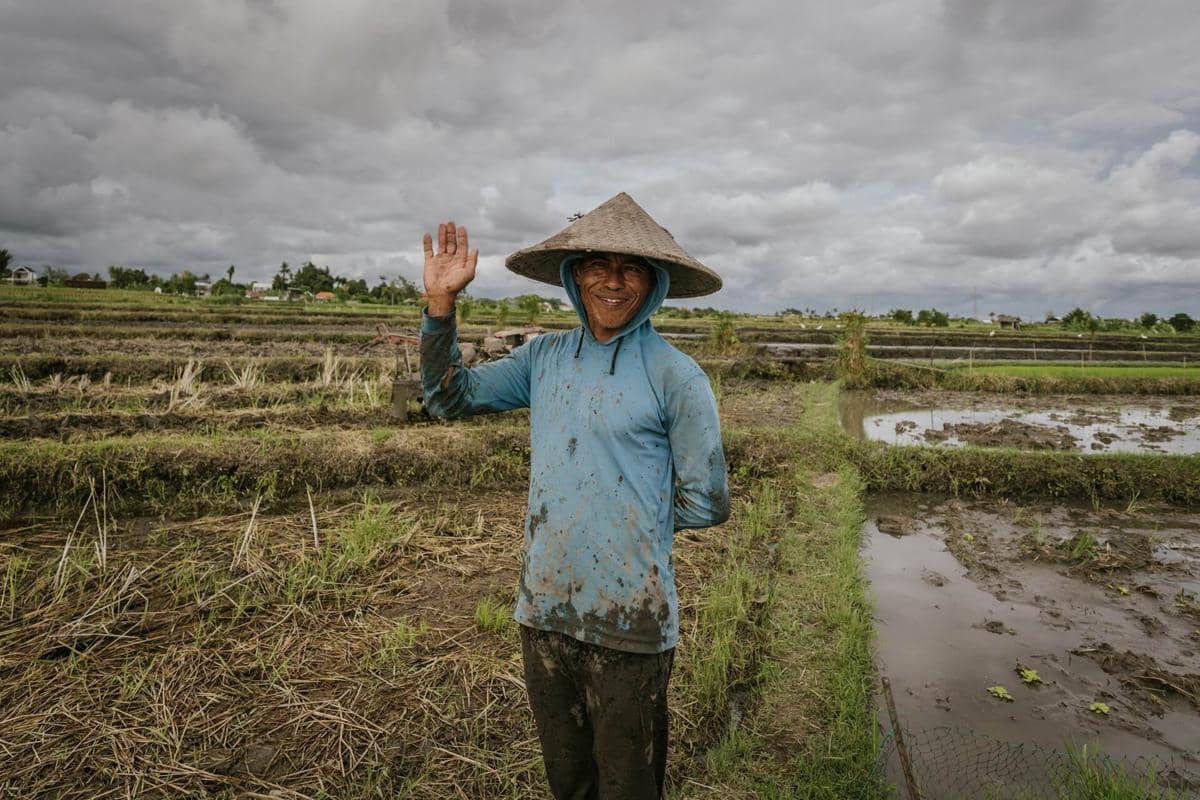
ilustrasi petani di Indonesia (unsplash.com/Polina Kuzovkova)
  • The government's self-sufficiency claim is calculated from eleven food-reserve commodities (Presidential Regulation No. 125/2022). This claim does not cover wheat and milk, the two commodities with the highest import dependence: 100% and 82%.

  • Every year, Rp213 trillion to Rp551 trillion worth of food is lost to food loss and waste across the supply chain, from farmland to consumers' dinner tables — equivalent to 4–5% of GDP. Separate from this national figure, a recurring pattern plays out at the farmer and livestock-breeder level: harvests are dumped because there are no buyers.

  • The root of the problem isn't production capacity, but three gaps in the supply chain: storage (the national cold chain was built for fisheries, not fresh food), quality standards (there's no mutually agreed testing mechanism), and buyer certainty (many farmers rely solely on the spot market).

  • For businesses, the biggest opportunity is no longer upstream (cultivation) but in post-harvest infrastructure: cold storage, product traceability, and supply-chain financing.

This section summary was AI-assisted and reviewed by our editorial team.

The government claims self-sufficiency has been achieved, yet the national food industry remains fully dependent on imports for precisely the raw materials it needs most.

On 7 January 2026, in Kertamukti Village, Karawang, President Prabowo Subianto announced that Indonesia had achieved food self-sufficiency. Rice imports were halted. The National Food Agency (Bapanas) recorded national rice stocks reaching 12.529 million tons, while the Government Rice Reserve managed by Bulog reached 3.25 million tons. All of these reserves came from domestic production (Infobanknews, 2026).

Fourteen months earlier, on 9 November 2024, hundreds of dairy farmers in Boyolali dumped around 50,000 liters of milk at a landfill because the industry wasn't absorbing it (KompasTV, 2024).

At first glance, the two events seem to be complete opposites. On one hand, Indonesia claims to have achieved food self-sufficiency; on the other, farmers and livestock breeders still struggle to sell what they produce.

The figures that explain this contradiction already exist. A study by Bappenas together with Waste4Change and the World Resources Institute calculated that the economic loss from food loss and waste in Indonesia reaches Rp213 trillion to Rp551 trillion per year, equivalent to four to five percent of gross domestic product (National Food Agency, 2025; Tirto.id, 2024). That is the value leaking out of the national food supply chain every year, and this article traces where it goes.

The issue isn't solely about the capacity to produce food. The bigger challenge actually lies in the ability to absorb that output into the industrial supply chain.

An increase in production doesn't automatically come with a market able to absorb the harvest. When production capacity grows faster than industry's absorptive capacity, the resulting oversupply pushes prices down and hurts both farmers and livestock breeders. Without improvements on the downstream side, a production surplus can actually turn into a burden for farmers. At least three factors explain this condition.

The argument is simple: Indonesia's challenge today is no longer solely about increasing production, but about ensuring that output is actually absorbed by industry and the market.

Self-Sufficiency on Paper, Industrial Import Needs Keep Flowing

The government's food self-sufficiency claim isn't baseless. National Food Agency (Bapanas) Head Andi Amran Sulaiman, who has also served as Minister of Agriculture since October 2025, stated that the Government Rice Reserve reached 5.17 million tons as of 1 July 2026, the highest in history. For comparison, he cited the national stock in 1984 — the year long regarded as the milestone of rice self-sufficiency — at only around 2.6 million tons (Suara Pemerintah, 2026; Antara, 2026).

However, that claim needs to be read according to the definition the government uses. In the same forum, Amran explained that Bapanas works within a framework of eleven strategic commodities referring to Presidential Regulation No. 125 of 2022. Eight of them have been declared self-sufficient, with a technical threshold of maximum 10 percent imports. Rice was said to have achieved perfect self-sufficiency because there are no medium-grade rice imports whatsoever (Suara Pemerintah, 2026).

To reinforce that claim, Amran also stated that Indonesia's total food imports amount to only around four percent of national demand. That figure comes from comparing food imports of 3.5 million tons against national demand of around 68 million tons (Suara Pemerintah, 2026). However, that figure depends on which commodities are counted. The list of commodities the government uses doesn't cover all the food that the public and industry need.

Presidential Regulation No. 125/2022 actually governs the Government Food Reserve, not a measure of self-sufficiency. Article 3 designates eleven specific staple foods as reserves controlled by the state: rice, corn, soybeans, onions/shallots, chili, poultry meat, poultry eggs, ruminant meat, consumption sugar, cooking oil, and fish (State Secretariat, 2022; National Food Agency, 2022). This list is what the government uses as the basis for explaining its self-sufficiency achievements. The problem is that the list was drawn up to govern the government's food reserves, not to measure Indonesia's dependence across all food commodities.

This is where the contradiction lies. The government measures success based on those eleven food-reserve commodities, while the national food-processing industry actually depends most heavily on commodities outside that list. Here's the picture, based on testimony from IPB University Professor Dwi Andreas Santosa before the Constitutional Court during the judicial review hearing of the Job Creation Law on 7 April 2026:

Table source: Indonesia Constitutional Court, 2026.

Of these six commodities, wheat and milk are the two most import-dependent, yet neither is included among the eleven strategic commodities in Presidential Regulation No. 125/2022 that the government's self-sufficiency claim is based on.

The sugar figure in the table above deserves special attention. The government classifies sugar as an already self-sufficient commodity. Dwi recorded its import dependence at 70 percent. Both can be true at once, because the government counts household consumption sugar, while Dwi counts cane sugar including refined sugar needs for industry. That difference in definition isn't merely a technical matter — it's exactly where the different ways of reading Indonesia's food situation diverge.

Still from the same testimony, Dwi noted that wheat is now the second staple food after rice, accounting for 28 percent of Indonesian society's total staple food consumption. Indonesia doesn't grow it at all. He also noted that the trade balance for the agricultural sector outside plantations had widened to a deficit of USD 17.11 billion before narrowing to a deficit of USD 13.79 billion in 2025 (Constitutional Court, 2026). The deficit shrank, but it's still in the low double-digit billions of dollars.

There are two other patterns that reveal the limits of how the government measures self-sufficiency. First, three commodities not yet declared self-sufficient are actually important raw materials for industry: soybeans (for tofu, tempeh, soy sauce), cane sugar (raw material for food and beverages), and ruminant meat (meat-processing industry). Second, the two commodities with the highest import dependence — wheat and milk — aren't even on the strategic commodity list at all, because Presidential Regulation No. 125/2022 was designed to govern government food reserves, not to measure the self-sufficiency of industrial raw materials.

That's why the four-percent import figure needs to be read within its proper scope. That calculation doesn't include wheat, which indeed isn't on the Presidential Regulation's strategic commodity list, even though wheat imports alone reach 11.76 million tons.

That said, one caveat keeps this reading proportional. Dwi also noted that Indonesia still imported around 454 thousand tons of rice in 2025 (Constitutional Court, 2026). This finding doesn't automatically refute the government's claim, since those imports are specialty rice varieties not produced domestically, while the government states it no longer imports medium-grade rice. In fact, this example reveals the same pattern: even for a commodity deemed self-sufficient, imports still occur when market demand calls for specifications that domestic production can't yet meet.

The government's self-sufficiency claim isn't entirely wrong, but it's calculated from a different set of commodities than what industry needs as raw materials. The result: Indonesia can record a surplus in a number of commodities while still depending on imports for the very foods most heavily used by the processing sector.

Where That Rp551 Trillion Leaks To

A study by Bappenas together with Waste4Change and the World Resources Institute, which analyzed data from 2000 to 2019 and was released in 2021, gives a precise figure for the scale of this leakage. Food loss and waste in Indonesia reaches 23 to 48 million tons per year, with an economic loss of Rp213 trillion to Rp551 trillion, equivalent to four to five percent of gross domestic product. The volume wasted is enough to feed 61 to 125 million people (National Food Agency, n.d.; Tirto.id, 2024). The then-Head of Bapanas, Arief Prasetyo Adi, explained that around 14 percent of the loss occurs post-harvest, while another 17 percent occurs at the consumption stage, at the dinner table (Kontan, 2023).

Why this matters: most of that loss isn't due to insufficient production, but because harvests fail to meet buyers before spoiling, or prices fall below the cost of selling — exactly the pattern seen in the following cases.

On 9 November 2024, dairy farmers and milk collectors in Boyolali dumped around 50,000 liters of milk at the Winong landfill. The action's coordinator, Sriyono Bonggol, estimated the value of the discarded milk at around Rp400 million (Radar Tuban, 2024). Head of the Boyolali Livestock and Fisheries Office, Lusia Dyah Suciati, explained that the region's milk production reaches around 140,000 liters per day. However, since the dairy processing industry capped its purchase quota, only around 110,000 liters were absorbed. The remainder — around 30,000 liters every day — had no buyer (KompasTV, 2024; Kompas.com, 2024). A similar condition occurred in Pasuruan. Kompas.id reported around 80 tons of farmers' milk went unabsorbed starting in early October 2024 (Kompas.id, 2024).

A few months later, in April 2025, farmers in Kepahiang, Bengkulu, dumped green beans, eggplants, and tomatoes by the roadside to protest plunging prices. Local residents then collected the vegetables since they were still fresh and fit for consumption (Kompas.com, 2025).

Why do farmers choose to dump their harvests? The answer shows up in the case of tomatoes in West Lampung. Ramlan, chair of the Serumpun Mandiri Farmer Group Association, as quoted by the Ministry of Agriculture's Directorate General of Horticulture, explained that the farm-gate price hit Rp800 per kilogram, while the city market price was only Rp1,000. Transport costs exceeded the value of the tomatoes themselves (Directorate General of Horticulture, 2023). Under those conditions, selling the harvest would only add to the loss. That's why dumping the harvest becomes the more economically rational choice than paying distribution costs higher than the value of the goods themselves.

This series of cases shows that increased production alone isn't enough to improve farmers' welfare. A national surplus doesn't automatically translate into income when the harvest isn't absorbed by the market or industry. In the end, what matters isn't just how much food is produced, but also how well the market can absorb it.

Industry Grows, Raw Materials Remain Import-Dependent

The same contradiction shows up on the industry side. The sector most often cited as proof of national food success is actually one of the most import-dependent for raw materials.

Minister of Industry Agus Gumiwang Kartasasmita said the food and beverage industry grew 6.49 percent in the third quarter of 2025, higher than the 5.58 percent growth of the non-oil-and-gas processing industry and the 5.04 percent national economic growth. This sector is also the largest contributor to non-oil-and-gas processing industry GDP (Liputan6, 2026). As of August 2025, the food and beverage industry employed 6.67 million workers and recorded a trade balance surplus of USD 29.7 billion over January–October 2025, from exports of USD 40.8 billion and imports of USD 11.1 billion (Suara.com, 2026).

However, that growth doesn't fully reflect the condition of the entire food supply chain. According to Statistics Indonesia (BPS), the 6.49 percent growth was mainly driven by increased production of crude palm oil (CPO) and its derivative products (Statistics Indonesia, 2025). This shows that when raw materials are available domestically, the supply chain between the upstream sector and the processing industry can run relatively smoothly. The situation is different for commodities still dependent on imports.

Ministry of Industry data cited in coverage of the Boyolali case shows that domestic milk production can only meet around 20 percent of the dairy processing industry's needs, or around 750 thousand tons. The remaining 80 percent is still met through imports. This gap keeps widening because industry demand grows by an average of five percent per year, while domestic fresh milk production grows only around 0.9 percent per year (Liputan6, 2024; Kompas.id, 2025).

A similar problem shows up in other commodities too. According to Minister of Industry Agus Gumiwang Kartasasmita, the national cassava starch industry still can't compete with imported starch because some industries need raw-material specifications that domestic production can't yet meet (Investor Trust, 2026).

These three examples show the same pattern. For commodities like milk, wheat, soybeans, and starch, industrial demand is actually continuing to grow, and the capacity to absorb output is there too. The problem is that domestic production can't yet meet that demand, so industry keeps relying on imports.

Why this matters: this proves the Indonesian food industry isn't averse to local raw materials. When domestic supply is available and consistent, as with CPO, absorption runs smoothly. The problem lies on the supply side, not demand.

The Root of the Problem Lies in the Supply Chain

Reading these three findings together reveals an observable pattern. Over the past two years, nearly all government policy has focused on boosting production — from opening new rice fields and pump-based irrigation to grants of farm machinery and the Food Brigade program. The results show: production has increased. But that increase hasn't been matched by a corresponding improvement in the market's ability to absorb the harvest.

Production and absorption operate on different logics. Production depends on land, seeds, and water. Absorption, by contrast, depends on storage, quality standards, and buyer certainty. When production rises without those three elements keeping pace, the surplus ends up as a loss at the farmer level. There are three points where that supply chain breaks down.

First, storage. Data from the Logistics Directorate of the KKP's Directorate General of Marine and Fishery Product Competitiveness Strengthening (PDSPKP) shows Indonesia has 2,110 cold-storage facilities with a combined capacity of around 814 thousand tons. But nearly all of them were built for fisheries. As much as 89 percent are privately owned, and nearly half are located on the island of Java (Ministry of Marine Affairs and Fisheries, 2025; CNBC Indonesia, 2025). In other words, the national cold-chain infrastructure simply wasn't designed to support the distribution of meat, fruit, and vegetables.

The problem isn't just the number of facilities. Hasanuddin Yasni, Chairman of the Indonesian Cold Chain Association (ARPI), estimated that refrigerated transport grew by around 14 percent in 2025, while cold storage capacity grew by only eight percent (ISL News, 2024). As a result, the capacity to transport harvests is growing faster than the capacity to store them.

Second, quality standards haven't truly been agreed upon. The milk case shows the problem isn't simply a shortfall in production. Amid heavy import dependence, some local farmers' milk still goes unabsorbed by industry. The government, industry, and farmers each use different measures to assess milk quality, so each side believes it's in the right. This divergence in views shows that, to this day, there's no quality standard that's genuinely understood and applied uniformly by all parties.

Sonny Effendhi, Executive Director of the Dairy Processing Industry Association, stated that farmers' milk is rejected because its quality doesn't meet food-safety standards. He denied that industry prefers imports, while also acknowledging that 80 percent of fresh milk raw material does indeed come from imports (Bisnis.com, 2024).

Teguh Boediyana, Chairman of the National Dairy Council, rejected that reasoning. In his view, the quality argument is contrived, and if quality really is low, what should be adjusted is the price, not the absorption. He noted that in East Java, farmers' milk quality already meets standards thanks to industry mentoring, and questioned why the quality issue only surfaced recently (RRI via Tribratanews, 2024).

Sriyono, an administrator of the Mojosongo Village Unit Cooperative (KUD), stated that the quality of Boyolali farmers' milk already meets the standard, and that what's limiting absorption is the quota (Kompas.id, 2024).

It isn't easy to determine who's right. That's precisely the problem. To this day, there's no mutually agreed, auditable, and binding quality-testing mechanism for both sides. As a result, quality standards more often function as a bargaining position in negotiations than as a verifiable technical measure.

Farmers' bargaining position is further weakened because fresh milk lasts only about 48 hours. Without adequate access to cooling facilities, they have no time to wait or dispute a quality assessment. In practice, the bargaining power ultimately rests with the processing industry (Kompas.id, 2024; Kompas.id, 2025).

Third, absorption certainty. According to the Minister of Industry, around 530 thousand tons of fresh milk is supplied by the Indonesian Dairy Cooperative Association (GKSI), whose 59 member cooperatives and around 44 thousand farmers meet industry quality standards (Liputan6, 2024). Outside that network, many farmers rely solely on the spot market, without purchase contracts or price protection. As a result, farmers bear the full risk alone whenever prices fall.

These three issues don't indicate that farmers are insufficiently productive; rather, they show that the supply chain hasn't been designed to absorb ever-rising production. The pattern on the ground also shows that Indonesia's policy response to production surpluses is still dominated by short-term measures, such as circulars urging local officials to buy farmers' harvests (Detik, 2025).

None of these findings mean the government's self-sufficiency claim is false, or that the processing industry deliberately disregards farmers' harvests. Rice production and a number of other commodities have indeed increased, while industry also needs raw materials that meet quality standards and are available consistently. Precisely because of that, the core problem isn't the intent of either side, but a supply-chain design that hasn't yet managed to bring the two together.

Implications for Policymakers

If the root of the problem lies in supply-chain design, then policy focus needs to shift too.

Success shouldn't be measured by harvest tonnage alone. As long as the main indicator is harvest tonnage, the system will keep chasing production without ensuring that harvest is actually absorbed. Ultimately, success should be measured by farmers' ability to sell their harvest at a fair price.

Self-sufficiency indicators need to reflect real needs. Presidential Regulation No. 125/2022 was drafted to govern government food reserves, not to serve as a measure of national food independence. As a result, commodities like wheat and milk — which are actually the biggest sources of import dependence — aren't reflected in that indicator at all.

Investment needs to shift toward post-harvest infrastructure. Storage, distribution, and cold chains have the potential to deliver a bigger impact than simply adding more farmland. Every new hectare of rice paddy does add to production, but without the capacity to absorb the harvest, a surplus will only heighten farmers' risk of loss. Improving storage, by contrast, means saving harvests that already exist. With food loss and waste estimated at Rp213 trillion to Rp551 trillion per year, the room for improvement is still enormous.

Incentives need to shift from pushing production to guaranteeing buyers. After the Boyolali case, the Ministry of Agriculture did require dairy processors to absorb local farmers' fresh milk (Liputan6, 2024). But that mandate doesn't automatically add storage capacity, improve distribution, or narrow the gap between growing industrial demand and domestic milk production. In the long run, incentives for purchase contracts between industry and farmers are likely to be more effective than simply mandating absorption.

What Does This Mean for Industry?

For businesses, this set of findings shows that the biggest opportunities actually lie in the parts of the supply chain that have received the least attention so far.

Agritech opportunity is shifting from cultivation to post-harvest. The 2023 Agricultural Census shows the number of individual farming enterprises fell 7.42 percent over a decade, from 31.71 million to 29.36 million, with the decline occurring across all subsectors (BPS, 2023; Constitutional Court, 2026). At the same time, farmers aged 19–39 make up only 21.93 percent of the national farmer total (BPS, 2023). This means business models that depend on app adoption by farmers face demographic constraints. By contrast, investment in post-harvest storage, processing, or logistics can serve all farmers, regardless of their age or digital literacy.

The cold chain is the largest untapped investment space. The national capacity of 813,966 tons per KKP figures was built for fisheries, with 944 of 2,110 units concentrated in Java. At the same time, ARPI's projections show storage capacity growing more slowly than distribution demand. As a result, the horticultural commodities that spoil fastest end up being the least served.

Product traceability opens room for premium pricing. So far, local food businesses have competed mostly on price whenever supply is abundant, even though certainty about a product's quality and origin opens up differentiation opportunities that remain largely untapped.

Supply partnerships are risk mitigation, not just procurement. Industry's dependence on milk imports shows that the issue isn't simply buying raw materials, but managing supply risk. Companies that can build a network of local suppliers meeting their standards not only reduce import dependence but also reduce their exposure to exchange-rate fluctuations.

Farmers need supply-chain financing, not just a buy-sell platform. Many farmers already have a market; what they struggle with is bridging the gap between harvest and payment, or financing quality improvements so their harvest meets industry standards. This gap is what opens up an opportunity for supply-chain financing, rather than just a platform that matches sellers with buyers.

Closing

Up to now, the Rp213 trillion to Rp551 trillion loss from food loss and waste has more often been read simply as evidence of wastefulness. Yet part of that figure, specifically the post-harvest loss portion, points to something else: harvests that were already produced but failed to reach a buyer. The rest, loss at the consumption stage, is a different problem requiring a different solution.

Indonesia has succeeded in raising food production. The next challenge is no longer growing more, but ensuring that harvest is absorbed by the market that actually needs it. As long as the supply chain can't bring the two together, surplus and imports will keep coexisting.

True self-sufficiency isn't just about how much gets grown, but about how much successfully reaches the buyer without being lost along the way.

References

Agraris.id. (2026, 15 April). Indonesia capai kemandirian pangan: 7 komoditas utama kini bebas impor. https://agraris.id/indonesia-capai-kemandirian-pangan-7-komoditas-utama-kini-bebas-impor/ (diakses 14 Juli 2026)

Antara. (2026, 30 Juni). Kepala Bapanas sebut Indonesia lumbung beras dunia tanpa impor. https://www.antaranews.com/berita/5629288/kepala-bapanas-sebut-indonesia-lumbung-beras-dunia-tanpa-impor (diakses 14 Juli 2026)

Badan Pangan Nasional. (2022, 27 Oktober). Perpres No. 125 tahun 2022, negara hadir amankan pangan nasional. https://badanpangan.go.id/blog/post/perpres-no-125-tahun-2022-negara-hadir-amankan-pangan-nasional (diakses 14 Juli 2026)

Badan Pangan Nasional. (n.d.). GRASP 2030: NFA ajak semua pihak kolaborasi tekan food loss and waste (FLW). https://badanpangan.go.id/blog/post/grasp-2030-nfa-ajak-semua-pihak-kolaborasi-tekan-food-loss-and-waste-flw (diakses 14 Juli 2026)

Badan Pusat Statistik. (2023, 4 Desember). Hasil pencacahan lengkap Sensus Pertanian 2023 Tahap I. https://www.bps.go.id/id/pressrelease/2023/12/04/2050/hasil-pencacahan-lengkap-sensus-pertanian-2023---tahap-i.html (diakses 14 Juli 2026)

Badan Pusat Statistik. (2025, 5 November). Siaran pers: Pertumbuhan ekonomi Indonesia triwulan III 2025. https://www.bps.go.id/id/news/2025/11/05/793/siaran-pers-badan-pusat-statistik.html (diakses 14 Juli 2026)

BBC. (2026). Why $20 durians are now being sold at half price, or given away for free. https://www.bbc.com/news/articles/c8x21yld0yro (diakses 14 Juli 2026)

Bisnis.com. (2024, 11 November). Industri blak-blakan penyebab susu peternak lokal tak terserap. https://ekonomi.bisnis.com/read/20241111/12/1814896/industri-blak-blakan-penyebab-susu-peternak-lokal-tak-terserap (diakses 14 Juli 2026)

CNBC Indonesia. (2025, 16 Oktober). KKP fokus kebut bangun cold storage di sini, kondisi terkini begini. https://www.cnbcindonesia.com/news/20251016170515-4-676528/kkp-fokus-kebut-bangun-cold-storage-di-sini-kondisi-terkini-begini (diakses 14 Juli 2026)

Detik. (2025, 11 April). Petani buang sayur karena harga anjlok, begini respons Gubernur Bengkulu. https://www.detik.com/sumbagsel/berita/d-7864516/petani-buang-sayur-karena-harga-anjlok-begini-respons-gubernur-bengkulu (diakses 14 Juli 2026)

Direktorat Jenderal Hortikultura, Kementerian Pertanian. (2023). Walau harga jatuh, petani Lampung Barat tetap tanam tomat. https://hortikultura.pertanian.go.id/walau-harga-jatuh-petani-lampung-barat-tetap-tanam-tomat/ (diakses 14 Juli 2026)

Infobanknews. (2026, 7 Januari). Prabowo: Indonesia resmi swasembada pangan, impor beras dihentikan 2026. https://infobanknews.com/prabowo-indonesia-resmi-swasembada-pangan-impor-beras-dihentikan-2026/ (diakses 14 Juli 2026)

Investor Trust. (2026, 22 Januari). Menperin: Industri makanan minuman tumbuh 6,49%, beri kontribusi terbesar ke PDB manufaktur. https://investortrust.id/business/92129/menperin-industri-makanan-minuman-tumbuh-6-49-beri-kontribusi-terbesar-ke-pdb-manufaktur (diakses 14 Juli 2026)

ISL News. (2024, 4 November). Industri rantai dingin tahun 2025 diproyeksikan tumbuh 14%. https://www.islnewstv.com/2024/11/industri-rantai-dingin-tahun-2025.html (diakses 14 Juli 2026)

Kementerian Kelautan dan Perikanan. (2025, 26 Januari). KKP siapkan sistem informasi cold storage perkuat hilirisasi perikanan. https://www.kkp.go.id/news/news-detail/kkp-siapkan-sistem-informasi-cold-storage-perkuat-hilirisasi-perikanan-MZ13.html (diakses 14 Juli 2026)

Kompas.com. (2024, 9 November). Peternak Boyolali buang 50.000 liter susu di TPA, apa yang terjadi? https://regional.kompas.com/read/2024/11/09/161513278/peternak-boyolali-buang-50000-liter-susu-di-tpa-apa-yang-terjadi (accessed 14 Juli 2026)

Kompas.com. (2025, 10 April). Petani Bengkulu buang sayur di jalan sebagai protes harga anjlok. https://regional.kompas.com/read/2025/04/10/075411778/petani-bengkulu-buang-sayur-di-jalan-sebagai-protes-harga-anjlok (accessed 14 Juli 2026)

Kompas.id. (2024, 13 November). Elegi peternak di Boyolali dan Pasuruan buang susu hasil produksi, apa yang terjadi? https://www.kompas.id/artikel/elegi-peternak-di-boyolali-dan-pasuruan-buang-susu-hasil-produksi-apa-yang-terjadi (accessed 14 Juli 2026)

Kompas.id. (2025, 4 Januari). Peternak buang susu, ironi mimpi swasembada. https://www.kompas.id/artikel/peternak-buang-susu-ironi-mimpi-swasembada (accessed 14 Juli 2026)

KompasTV. (2024, 10 November). Saat para peternak Boyolali buang 50.000 liter susu, imbas produk impor hingga tak terserap pasar. https://www.kompas.tv/regional/552328/saat-para-peternak-boyolali-buang-50-000-liter-susu-imbas-produk-impor-hingga-tak-terserap-pasar (diakses 14 Juli 2026)

Kontan. (2023, 18 Oktober). Potensi kerugian dari food loss dan food waste di Indonesia capai Rp551 triliun. https://nasional.kontan.co.id/news/potensi-kerugian-dari-food-loss-dan-food-waste-di-indonesia-capai-rp-551-triliun (accessed 14 Juli 2026)

Liputan6. (2024, 13 November). Usai viral video peternak Boyolali buang susu, Prabowo beri perintah begini. https://www.liputan6.com/bisnis/read/5785421/usai-viral-video-peternak-boyolali-buang-susu-prabowo-beri-perintah-begini (accessed 14 Juli 2026)

Liputan6. (2026, 22 Januari). Menperin: Industri makanan dan minuman jadi kontributor terbesar ke PDB manufaktur. https://www.liputan6.com/bisnis/read/6263232/menperin-industri-makanan-dan-minuman-jadi-kontributor-terbesar-ke-pdb-manufaktur (accessed 14 Juli 2026)

Mahkamah Konstitusi Republik Indonesia. (2026, 7 April). Ahli pemohon: Dampak impor pangan berimbas ke petani kecil. https://www.mkri.id/berita/ahli-pemohon:-dampak-impor-pangan-berimbas-ke-petani-kecil-24820 (accessed 14 Juli 2026)

Radar Tuban. (2024, 10 November). Peternak sapi perah Boyolali buang ribuan liter susu senilai Rp400 juta sebagai bentuk protes. https://radartuban.jawapos.com/nasional/865295456/peternak-sapi-perah-boyolali-buang-ribuan-liter-susu-senilai-rp-400-juta-sebagai-bentuk-protes (accessed 14 Juli 2026)

Sekretariat Negara Republik Indonesia. (2022). Peraturan Presiden Nomor 125 Tahun 2022 tentang Penyelenggaraan Cadangan Pangan Pemerintah. https://peraturan.bpk.go.id/Details/230367/perpres-no-125-tahun-2022 (accessed 14 Juli 2026)

Startup Fortune. (2026). Singapore's AGONG Durian uses blockchain to prove every fruit is genuine. https://startupfortune.com/singapores-agong-durian-uses-blockchain-to-prove-every-fruit-is-genuine/ (accessed 14 Juli 2026)

Suara.com. (2026, 22 Januari). Menperin pede industri makanan dan minuman bisa jadi andalan ke depan. https://www.suara.com/bisnis/2026/01/22/180959/menperin-pede-industri-makanan-dan-minuman-bisa-jadi-andalan-ke-depan (accessed 14 Juli 2026)

Suara Pemerintah. (2026, Juli). Swasembada pangan 2026 makin kuat, pemerintah klaim delapan komoditas strategis sudah mandiri. https://suarapemerintah.id/2026/07/swasembada-pangan-2026-makin-kuat-pemerintah-klaim-delapan-komoditas-strategis-sudah-mandiri/ (accessed 14 Juli 2026)

Tribratanews Polri. (2024, 13 November). Dewan Persusuan Nasional menyoroti masalah kualitas penyerapan susu lokal [dilansir dari RRI]. https://tribratanews.polri.go.id/blog/nasional-3/dewan-persusuan-nasional-menyoroti-masalah-kualitas-penyerapan-susu-lokal-80858 (accessed 14 Juli 2026)

Tirto.id. (2024, 3 Juli). Bappenas: Potensi kerugian negara akibat sampah makanan Rp551 T. https://tirto.id/bappenas-potensi-kerugian-negara-akibat-sampah-makanan-rp551-t-g1go (accessed 14 Juli 2026)
Curated For You

Editorial Team

Related Article