Baca artikel IDN Research Institute lainnya di IDN App
It helps you see more of our articles when you search on Google
Doom Spending: When Indonesia's Gen Z Shops to Escape Economic Anxiety
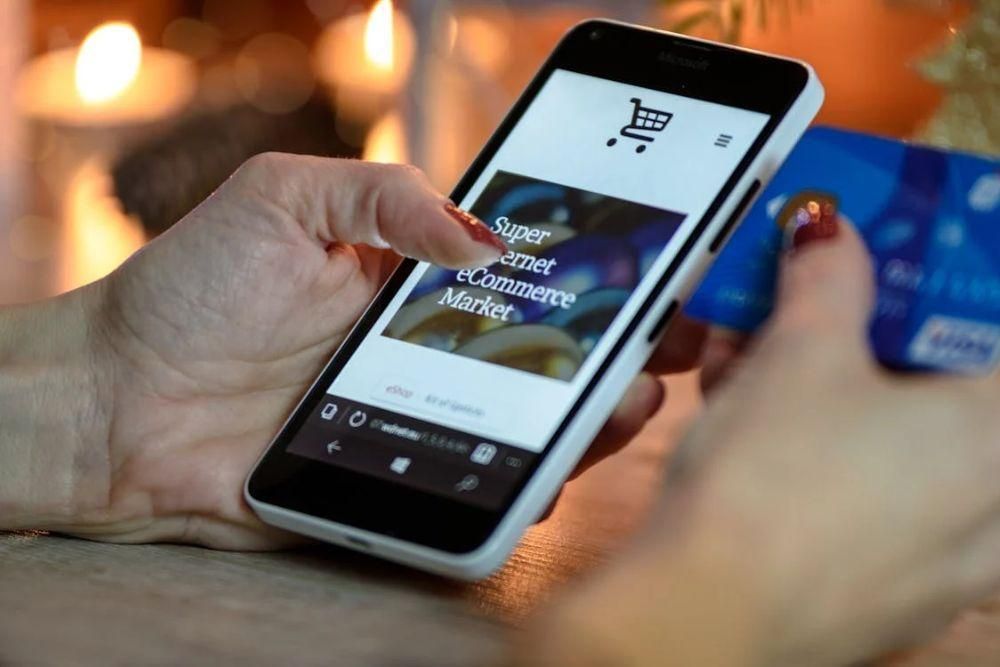
Ilustrasi belanja online (pexels/photoMIX company)
  • Doom spending has become a trend among Gen Z in Indonesia, emerging as an escape from stress and economic anxiety rather than just ordinary consumerist behavior.

  • Data from 2024–2025 shows a surge in paylater usage, reaching IDR 8.22 trillion, while financial literacy remains relatively low at 65.43%. This worsens the cycle of debt and impulsive digital spending.

  • The main causes include real economic pressure, e-commerce algorithms that trigger impulsive purchases, and FOMO on social media. Addressing this issue requires both psychological and systemic approaches.

Disclaimer: This was created using Artificial Intelligence (AI)

Imagine you have just spent 20 minutes scrolling TikTok, and suddenly your shopping cart is full, even though you know this month's bills are not yet paid. Familiar? You are not alone.

This phenomenon has a name: doom spending. In Indonesia, it is affecting millions of young Gen Z consumers in a way far more complex than simply being "wasteful."

What Is Doom Spending?

Doom spending is the behavior of spending money impulsively as an escape mechanism from stress or anxiety about uncertain economic conditions. Psychology Today popularized the term, and it is now an increasingly relevant topic in Indonesia.

This is not ordinary hedonistic shopping. Doom spending arises precisely because a person feels their financial situation will not improve. The logic runs roughly like this: "The future looks bleak anyway, so why not enjoy now?"

Numbers Worth Paying Attention To

Doom spending is admittedly difficult to measure directly. However, several economic and digital behavior indicators suggest that young Indonesians are living amid growing financial pressure and increasingly powerful consumption temptations.

The 2025 National Financial Literacy and Inclusion Survey (SNLIK) conducted by OJK and BPS recorded the national financial literacy index at 66.46%, while financial inclusion reached 80.51%. Compared to SNLIK 2024 (literacy 65.43%, inclusion 75.02%), the gap between access and understanding widened from approximately 9.6 points to approximately 14 points. This means access to financial products is growing much faster than the ability to use them wisely.

At the same time, Indonesia is experiencing a massive acceleration in its digital economy. E-commerce platforms, delivery services, and live shopping features are making transactions easier than ever with just a few clicks. Shopping is no longer an activity that requires extensive consideration—it has become an instant decision that can be made anytime.

Why Is Gen Z So Vulnerable?

There are at least several factors that make Gen Z particularly vulnerable to doom spending. Some of them include:

1. Real Economic Pressure

Indonesian Gen Z is entering the workforce amid challenging economic conditions. BPS data from February 2026 recorded the national open unemployment rate (TPT) at 4.68%. However, for the 15–24 age group, the TPT reached 16.36%, far above the national average and the highest among all age groups. The burden of unemployment in Indonesia is borne most heavily by young people entering the labor market.

Meanwhile, living costs continue to rise, job competition is becoming increasingly intense, and social media constantly shapes high lifestyle standards. Many young people feel compelled to appear as though they are doing fine, even when their financial situation is actually unstable.

2. A Digital Ecosystem Designed to Trigger Spending

Modern digital platforms are intentionally designed to shorten the distance between desire and transaction. Instant checkout features, flash sales, live shopping, and recommendation algorithms make shopping feel extremely fast and frictionless.

Various studies on digital consumer behavior also show that live shopping and influencer content can increase impulsive purchasing tendencies, especially among young social media users.

3. FOMO and Social Pressure on Social Media

Instagram and TikTok create lifestyle narratives that feel both aspirational and easily attainable, as long as someone checks out now.

Fear of Missing Out (FOMO) is not merely a popular internet term. In many cases, it becomes a real psychological pressure. Young people feel left behind if they do not follow trends, hang out at certain places, buy viral products, or participate in experiences everyone is talking about.

This kind of social pressure makes consumption no longer just about needs, but also about validation and a sense of belonging.

4. The Deceptive Convenience of BNPL

Buy Now Pay Later (BNPL) services, such as e-commerce paylater features and digital installment plans, certainly offer flexibility. However, this convenience can also blur the line between being able to buy and being able to pay.

For some young people who have not yet built a strong financial foundation, BNPL can turn into a cycle of small debts that quietly accumulate over time.

The scale of this phenomenon can be seen in the latest OJK data:

  • As of March 2026, the 19–34 age group accounted for 48.65% of non-performing online loan credit.

  • Total national BNPL debt reached IDR 28.3 trillion with 30.81 million users (March 2026).

  • Paylater financing by financing companies grew 71.13% year-on-year to IDR 12.18 trillion (January 2026).

  • Gen Z accounts for nearly 40% of total BNPL users, with a paylater non-performing loan ratio of around 4%, higher than that of conventional banking credit.

  • The 2025 APJII survey recorded that 86.6% of online borrowers came from Millennials and Gen Z.
The Trapping Cycle

Doom spending does not work in isolation; it spins in a cycle that is hard to break:

Economic anxiety → Stress → Impulse spending → Momentary satisfaction → Post-purchase regret → Reduced savings or rising debt → Greater economic anxiety → and so on.

The problem is that shopping only provides temporary relief. Afterward, the original anxiety often returns and sometimes in an even worse condition because savings have decreased or installment obligations have increased.

Another impact can be seen in saving behavior. Bank Indonesia reported that around 20 million Gen Z individuals did not have a bank savings account as of November 2025.

However, there is a slight sign of improvement: Bank Indonesia's Consumer Survey recorded that the share of income allocated to consumption declined to 74.3% in December 2025, lower than in previous months, indicating that the proportion allocated to savings had begun to increase.

What Does Gen Z Buy?

Based on Antara News data (2025), the doom spending consumption pattern of Indonesia's Gen Z occurs most in the following categories:

  • Food and cafes: coffee, hangouts, and dining experiences

  • Fashion and streetwear: especially items promoted on social media

  • Concerts and entertainment: experiential spending that has risen sharply

  • Gadgets and electronics: upgrading devices faster than needed

  • Digital subscriptions: streaming, games, and paid content that accumulate

Interestingly, many of these expenditures are not primarily about physical goods but social experiences. This suggests that doom spending is also connected to emotional needs, a sense of belonging, and the pursuit of temporary comfort.

The Paradox: Deflation, but Spending Rises

In January 2025, BPS recorded a monthly deflation rate of 0.76%. However, this decline was not a sign of naturally weakening prices, but rather the result of a 50% electricity tariff discount policy that applied from January to February 2025. The effect was temporary. Once the policy effect disappeared, annual inflation in January 2026 surged to 3.55%, the highest level since 2023.

Interestingly, despite weakened purchasing power and rising living costs, young people's consumption did not slow down accordingly. This indicates that consumption behavior is determined not only by prices or income but also by psychological conditions and feelings of insecurity about the future.

Is This Gen Z's Fault Alone?

The issue is not that simple.

Uneven financial literacy is part of a systemic problem. The 2024 National Survey on Financial Literacy and Inclusion (SNLIK) shows that while the financial inclusion rate is already high at 75.02% (meaning people already have access to financial products), the financial literacy rate sits at 65.43%. More specifically, the student segment is among those with a relatively low literacy index, signaling that financial understanding among young people still needs strengthening.

On the other hand, macroeconomic conditions, the inequality of job opportunities, and an aggressive digital ecosystem are not things that can be changed merely by being "more disciplined." As a generation, Gen Z grew up in an environment that structurally makes it easy for them to shop while making it hard for them to save.

Escaping the Doom Spending Trap: Practical Steps

Addressing doom spending requires a two-pronged approach: psychological and financial.

Recognize the Trigger

Before checking out, ask yourself: "Do I want to buy this because I need it, or because I am stressed, bored, or anxious?" Self-awareness is the first step.

Apply the 24-Hour Rule

Every time you want to buy something unplanned, wait 24 hours. Research shows that impulsive urges decrease drastically after a time gap.

Limit Exposure to Shopping Content

Unfollow haul accounts, reduce time on TikTok Shop, and turn off promo notifications from e-commerce apps. The less stimulation, the less temptation.

Audit Your BNPL Subscriptions

Check how many active installments are running. If the total has become a burden, stop using BNPL for non-essential purchases.

Build a Planned "Fun Fund"

This does not mean you cannot enjoy life, but allocate a specific budget for it. When the money runs out, that is it. No guilt, no debt.

Find a Stress Outlet Other Than Shopping

Exercise, journaling, talking with friends, or creative activities can replace shopping as a healthier coping mechanism.

The Role of the Ecosystem: Not Just the Individual

Doom spending is not merely a matter of individual discipline. Systemic factors also shape the consumption behavior of younger generations.

The government has begun taking action. In 2025, OJK issued POJK Number 32 of 2025 concerning BNPL Operations, regulating minimum age requirements, minimum income requirements, and borrower leverage ratios. OJK has openly linked this regulation to the risk of over-indebtedness among young people and is preparing derivative regulations to limit ownership of multiple paylater accounts.

Therefore, the following measures are also important to encourage:

  • Financial education that is relevant to young people's digital lives

  • Transparency regarding fees and risks in paylater services

  • Stricter regulation of digital credit

  • Financial literacy integrated into formal education

  • More responsible digital platforms in reducing impulsive consumption triggers.

Conclusion

Doom spending is not merely a trend or a character flaw. It is a psychological response to real economic pressure, then worsened by a digital ecosystem designed to drain the wallet.

Indonesia's Gen Z, the largest generational group with a share of around 24.93% (equivalent to roughly 71 million people) of the total 284.67 million population according to the SUPAS 2025 results (BPS), is a generation carrying the weight of large expectations with resources that are often inadequate. Understanding doom spending means understanding the pressures they face, not merely judging their shopping behavior.

Most importantly, awareness is the beginning of change. When you recognize that today's shopping may be your brain's way of managing anxiety, that is already a significant step.


Data sources: Nielsen (2024), Katadata Insight Center, OJK and BPS (SNLIK 2024), OJK (2024 to 2025), BPS (2024 to 2025, including SUPAS 2025), Tech in Asia (March 2025), Antara News (2025), Snapcart (2025), Zeta et al. (2025).

Editorial Team

Related Article